Bitcoin’s slide back toward $59,000 is the market’s clearest warning that the crypto trade is still being driven by forced selling, not conviction buying.
Bitcoin Falls Toward $59,000 on ETF Outflows

That matters because this is no longer just a pullback in a volatile asset class. It is a liquidity event. A wave of ETF redemptions, leveraged liquidations and fading risk appetite is pressuring the entire digital-asset complex, from Bitcoin and Ether to XRP, Solana and Dogecoin. When Bitcoin loses support, it pulls on the same capital, collateral and sentiment channels that have driven the broader crypto rally and the related equity names built around it.
Sentiment Indicators
Bitcoin
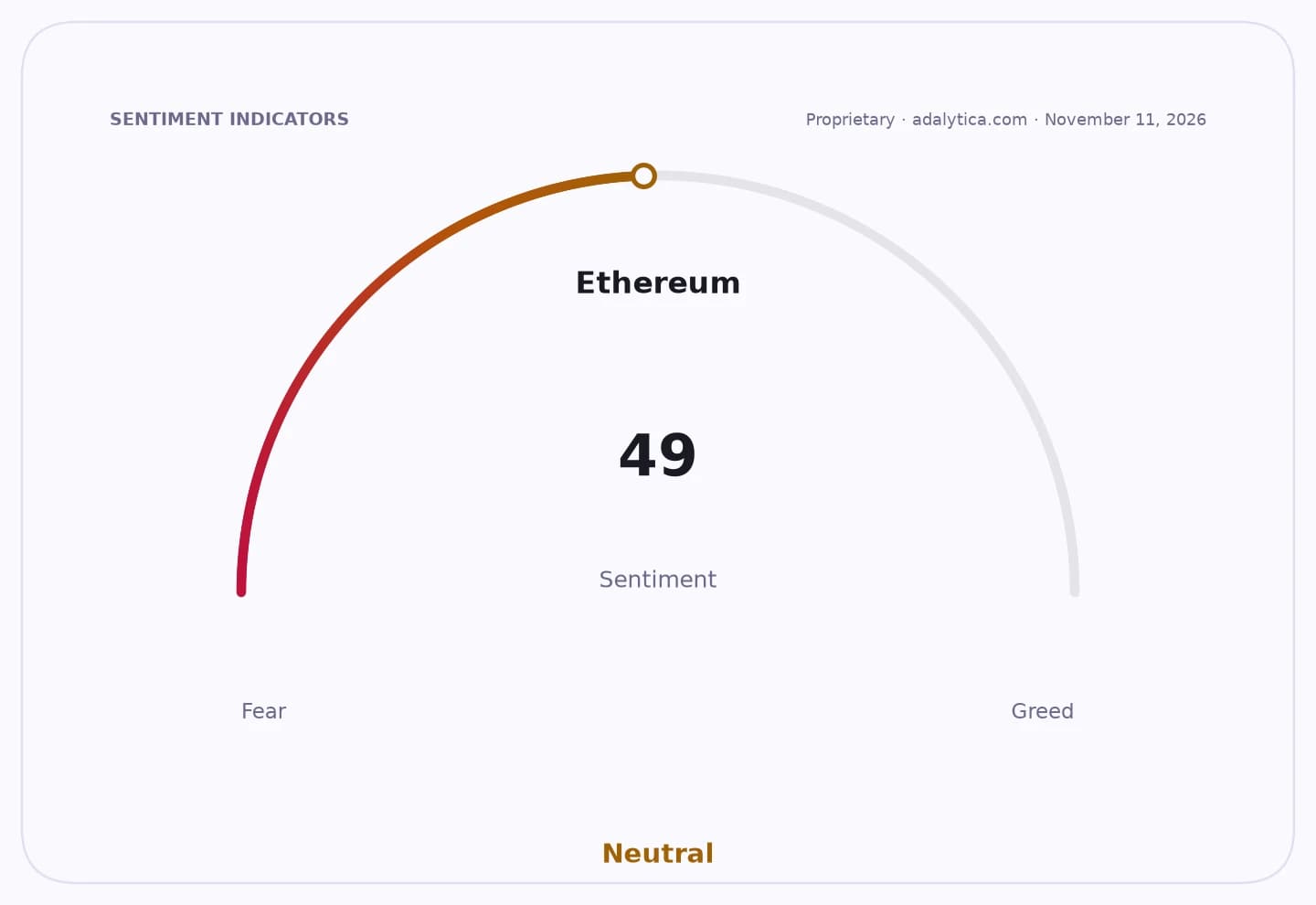
The damage is showing up across the board. Bitcoin has fallen to about $59,292 after dropping as low as $55,250 earlier in the selloff, while Ether is hovering near $1,646. XRP, Solana and Dogecoin are all lower as well, with Dogecoin among the weakest after a roughly 12% weekly decline. The bigger tell is the money leaving the market: US spot Bitcoin and Ether ETFs saw about $1.47 billion of net outflows in the trading week cited, while Ether funds have shed nearly $1 billion since early November.
That outflow pressure is crucial for investors because ETF demand has been one of the main pillars supporting crypto valuations this cycle. When that pillar weakens, price discovery turns harsh. On Bitcoin’s chart, the 50-day moving average sits well above spot at roughly $73,777, and the RSI is deep in oversold territory at 32.2, underscoring how far sentiment has swung. Ether’s RSI is even weaker at 37.5, with its price still stuck below the 50-day average near $2,134.
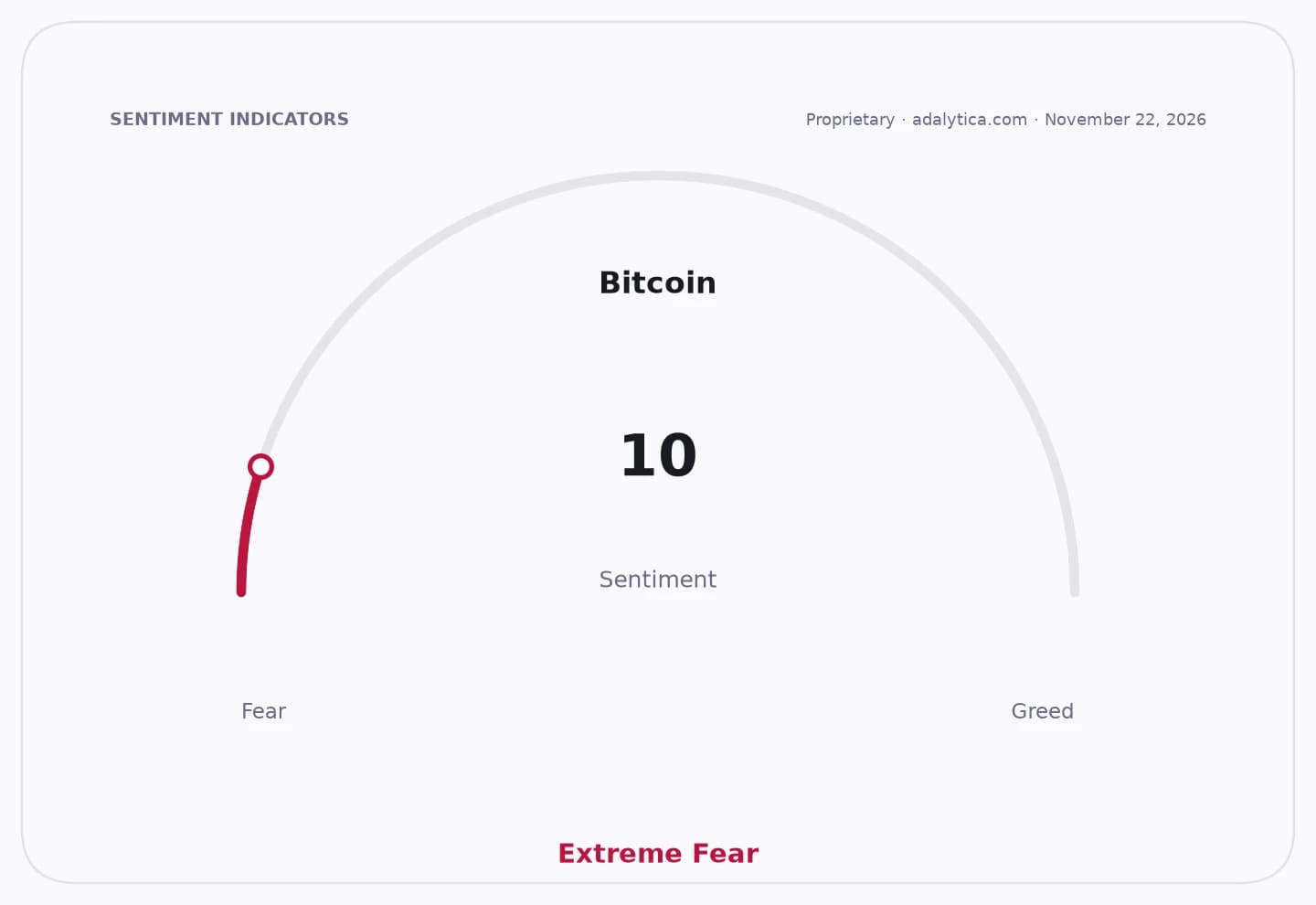
The macro backdrop is making the unwind worse. Traders are bracing for key US inflation and growth data, including PCE and revised third-quarter GDP, after a stretch of concern that the Federal Reserve may stay tighter for longer. Higher Treasury yields and a stronger dollar drain the speculative fuel that had powered digital assets. Adalytica’s Bitcoin Fear & Greed snapshot still shows sentiment in neutral territory at 35, but awareness remains in “Extreme Fear,” a sign that retail and momentum traders are not yet comfortable stepping back in.
For crypto-linked equities, the implications are just as important. Coinbase, MicroStrategy and the ETF complex tied to Bitcoin prices will likely remain highly sensitive to any further downdrafts in the underlying coins. If Bitcoin cannot reclaim the low-$60,000 area quickly, forced deleveraging could keep ricocheting through the market and drag on the next round of digital-asset allocations. That is why the next catalyst matters: softer US inflation could stabilize rates and stop the bleed, but until that happens, the path of least resistance is still lower.
For now, this is an opportunity only for patient capital willing to wait for capitulation to clear. The tradeable setup is not in chasing dips, but in watching for the first durable reversal in ETF flows, volatility and the macro rate backdrop. Until then, Bitcoin’s weakness remains the signal that the crypto market is still repairing a leverage shock.
| Entity | Gains | Losses |
|---|---|---|
| Short sellers | ▲Momentum and volatility | ▼None if selloff persists |
| ETF outflow watchers | ▲Lower entry prices | ▼Bullish inflow thesis |
| Bitcoin miners | ▲Potentially none | ▼Margins and sentiment |
| Coinbase / crypto brokers | ▲Trading volume spikes | ▼Asset prices and investor confidence |