Bitcoin sank below $80,000 as a sharp jump in oil prices and renewed expectations for higher U.S. interest rates intensified a broader selloff in risk assets, underscoring how quickly macro forces are overpowering crypto’s idiosyncratic drivers.
Bitcoin Falls Below $80,000 as Oil Rises

The move matters because Bitcoin is trading less like a standalone alternative asset and more like a high-beta proxy for liquidity conditions. When oil rises, inflation expectations tend to firm, Treasury yields can move higher and the case for easier monetary policy weakens. That combination is toxic for speculative assets that depend on abundant cash and low real rates, especially after a strong run has left positioning vulnerable to a rush for the exits.
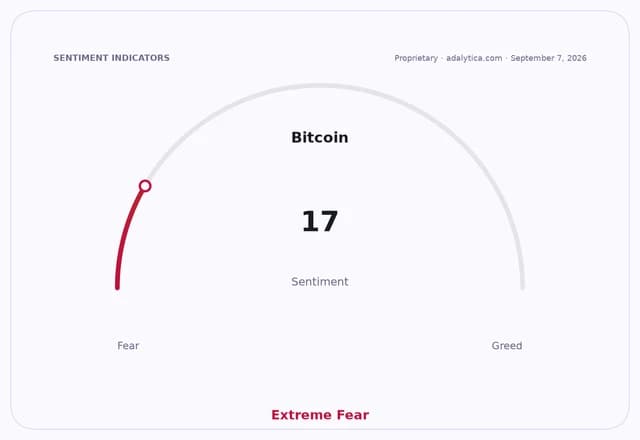
Sentiment IndicatorsⓘProprietary · adalytica.com · September 7, 2026
This is a snapshot — live sentiment, awareness and momentum for 130+ markets update continuously in the dashboard.Open AlphaPulse
West Texas Intermediate crude climbed to $91.48 a barrel, its highest level in the supplied data, after rising more than 5% on the latest session and more than 27% from early May. The Fed funds rate in the context stands at 3.63%, with the market now leaning toward another increase rather than a quick pivot lower. For Bitcoin, that backdrop has coincided with a drop to $78,842.39 on Sept. 7 after a brief rebound above $80,000 the prior two sessions.
The technical picture also points to a market under stress. Bitcoin’s 50-day moving average is around $69,689 and the 200-day moving average near $69,813, leaving price above both but with momentum cooling: RSI readings have slipped to 49.6 from the high 50s, while the MACD has narrowed against its signal line. That is not a breakdown on its own, but it shows a market struggling to extend rallies even as it remains far from capitulation levels reached earlier in the year.
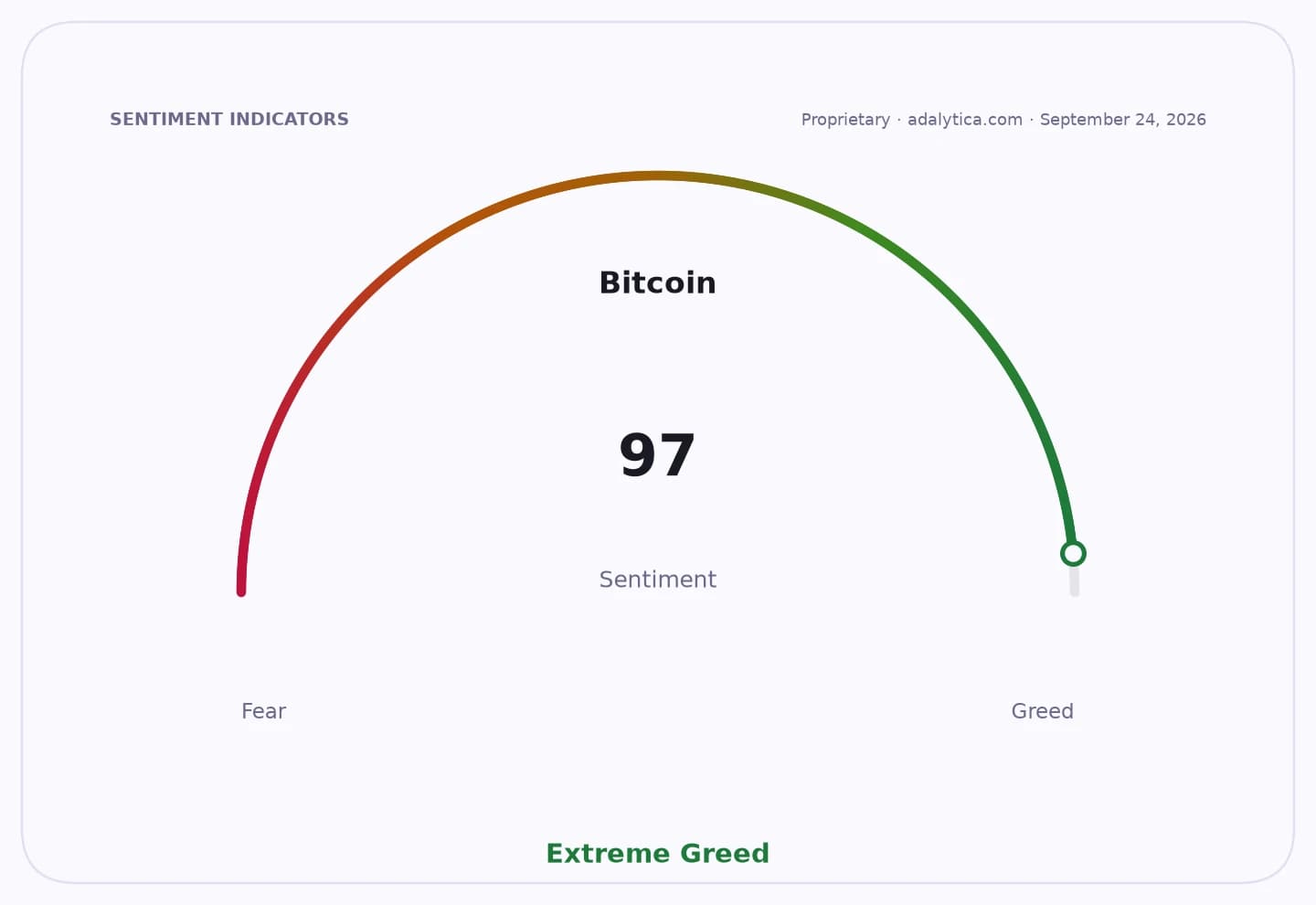
Adalytica’s Bitcoin Fear & Greed Index dropped to 17, firmly in “Fear,” with the awareness gauge at “Extreme Fear.” That lines up with the price action and suggests traders are de-risking rather than buying the dip. In a market where retail flows, leveraged derivatives and ETF positioning can amplify swings, falling sentiment can feed on itself.
Gold, meanwhile, held around $4,476.60 an ounce, reinforcing the defensive tone in markets, while the U.S. dollar stayed relatively firm on Adalytica’s trade signals. That mix typically leaves Bitcoin struggling to compete either as a macro hedge or a momentum trade.
For investors, the key question is whether this is a short-lived rate-and-oil shock or the start of a more durable unwind in the parts of the market most sensitive to tighter financial conditions. Crypto miners such as Marathon Digital and Riot have already flagged bitcoin price volatility as a material business risk in recent filings, and exchanges such as Coinbase remain exposed to trading volume and asset-price swings. If oil stays elevated and the Fed stays restrictive, Bitcoin is likely to remain tethered to macro rather than narrative.
| Entity | Gains | Losses |
|---|---|---|
| Oil producers | ▲Higher realized prices | ▼— |
| Bitcoin bulls | ▲— | ▼Lower prices, weaker momentum |
| Crypto miners | ▲— | ▼Margin pressure, lower asset values |
| Defensive assets | ▲Safe-haven demand | ▼Opportunity cost if rates rise |