Bitcoin is back in the kind of market that forces investors to think less about price and more about custody, and that is exactly why wallet selection matters now.
Bitcoin Holds Above Key Averages, Wallet Demand Rises
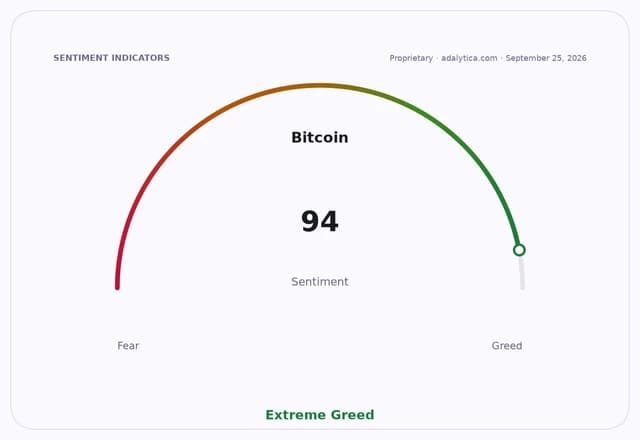
BTC closed at $83,766.84 on Sept. 25, holding well above both its 50-day moving average of $75,317.60 and its 200-day moving average of $70,927.72, while Adalytica’s Bitcoin Fear & Greed Index sat at 94, or “Extreme Greed.” That combination tells you the market has moved out of survival mode and into accumulation mode. When momentum is this strong, the wrong storage setup can do more damage than a bad entry price.
Sentiment IndicatorsⓘProprietary · adalytica.com · September 25, 2026
This is a snapshot — live sentiment, awareness and momentum for 130+ markets update continuously in the dashboard.Open AlphaPulse
That is the real investment story behind the wallet debate. Bitcoin is no longer a niche trade for speculators. It is a macro asset, a treasury reserve candidate and, for many holders, a long-duration store of value. As the asset appreciates and institutional participation deepens, the risks shift from price discovery to operational security, self-custody and counterparty exposure. Investors who are serious about holding BTC need a wallet strategy that matches their time horizon, risk tolerance and size of position.
The market is also sending a clear signal that conviction is building. Bitcoin’s RSI reading of 67.9 is elevated but not yet stretched to the point that trend followers would panic, and the 50-day average remains well above the 200-day average, a classic bullish structure. In plain English: the uptrend is intact. That makes wallet security more important, not less, because bullish cycles tend to attract more hacks, more phishing attempts and more emotional trading mistakes as new money floods in.
For investors, the implications are bigger than convenience. A hot market changes the competitive landscape across the crypto stack. Hardware wallet makers, custody providers, exchange platforms and Bitcoin-linked public companies all benefit when holders become more security-conscious. That includes Coinbase, which sits at the center of trading and custody flows, and MicroStrategy, whose equity remains a leveraged proxy for Bitcoin exposure. If BTC continues to grind higher, the next wave of capital should not only lift the coin itself but also the infrastructure built around storing it safely.
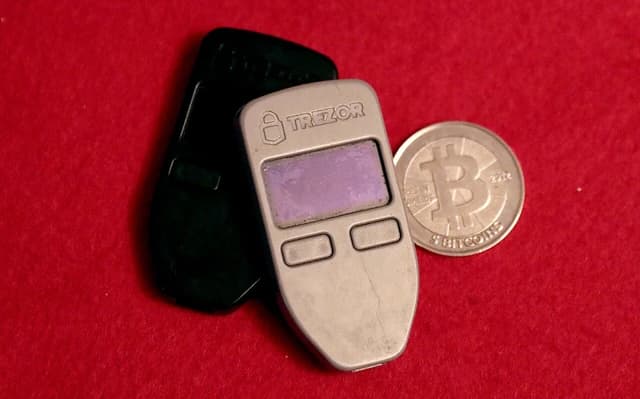
The other important point is that wallet choice has become a portfolio decision, not a tech preference. For small balances and active users, mobile or software wallets may be enough. For long-term holders, hardware wallets and multisignature setups are the cleaner play. For institutions, regulated custody is the institutional-grade answer. The market underestimates how much demand for these products rises when Bitcoin volatility returns and the asset approaches new highs.
That is why the best Bitcoin wallet is not a one-size-fits-all answer. It is the one that protects the investor’s base case: hold through the next cycle without losing coins to exchange risk, poor key management or a phishing scam. In a market where BTC is trending above key averages and sentiment is euphoric, the asymmetric opportunity is not just owning Bitcoin — it is owning it properly before the next leg higher forces even more holders to upgrade their security.
| Entity | Gains | Losses |
|---|---|---|
| Bitcoin holders using hardware wallets | ▲safer long-term custody | ▼exchange and phishing risk |
| Coinbase and custody providers | ▲more security-driven demand | ▼pure spot traders |
| Hardware wallet makers | ▲higher sales | ▼weak self-custody demand |
| Short-term traders | ▲volatility opportunities | ▼missing the trend |