BNB Chain is back in the spotlight after its BSC-Reth client published a hotfix for incorrect state-root calculations, underscoring how quickly a software maintenance issue can become a network-level concern for holders and developers. The update matters because it reinforces the operational plumbing behind BNB Chain at a time when crypto investors are weighing not just token price action, but whether chains can stay reliable enough to attract usage.
BNB Chain fixes BSC-Reth state-root bug

The November 6 release calls for operators to upgrade and restart nodes after fixing a legacy code path in the Reth client. BNB Chain said the issue was specific to BSC-Reth and did not affect opBNB, but the episode still highlights the dependence of blockchain ecosystems on client software that most users never see. For BNB, the bigger economic question is whether maintenance like this keeps the network stable enough to support higher developer activity and transaction demand.
Sentiment Indicators
That backdrop matters because BNB is already under pressure in the market. The token closed at $591.02 on Nov. 16, far below its $720.49 50-day moving average and $657.88 200-day moving average, while the Relative Strength Index sat at 24.2, a level that typically points to heavily oversold conditions. The move follows a sharp slide from $719.55 on Nov. 4, with recent trading volume of $917.9 million showing the selloff is still drawing attention.
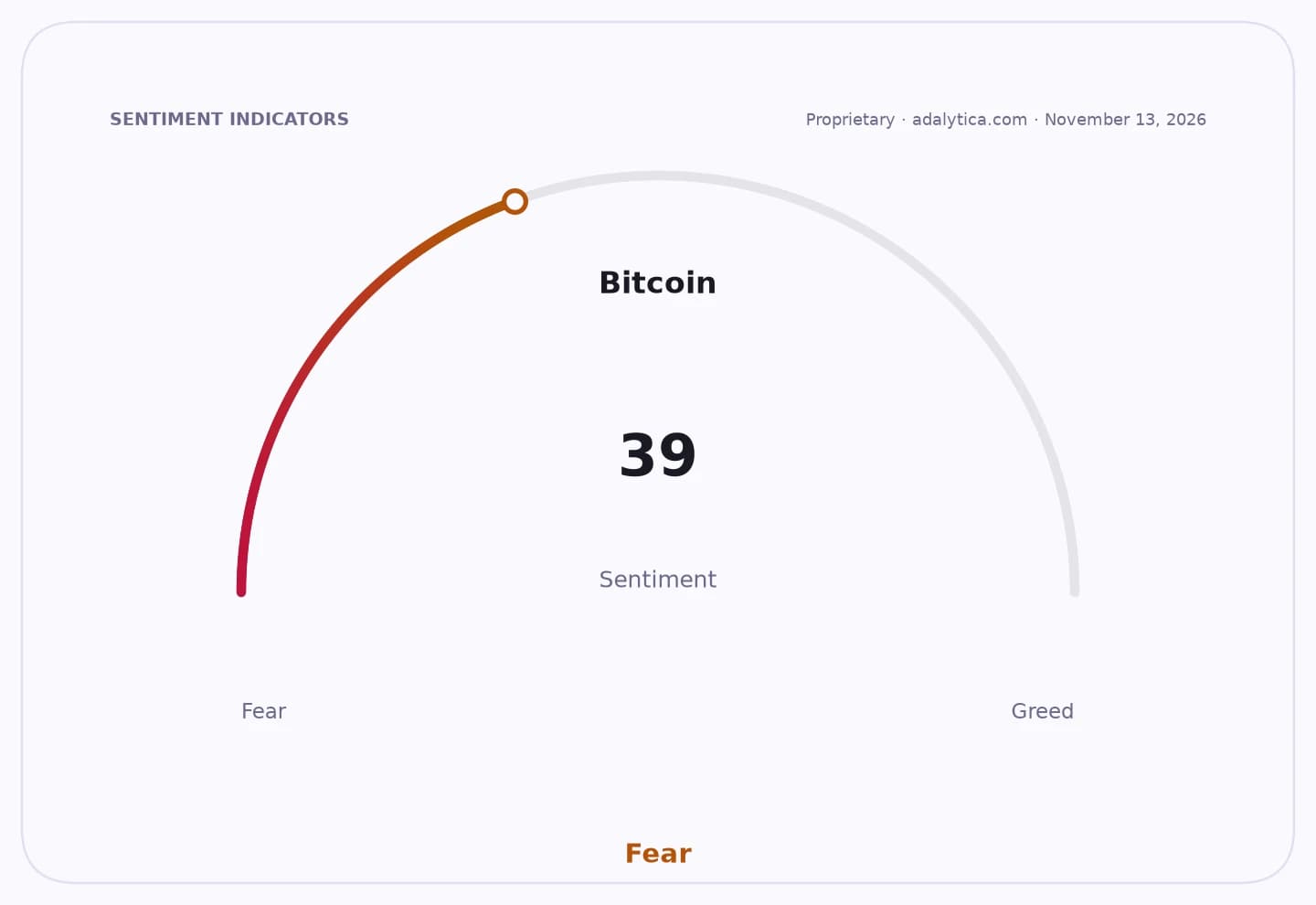
Broader crypto sentiment is mixed rather than euphoric. Adalytica’s Bitcoin Fear & Greed Index stood at 32, in neutral territory, while Ethereum sentiment was just 7, labeled extreme fear. That split helps explain why investors are likely to focus less on headline infrastructure fixes and more on whether any chain-specific development can translate into sustained usage and fee generation.
Against that backdrop, Remittix is trying to capture user attention at the application layer. Its public Earn product now accepts ETH, USDT and USDC deposits with weekly payouts and has reached $1.7 million in total value locked in five days, giving the project an early proof point for demand. Standard options advertise up to 17.4% APY, while eligible RTX holders can access up to 21.4% across qualifying pools.
The pitch is designed to be easier to evaluate than many crypto launches: users can compare live pools from Aave, Morpho, Fluid and Maple Finance, then decide whether the RTX-linked rate is worth the trade-off. For investors, that matters because products that convert speculative interest into deposits can create stickier capital flows than a token narrative alone.
USDT remains central to that demand picture. Adalytica’s USDT trade signals show extreme greed at 89, while the stablecoin itself continues to trade at $1 across the data set, reinforcing its role as the core funding asset for yield products and crypto payments. ETH, by contrast, is mired in extreme fear, with a reading of 7, which may help explain why stablecoin and dollar-linked deposits are seeing more practical usage than risk assets.
The near-term catalyst is whether BNB Chain’s hotfix restores confidence quickly enough to keep the network’s infrastructure narrative intact, while Remittix’s Earn product shows whether early TVL can hold and expand beyond the first wave of deposits. For investors, the split story is clear: operational stability supports the chain, but actual user capital still decides which crypto products gain traction.
| Entity | Gains | Losses |
|---|---|---|
| BNB Chain operators | ▲Stability restored | ▼Reputational pressure from a client bug |
| BNB holders | ▲Lower technical risk | ▼Weak price momentum |
| Remittix | ▲Early TVL traction | ▼Needs sustained deposit growth |
| Competitor yield protocols | ▲More comparison traffic | ▼Lose attention to a new entrant |