BNDES pumped R$254 billion into Brazil’s economy in the first nine months of the year, underscoring how the state development bank has become one of the country’s most important engines of investment just as private credit remains tight.
BNDES Lends R$254 Billion in Brazil

That matters because Brazil’s growth story is still heavily dependent on affordable financing for infrastructure, farms and industry. When the BNDES expands lending and guarantees, it is not just moving money around the system; it is helping projects get built, trucks get financed, factories modernize and smaller companies reach bank credit they might not otherwise secure. For investors, that can support activity across the real economy and, over time, improve earnings visibility for lenders, builders, industrial firms and exporters tied to domestic demand.
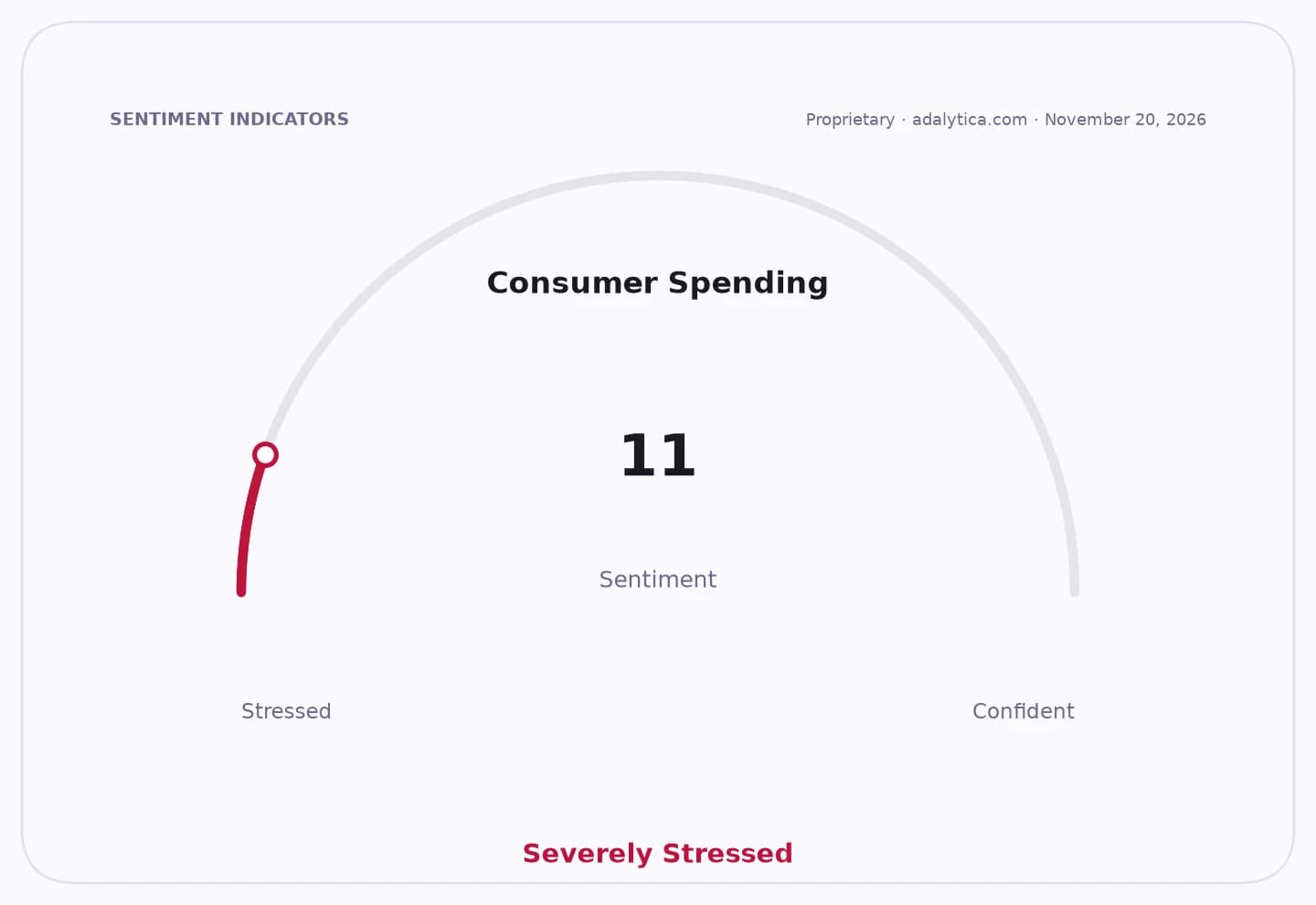
Sentiment Indicators

The total credit injection was up 9% from the same period a year earlier, excluding inflation. It included R$190.5 billion in loan approvals and R$63.6 billion in guarantees aimed at helping smaller businesses access financing from commercial banks. Disbursements reached R$135.9 billion, up 33%, reflecting the fact that many loans are paid out in tranches over several years.
Infrastructure took the largest share, with R$75.7 billion approved, followed by agriculture at R$42.9 billion, industry at R$40.8 billion and commerce and services at R$31.1 billion. The bank said R$166.9 billion of approved lending went to micro, small and medium-sized companies, a sign that the BNDES is still serving as a crucial second-tier lender for businesses that often struggle to borrow on attractive terms in the private market.
The message from management is that the bank is doing more than supporting policy goals. It is also operating like a highly profitable financial institution. Net income rose 18% to R$20.3 billion in the January-to-September period, while recurring profit increased 10% to R$12.3 billion. The bank said its return on equity was 17.6%, a strong figure for a state-owned lender and one that helps explain why BNDES remains a powerful tool for Brasília without appearing to need constant budget support.
Asset quality is another reason the bank matters. Inadimplência, or loans more than 90 days overdue, was just 0.05%, far below the broader financial system. That gives BNDES room to keep expanding credit without immediately stoking concerns about losses, even as some lenders face pressure from higher delinquency in consumer and farm portfolios.
For investors, the knock-on effects are broader than the bank itself. A sustained flow of subsidized and market-rate credit can help sustain capital expenditure, especially in infrastructure and industry, while also supporting rural investment and regional development in the Northeast and North. It can also shape the relative fortunes of Brazil’s listed banks, with state-directed lending often complementing rather than replacing commercial credit in segments that require guarantees or longer maturities.
The risk, of course, is that a bigger development-bank footprint can eventually distort pricing or invite political pressure over who gets financed and on what terms. But for now, the story is simpler: BNDES is back as a major channel of capital in Brazil, and that is supportive for long-term investors who want exposure to a more investment-led economy. The bank is worth watching as a barometer of credit growth, public policy and capital formation in Brazil.
| Entity | Gains | Losses |
|---|---|---|
| BNDES | ▲Bigger lending franchise | ▼Less room for caution |
| Brazilian economy | ▲More investment capital | ▼Higher policy dependence |
| Small and mid-sized firms | ▲Easier access to credit | ▼Fewer financing constraints |
| Commercial banks | ▲Shared credit growth | ▼More competition for borrowers |