Bolivia’s central bank has halted new dollar purchases and imposed a restricted reserve requirement on banks, a two-step move designed to drain liquidity and steady a currency market still under strain after the country abandoned its long-standing fixed exchange rate this summer.
Bolivia Central Bank Halts Dollar Purchases

The measures matter because they show the Banco Central de Bolivia is using the brief breathing room created by recent reserve inflows to defend the new flexible regime before renewed demand for dollars forces a sharper adjustment. For investors, the signal is that policymakers are prioritizing stability over rapid reserve accumulation, while also trying to avoid another disorderly bout of peso weakness that could feed inflation and pressure domestic banks.
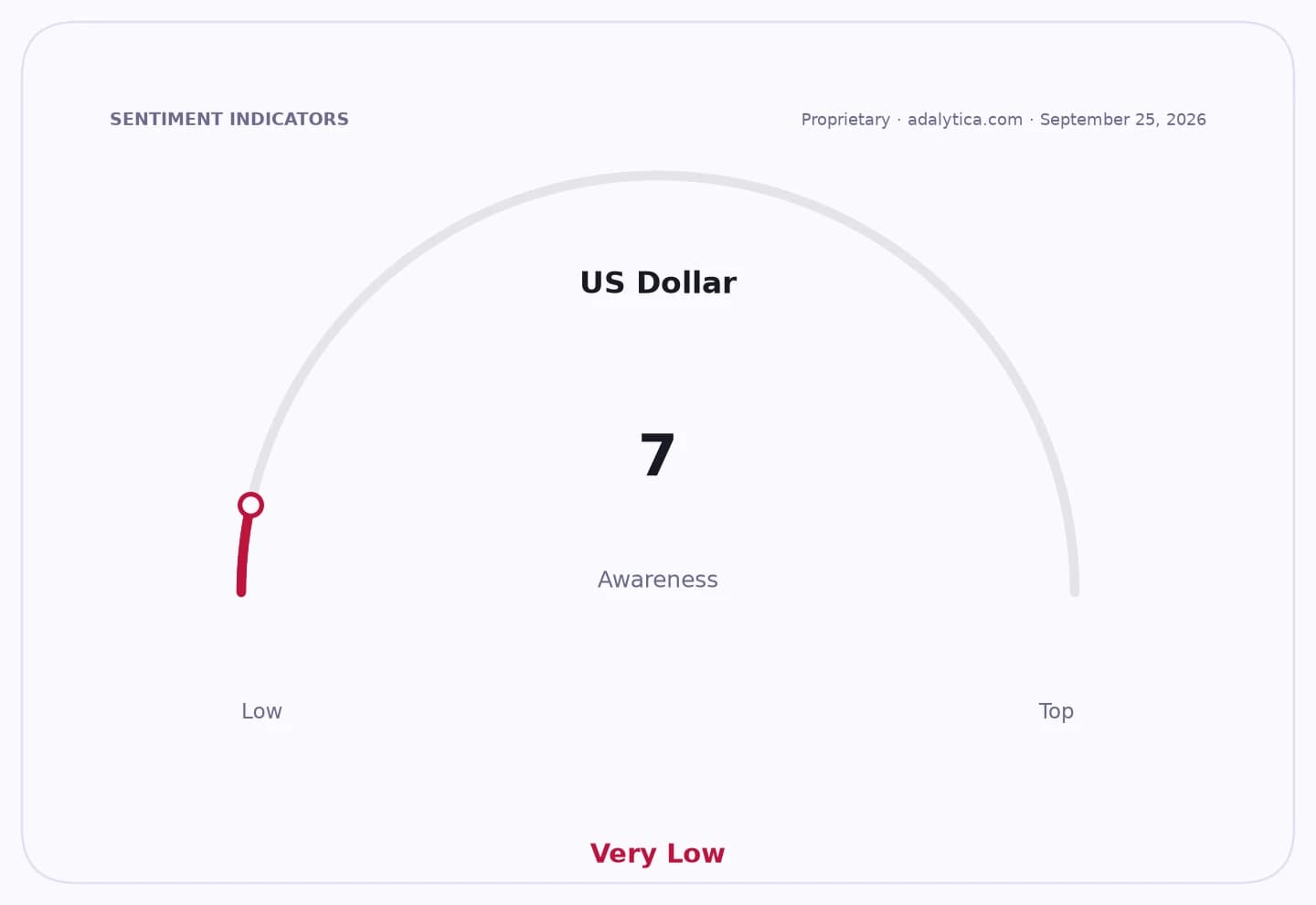
Sentiment IndicatorsⓘProprietary · adalytica.com · September 9, 2026
This is a snapshot — live sentiment, awareness and momentum for 130+ markets update continuously in the dashboard.Open AlphaPulse
The central bank said its latest liquid foreign-exchange resources had climbed above $1 billion, giving it enough cover to meet international payments and cushion the market. That buffer includes expected external disbursements, among them $1.9 billion linked to a deal with the International Monetary Fund that the government has sent to parliament for approval.
At the same time, the bank introduced a restricted monetary reserve, effective Tuesday, requiring multiple banks to absorb liquidity equivalent to 3% of their local-currency deposits. The aim, the central bank said, is to sterilize part of the money created in recent weeks and preserve price stability. In practice, that makes funding conditions tighter for lenders and limits how much domestic cash can spill into dollar demand.
The policy shift comes as Bolivia tries to stabilize its financial system after years of pressure on foreign exchange reserves and mounting criticism of the 15-year fixed-rate regime, which ended June 29. The new daily-published exchange rate has already moved sharply, from 9.73 bolivianos at the start of the flexible system to 12.60 this Tuesday, versus 6.96 bolivianos that had held since 2011.
That devaluation dynamic is why the move is economically significant. A more flexible currency can relieve pressure on reserves and improve pricing of scarce foreign exchange, but it also raises the risk of imported inflation, higher corporate costs and public discontent. Bolivia said annual inflation has eased to 5%, the lowest since the peak of last year’s crisis, but that progress remains vulnerable if the currency slides too fast.
For banks, the new reserve rule tightens liquidity management at a time when depositors, importers and smaller businesses are already sensitive to exchange-rate volatility. For borrowers and retailers, the stakes are immediate: a weaker boliviano lifts the local cost of imported food, fuel, machinery and intermediate goods, and can squeeze margins in trade-heavy sectors.
The central bank’s willingness to pause dollar purchases suggests it believes the reserve position is temporarily stronger, helped by more than $400 million generated under the new regime and liquid reserves of $1.134 billion, with total reserves at $4.255 billion as of Aug. 14. But the policy also underscores how dependent Bolivia remains on external financing and reserve management rather than a durable return of confidence in the currency.
Investors will watch whether parliament approves the IMF-linked funding, whether the exchange rate continues to adjust without triggering a rush into dollars, and whether the central bank is forced to sell gold or other assets to maintain stability. The near-term read-through is that Bolivia is trying to buy time: enough to keep the flexible system intact, but not so much that liquidity and inflation become the next pressure point.
| Entity | Gains | Losses |
|---|---|---|
| Bolivia central bank | ▲Reserve buffer, policy flexibility | ▼Less room to buy dollars |
| Commercial banks | ▲Clarity on FX regime | ▼Tighter liquidity conditions |
| Importers and consumers | ▲Lower risk of disorderly devaluation | ▼Higher local-currency costs |
| IMF-linked funding supporters | ▲External financing path | ▼Parliament approval risk |