Bolivia has locked in $34 million to build the road links needed to make its new binational bridge to Brazil useful, a small but important step toward turning a symbolic crossing into a working trade corridor.
Bolivia funds road links for Brazil bridge corridor
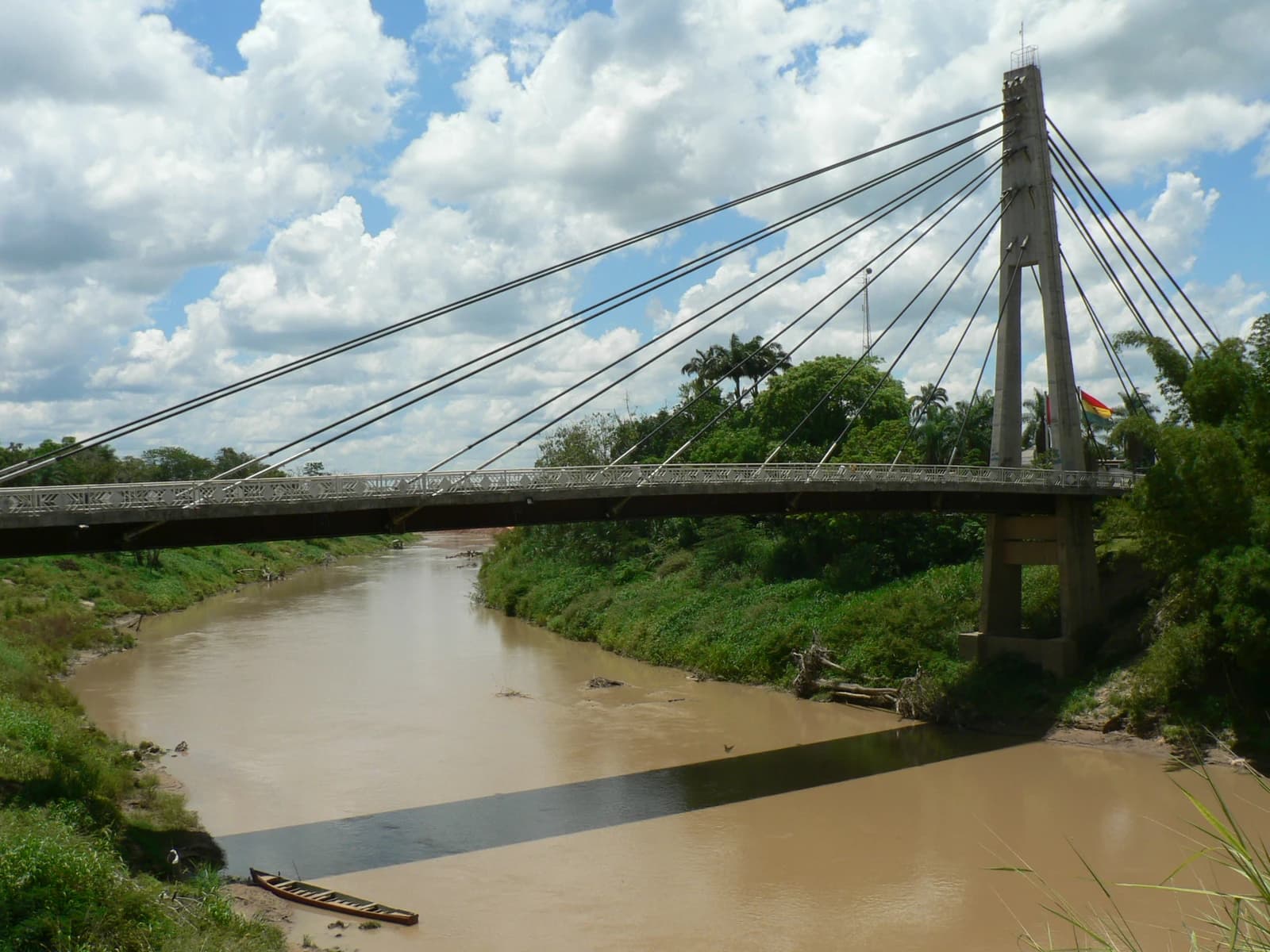
President Rodrigo Paz said the money will pay for Brazil’s access road and 16 to 18 kilometers of connecting highway on the Bolivian side, tying the Guayaramerín–Guajará-Mirim bridge into the national road network and, eventually, the Beni region and the wider bioceanic corridor. For investors, the significance is not the bridge itself so much as the infrastructure around it: trade flows do not move on steel alone, but on roads, power and customs-ready logistics.
That makes the project economically meaningful for Bolivia’s remote Amazonian frontier, where weak transport links have long kept commerce expensive and slow. A new crossing over the Mamoré River could lower shipping costs, improve access to Brazilian markets and strengthen the case for more private and public investment in northern Bolivia. If the corridor develops as planned, it could also support agriculture, fuel distribution and construction activity in a part of the country that has typically been left out of the main growth story.
The bridge already has momentum on the Brazilian side, where construction has started. On the Bolivian side, the newly confirmed funding removes one of the biggest bottlenecks: without feeder roads, even a strategically located international bridge can become an underused asset. That is why Paz also paired the announcement with plans for about $200 million in electricity connections for Beni and Pando — a reminder that infrastructure works best as a network, not as a one-off project.
For long-term investors, the broader narrative is straightforward. Bolivia and Brazil are edging toward a more integrated Amazon trade lane, and the winners are likely to be companies and sectors exposed to transport, materials, utilities and regional commerce. The near-term payoff may be modest, but the compounding effect of better connectivity in an undersupplied region can be powerful over years, not quarters.
The main risk is execution. Roads in difficult terrain are expensive to finish and even more expensive to maintain, while cross-border projects can be slowed by politics, permitting and financing delays. Still, the fact that Bolivia is now putting money behind its side of the crossing suggests this is moving from diplomatic promise to economic reality. For investors looking for durable infrastructure themes, it is worth watching.
| Entity | Gains | Losses |
|---|---|---|
| Bolivia’s northern regions | ▲Better market access | ▼Transport isolation |
| Brazil-Bolivia trade | ▲Lower logistics costs | ▼High-friction border routes |
| Construction and utilities | ▲New spending cycle | ▼Delayed-project contractors |
| Consumers and farmers | ▲Cheaper freight, more access | ▼Higher-cost supply chains |