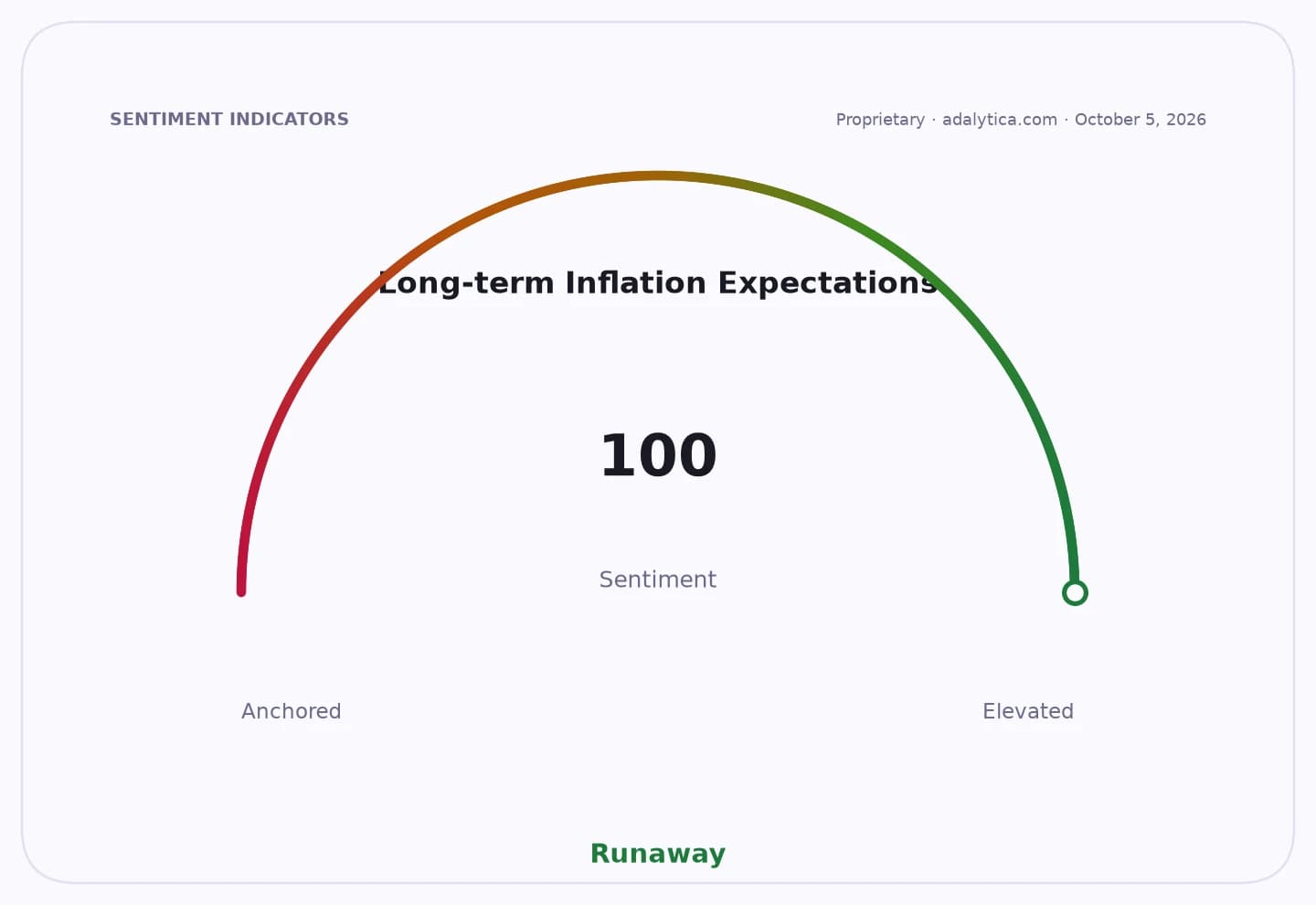
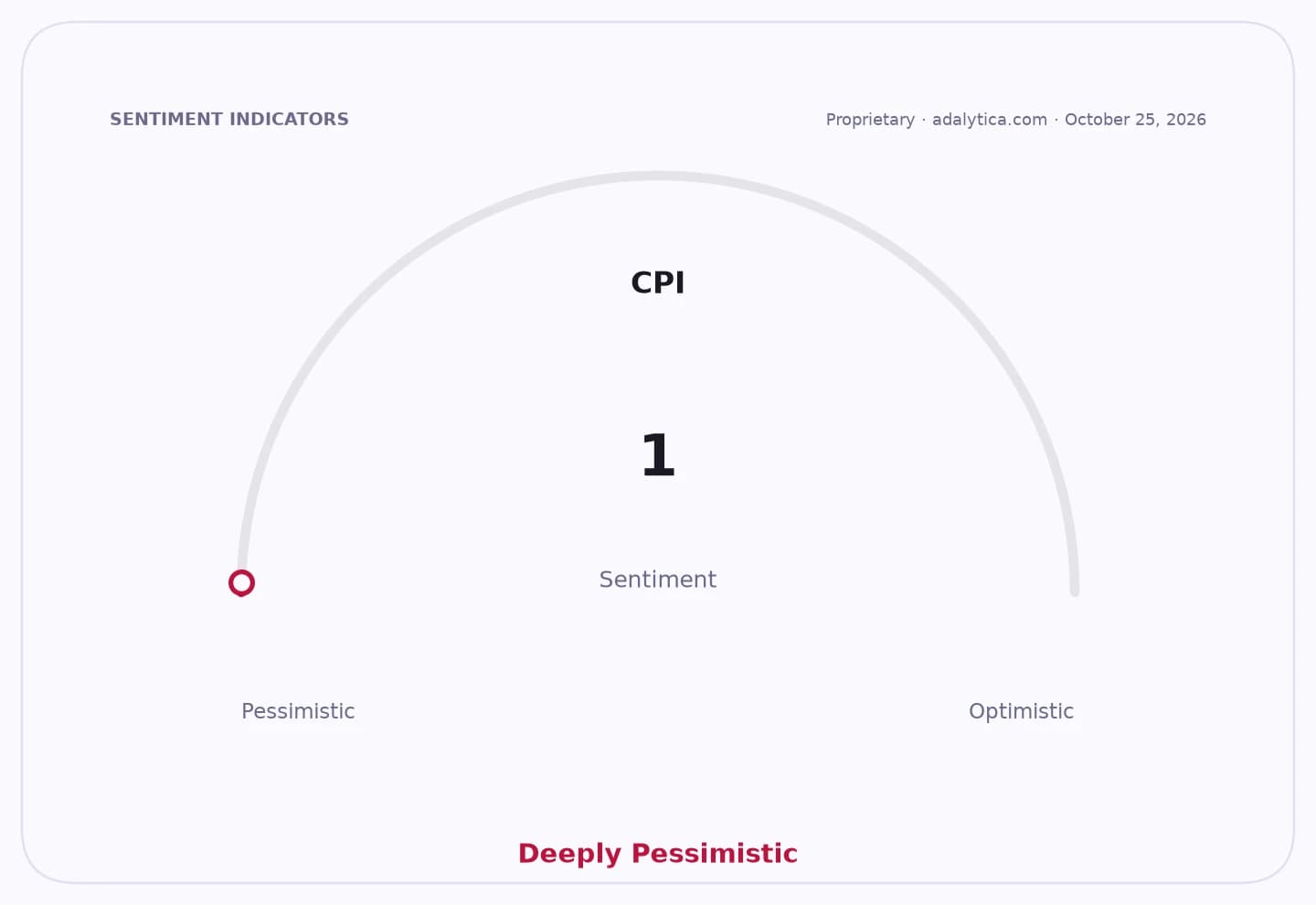
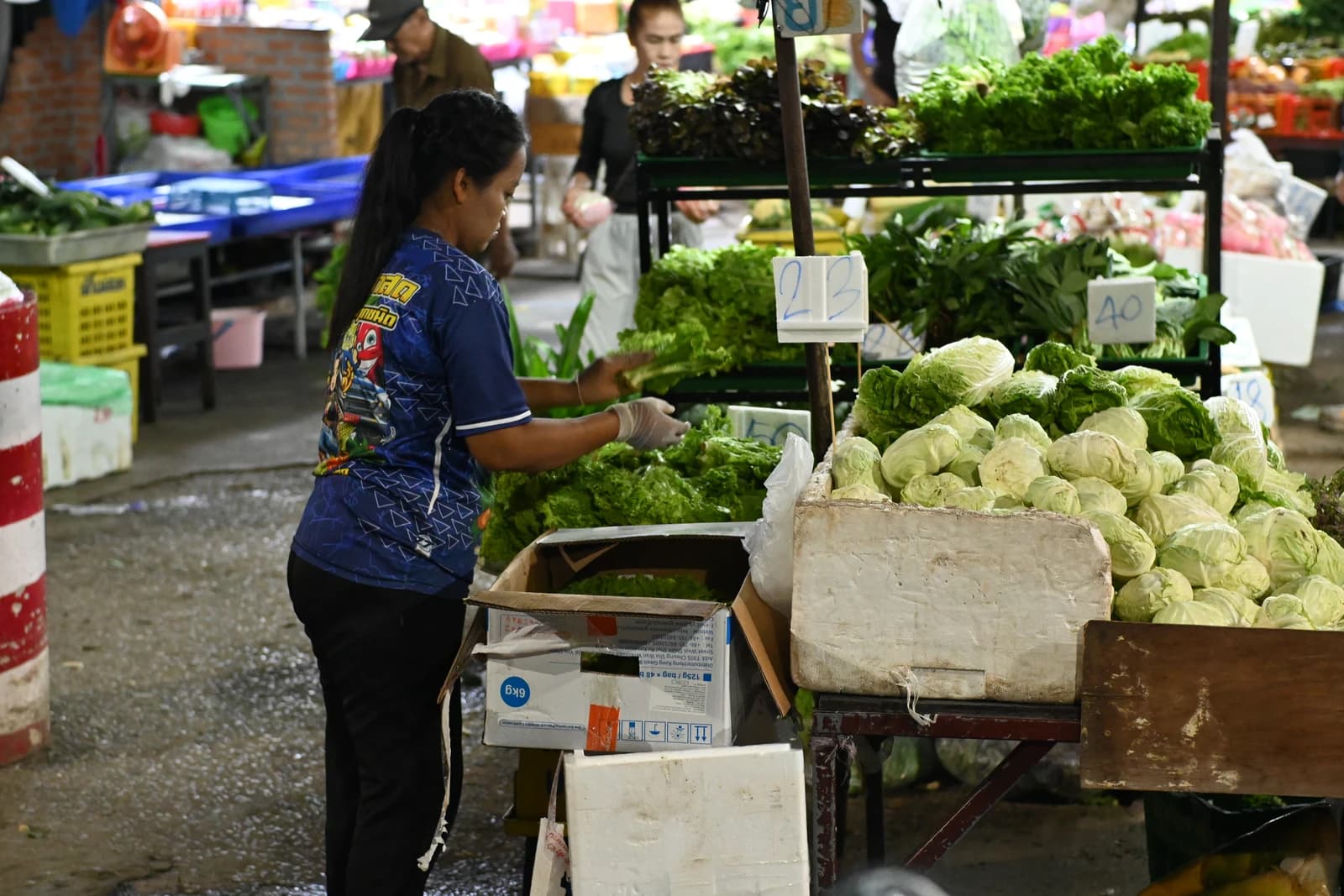
Bolivia is sliding into a painful stagflationary mix of faster food inflation, weaker purchasing power and a supply shock that could keep prices climbing into year-end, making life harder for households and raising the risk that small businesses shut their doors.
Bolivia faces stagflation as food prices climb
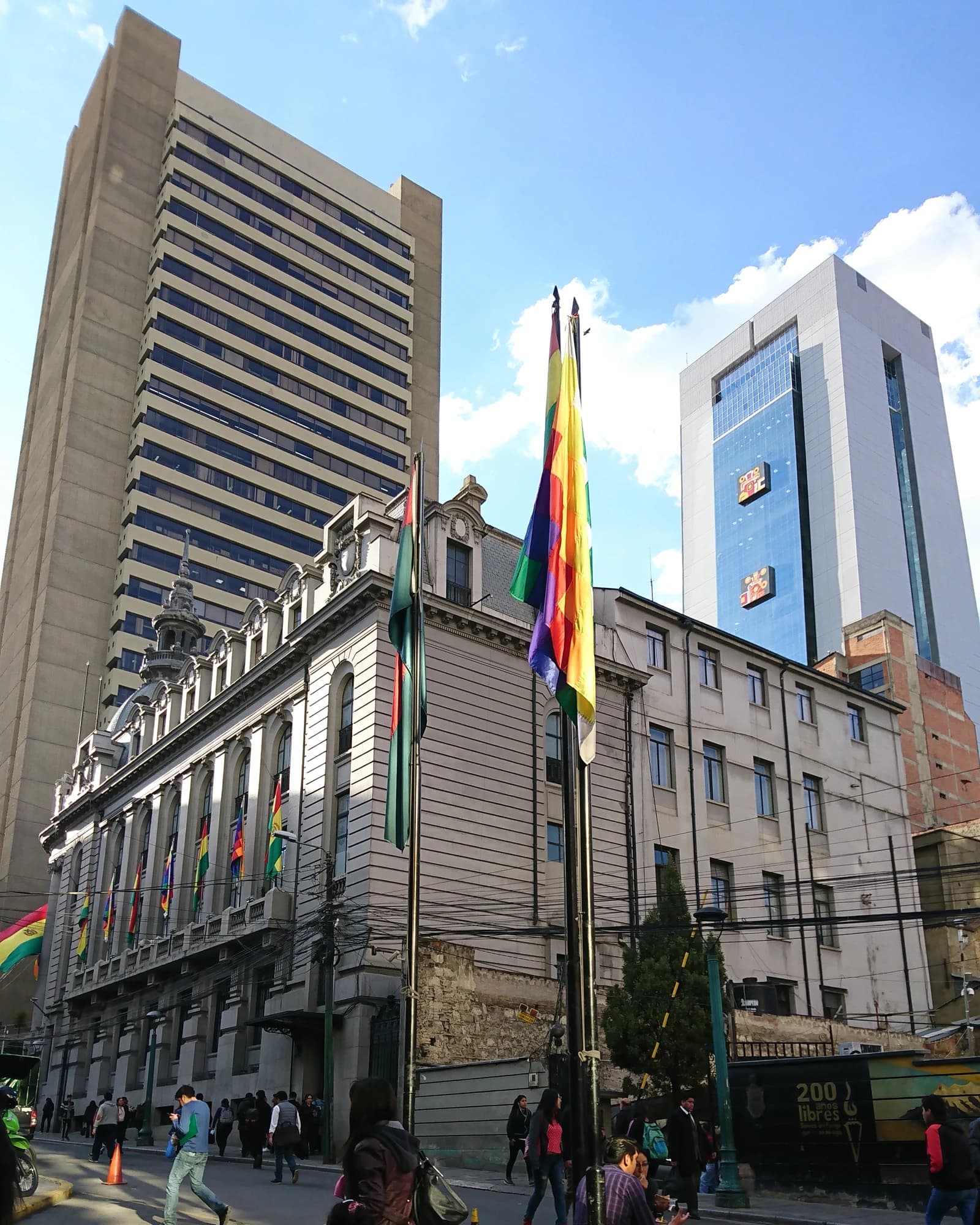
That is the core warning from economist Gonzalo Chávez, who said the country is facing a “perfect storm” as fuel costs ripple through transport and distribution, traders pass along earlier stock bought at a much weaker exchange rate and consumers rush to mark up prices on expectations that gasoline will get more expensive.
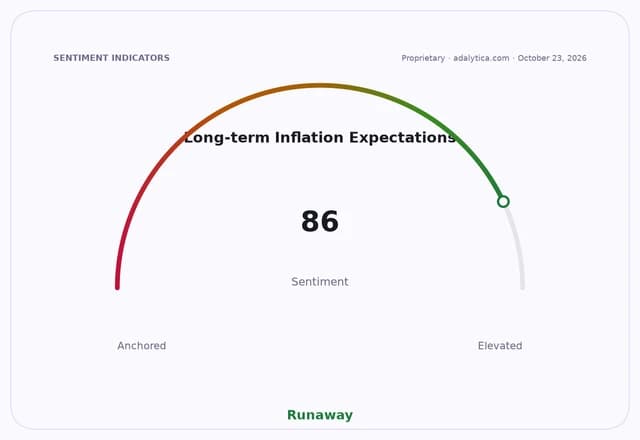
Sentiment IndicatorsⓘProprietary · adalytica.com · October 23, 2026
This is a snapshot — live sentiment, awareness and momentum for 130+ markets update continuously in the dashboard.Open AlphaPulse
For investors, the message is bigger than one month’s price spike. When inflation is driven by supply disruptions and expectations rather than strong demand, central banks and policymakers have fewer easy fixes. Growth weakens at the same time that prices rise, which tends to compress corporate margins, hit discretionary spending and punish the weakest balance sheets first.
The pressure is already visible in basic staples. Chávez said the daily bread known as pan de batalla has risen 25% in the south of La Paz to 1 boliviano a piece, while a quintal of rice in Santa Cruz climbed from 360 bolivianos to 500, a 40% jump. He said similar increases are working their way into chicken, cheese and other household essentials.
At the heart of the problem is a supply shock, not just a currency move. Chávez pointed to higher fuel costs raising transportation and commercialization expenses, merchants still selling inventory bought when Bolivia’s parallel dollar traded near 12 to 12.60 bolivianos, and a psychological layer that matters as much as the math: people expecting more inflation tend to lift prices ahead of time.
That expectation channel is especially dangerous because it feeds on itself. If households believe the next month will be worse, they pull forward purchases. If businesses expect another fuel hike or a gasoline adjustment, they raise prices early. In an economy already under strain, that can lock in inflation even as demand cools.
Chávez estimated wages have lost about 34% of their purchasing power, a number that helps explain why the inflation shock is so corrosive. Consumers are not just paying more; they are able to buy less. That is what gives stagflation its bite: fewer sales for producers, lower real incomes for workers and more stress on small firms that do not have the cash buffers to absorb higher costs.
He also warned that if producers are forced to sell below cost, many small companies with little financial room will fail, especially after what he described as 53 days of blockades that damaged physical capital and disrupted the productive apparatus. In practical terms, that means fewer suppliers, less competition and potentially even more pricing power for the survivors.
The timing matters too. Chávez said October, November and December could be “very inflationary” months, with price pressure likely showing up more forcefully in official data. For markets, that raises the odds of a tougher policy backdrop, more pressure on consumer spending and continued stress for sectors tied to local demand.
The broader investment takeaway is that Bolivia’s problem is not a normal inflation bump. It is a classic stagflation warning sign, where the economy weakens as prices rise. That is usually a bad mix for equities, small businesses and household spending, but it can create opportunities in more resilient companies with pricing power, hard-currency revenues or low reliance on domestic purchasing power.
For long-term investors, the story is worth watching less as a trading event and more as a reminder of how quickly inflation psychology can damage an economy when supply chains are already strained. If Bolivia cannot restore confidence in prices, fuel and the currency, the pain could deepen well beyond this quarter.
| Entity | Gains | Losses |
|---|---|---|
| Consumers | ▲None | ▼Purchasing power |
| Small retailers and producers | ▲Price pass-through, if any | ▼Margins and survival |
| Inflationary assets/pricing power businesses | ▲Revenue resilience | ▼None |
| Bolivia’s economy | ▲None | ▼Growth, stability, confidence |