Peru’s inflation rate remains above the central bank’s target band and is likely to force another rate increase as weather and fuel shocks keep price pressures alive.
Peru Inflation Stays Above Target as Rate Hike Looms
Consumer prices in Peru rose 4.17% in the year through September, according to the national statistics agency, still well above the Banco Central de Reserva’s 1% to 3% target range. The monthly reading of 0.14% brought inflation in the first nine months of the year to 4.02%, underscoring that the disinflation process has stalled just as policymakers face a fresh supply-side hit from El Niño.
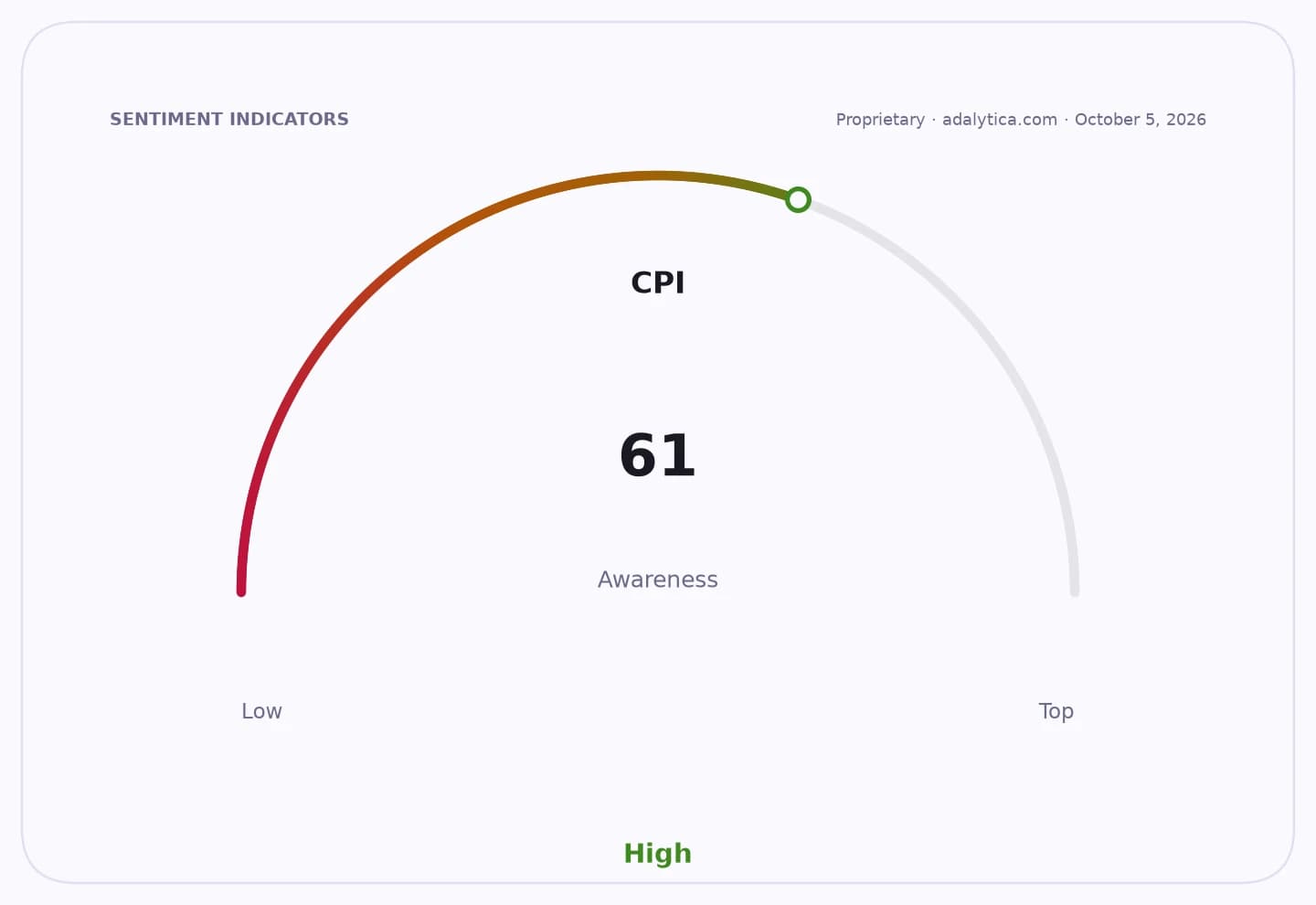
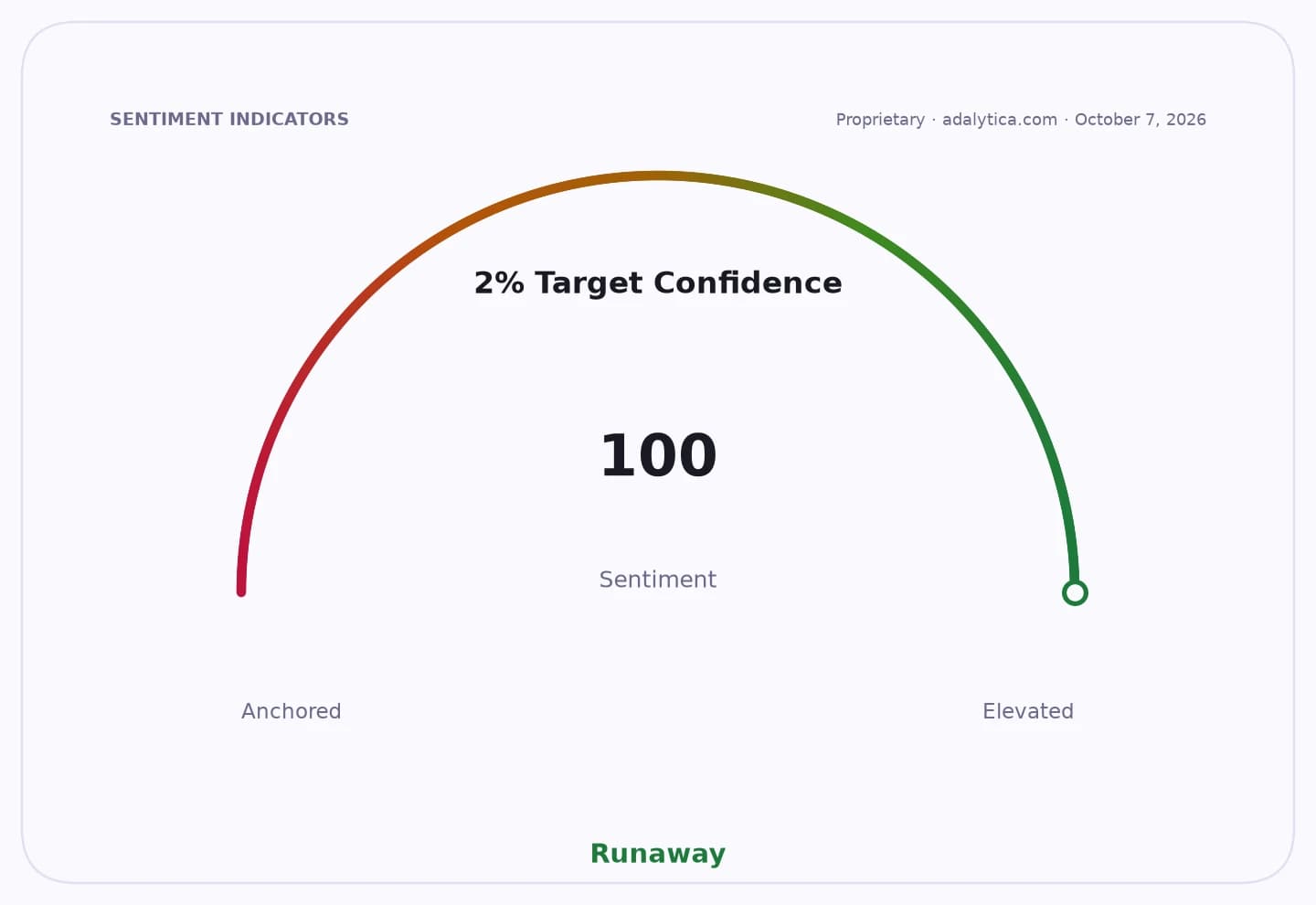
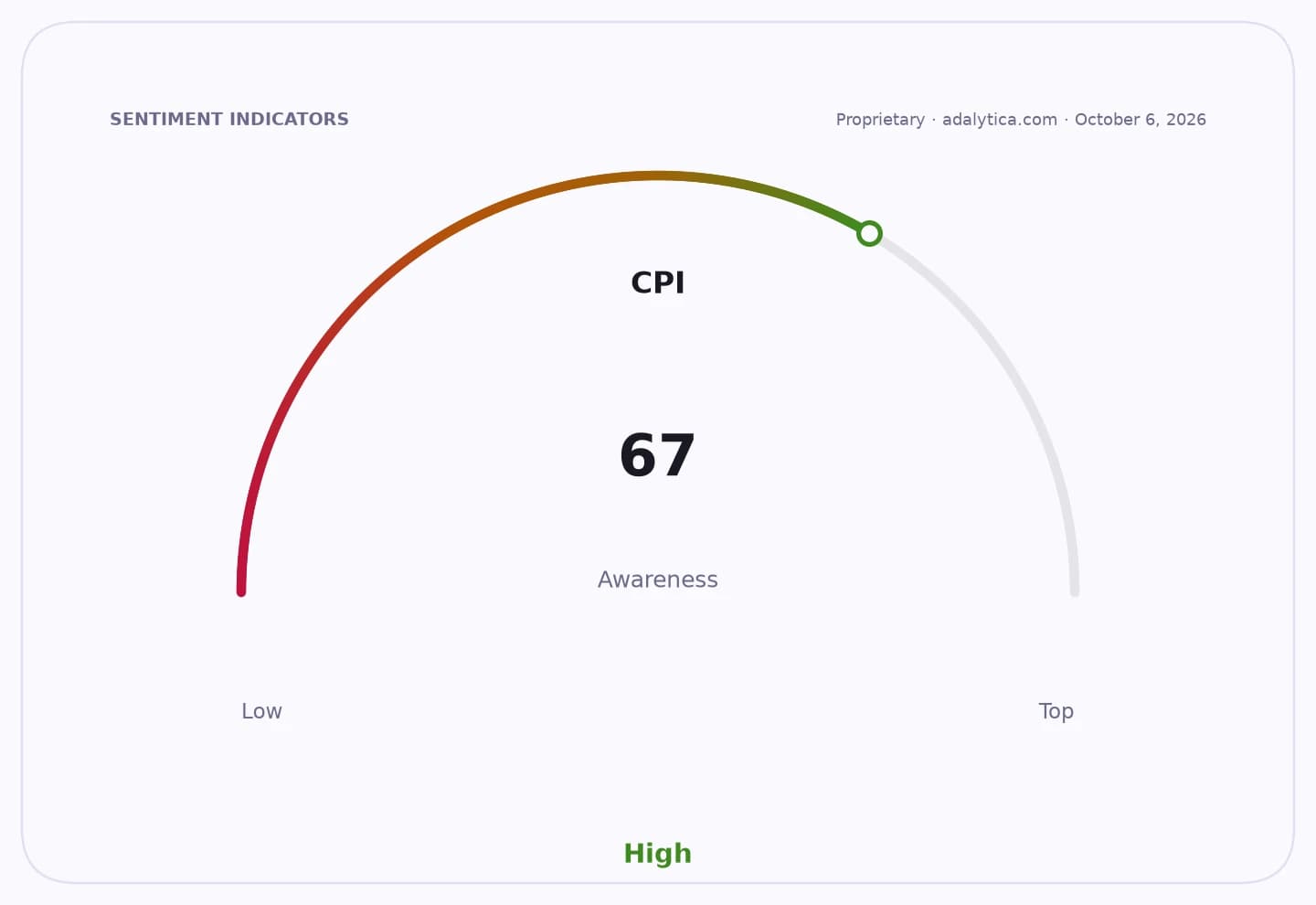
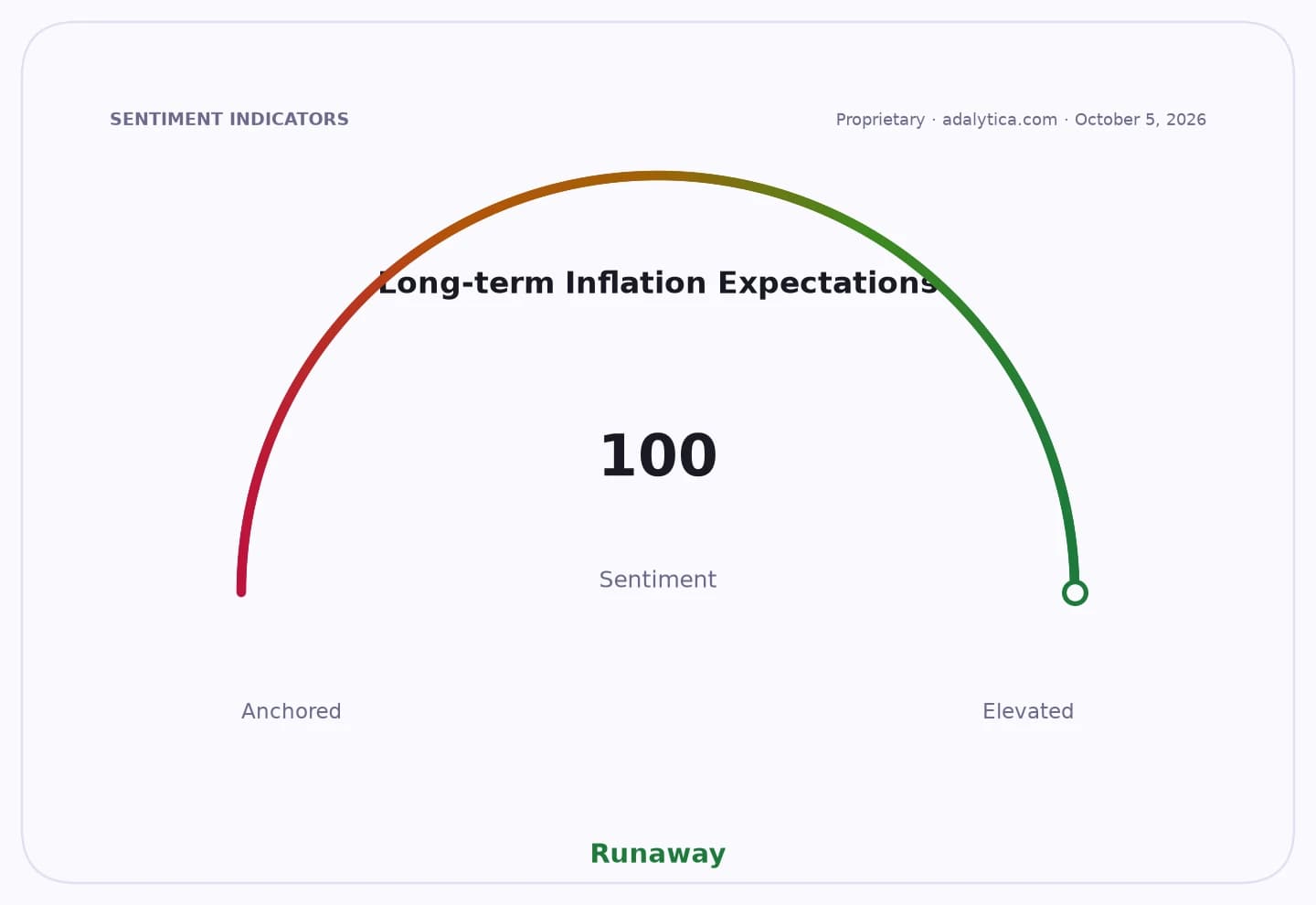
Sentiment IndicatorsⓘProprietary · adalytica.com · October 5, 2026
This is a snapshot — live sentiment, awareness and momentum for 130+ markets update continuously in the dashboard.Open AlphaPulse
The policy implication is straightforward: the central bank cannot yet declare victory over inflation. Core measures are not giving much comfort either. Prices in Lima excluding food and energy rose 0.07% in September, while annual inflation in the capital reached 4.55%, above the national average and far from the target band. Economists say the next move will depend on whether these shocks feed into expectations, which already moved slightly above target in July and August.
For investors, that raises the odds of tighter monetary policy, higher local funding costs and continued pressure on domestic demand. Preliminary estimates cited by analysts point to at least one 25-basis-point rate hike from the BCR in the final quarter. That would matter for bank margins, consumer credit and duration-sensitive assets, while reducing the room for an early easing cycle.
The composition of inflation also makes the problem harder to solve with policy alone. In Lima, vehicle fuel prices rose 5.2% in September, taxi fares increased and restaurant and hotel prices climbed. Food prices were mixed, with declines in fish, chicken and fruit offset by sharp gains in tomatoes and sugar. Transportation, food and restaurants contributed around 3.5 percentage points, or about 80% of annual inflation, showing how concentrated the pressure remains.
The bigger risk is that the next leg of inflation comes from the weather. Intense rains expected from October in northern regions such as Tumbes, Piura and Lambayeque could disrupt agricultural supply, especially for crops such as lime and mango that have already been damaged in earlier El Niño episodes. A possible early onset of the Niño Costero would further complicate food availability and keep upside pressure on prices into year-end.
That is why analysts are revising forecasts upward rather than looking for quick relief. Macroconsult said it expects to lift its inflation projections for 2026 and 2027, while the Instituto Peruano de Economía sees inflation ending 2026 near 4.5% before gradually returning to the target band in 2027. The pattern suggests the central bank is dealing not with a one-off spike, but with a persistent mix of imported energy costs, weather disruptions and fragile expectations.
For bond and equity investors, the message is that Peru’s rate path is now tied as much to climate risk as to demand conditions. A further tightening would support the sol but could weigh on growth-sensitive sectors and delay any recovery in domestic consumption. The clearest beneficiaries are short-duration assets and those positioned for higher yields; the losers are borrowers, retailers and other businesses dependent on cheaper credit and stable food prices.
| Entity | Gains | Losses |
|---|---|---|
| Banco Central de Reserva | ▲Inflation credibility | ▼Growth flexibility |
| Sol / short-duration assets | ▲Higher-rate support | ▼Easing expectations |
| Banks / lenders | ▲Wider margins | ▼Credit demand |
| Consumers / retailers | ▲Lower inflation only if shocks fade | ▼Purchasing power |