AI-powered travel assistants are starting to challenge the funnel that has long fed Booking, Expedia and Airbnb, and investors are already marking down the risk that generative tools could weaken traffic, bookings and pricing power across online travel.
Booking, Expedia and Airbnb Fall on AI Risk
The shift matters because the $1 trillion-plus travel market has been built on search, comparison and conversion — the exact steps AI agents are being trained to compress. If travelers increasingly ask ChatGPT, Gemini or Claude to plan and book trips end to end, the big online travel platforms could lose their role as default intermediaries, forcing them to spend more on marketing or accept lower margins.
Sentiment Indicators
The pressure is showing up in the shares. Booking Holdings has fallen to $144.91 from $212.49 in late August, while Expedia has dropped to $234.96 from $328.79 in late August and Airbnb has slipped to $170.36 from $189.43 over the same period. All three are trading below their 50-day moving averages, with Booking and Expedia also below their 200-day averages, a sign that the market is recalibrating growth assumptions rather than treating the selloff as a short-term wobble.
The concern is not just that AI can help consumers plan a holiday faster. It is that the tools can steer demand toward a narrower set of destinations, hotels and activities, potentially reducing the fragmentation that online travel agencies have monetized for years. That creates a two-sided problem for investors: less traffic from search and social channels, and a risk that AI-native booking tools sit between customers and suppliers, weakening brand loyalty.
The companies are not standing still. Booking says it is pursuing an “AI-powered traveler experience” in its latest filing, while Expedia describes generative AI as both a competitive threat and a growth opportunity. Airbnb has gone a step further, disclosing an intellectual-property sale and transaction agreement with a recently formed artificial intelligence lab, underscoring how quickly the sector is trying to adapt rather than wait for disruption to deepen.
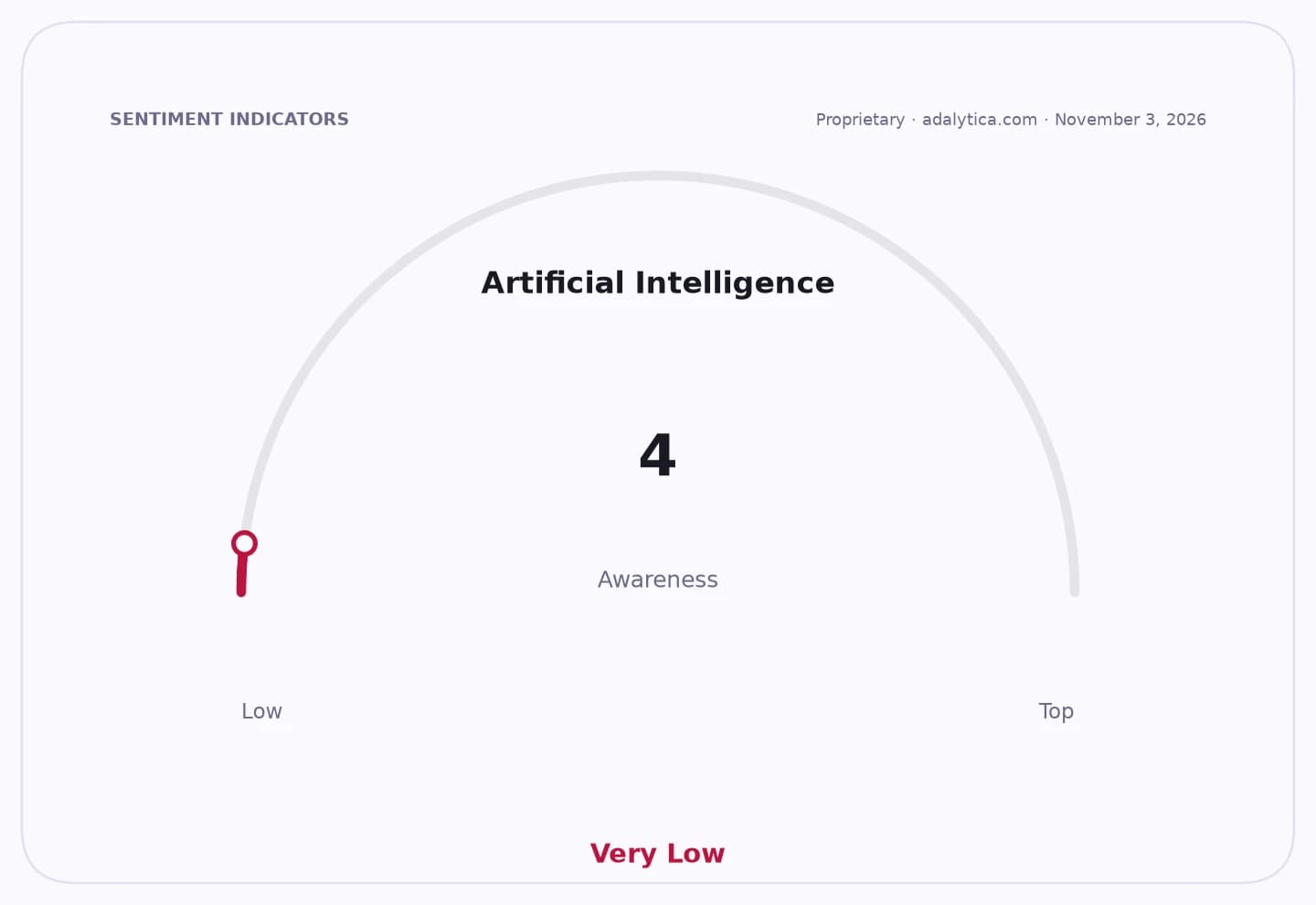
But the market is treating adaptation as an open question, not a solution. Booking’s RSI is 41.6, Expedia’s is 28.0 and Airbnb’s is 49.5, levels that suggest the recent drop has left Expedia especially oversold while sentiment across the group remains fragile. In the broader market, Adalytica’s AI sentiment gauge shows “Extreme Fear” at 11, even as awareness remains at 96, a combination that points to intense attention but little confidence in the durability of the current AI trade.
For investors, the key issue is whether AI becomes an incremental acquisition tool for online travel companies or a substitute distribution layer that siphons off bookings. The next earnings updates and product launches from Booking, Expedia and Airbnb will be watched for evidence that they can keep travelers inside their own ecosystems as AI agents become a more common starting point for trip planning.
| Entity | Gains | Losses |
|---|---|---|
| AI booking tools | ▲More traveler engagement | ▼Traditional booking traffic |
| Booking, Expedia, Airbnb | ▲Can automate trip planning if they adapt | ▼Margin pressure and weaker direct traffic |
| Airlines and hotel suppliers | ▲Potentially more direct access via AI | ▼More dependence on new intermediaries |
| Consumers | ▲Faster, more personalized trip planning | ▼Fewer choices if AI funnels demand to a few destinations |