Brazil’s 2026 presidential race is shaping up as a contest over who can build the country’s digital infrastructure, regulate artificial intelligence and reduce foreign dependence on critical technology rather than simply promising more internet access.
Brazil 2026 race focuses on tech policy and AI
That matters because the next government will inherit a technology agenda that now cuts across health, education, industry, public services and national security. The competing plans also give investors and businesses a clearer read on whether Brazil leans toward state-led digital sovereignty, private-sector productivity or a more tactical mix of the two.
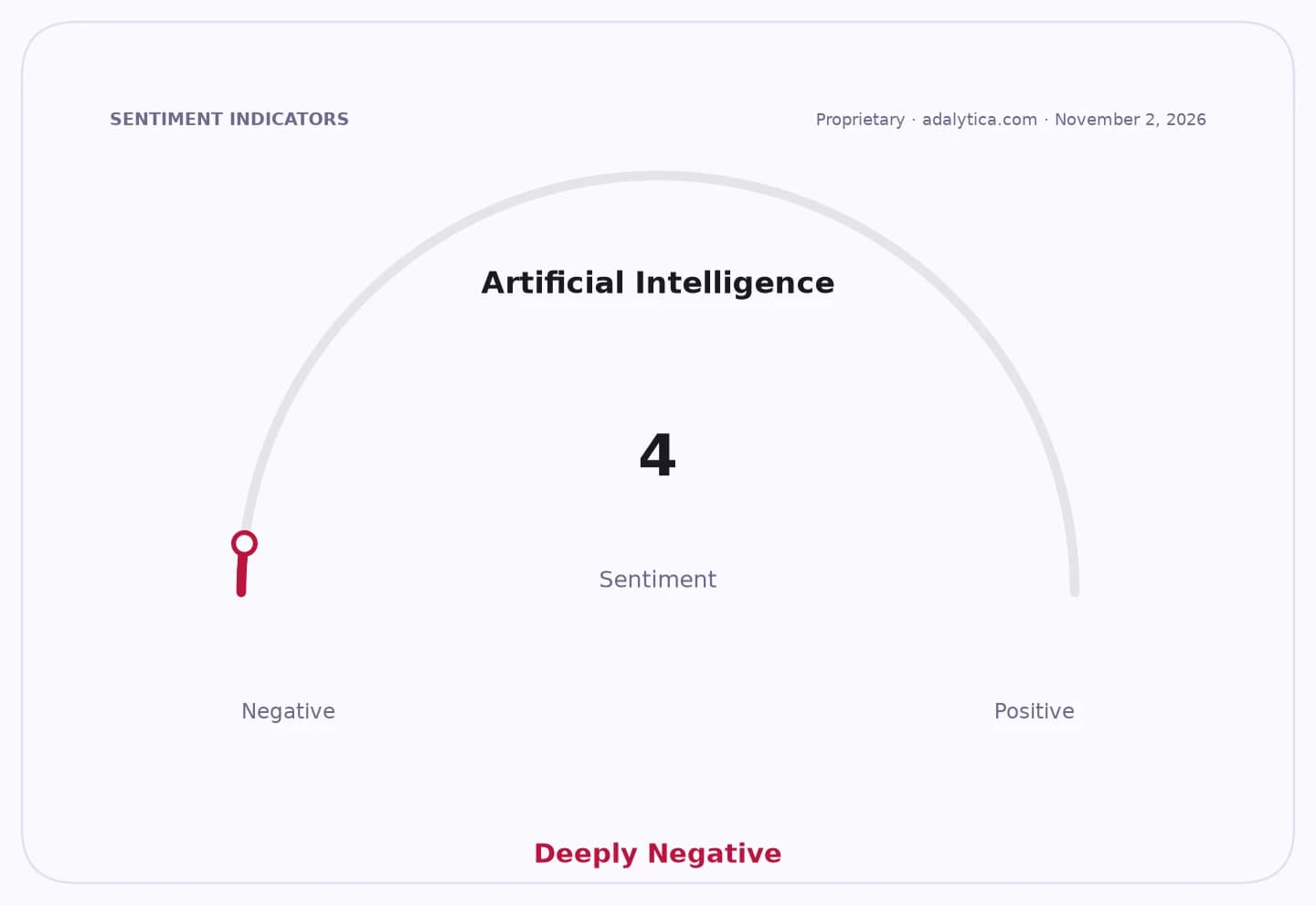
Sentiment Indicators
A study by the Labiia lab reviewed 592 pages from the government programs of six leading candidates — Augusto Cury, Flávio Bolsonaro, Luiz Inácio Lula da Silva, Renan Santos, Romeu Zema and Ronaldo Caiado — and identified 98 direct promises on technology, AI, science, digital education or technological sovereignty.
The report says the most heavily detailed plans are not necessarily the ones that mention technology the most. Augusto Cury cited “artificial intelligence” 56 times and Ronaldo Caiado 34 times, but Lula was the most frequent user of “innovation” on a proportional basis, with 22.4 mentions per 10,000 words.
What matters more for post-election accountability is whether those promises are executable. Caiado’s program contained 22 tech-related pledges, with an average of 3.05 execution signals — such as named implementers, deadlines, funding or measurable targets — per promise. Renan Santos averaged 3.00 signals, while Zema posted 2.57, Cury 2.39, Lula 2.38 and Flávio Bolsonaro 2.08.
That gap is important for investors because it suggests some programs are closer to policymaking than campaign rhetoric. Promises tied to budgets, agencies and milestones are easier to monitor, and more likely to affect procurement, regulation, telecom investment, cloud infrastructure, semiconductor policy and AI adoption in the public sector.
The study also shows a clear split in policy priorities. Flávio Bolsonaro centers on digital public services such as identity systems, health scheduling and an AI assistant, while Lula ties technology to sovereignty, industrial policy and rights, including data centers, cloud, connectivity, Portuguese-language models and AI regulation.
Caiado’s plan is the most explicit on cibersecurity, semiconductor policy, AI risk-based regulation and human oversight, while Renan Santos focuses on critical minerals, rare earths and AI for agribusiness. Zema frames technology around productivity, private investment and performance-based funding for universities.
For Brazil’s tech sector, that means the election is less about whether digitalization continues than about who controls it and how aggressively the state intervenes. For telecoms, cloud providers, data-center operators, AI vendors and industrial suppliers, the outcome could shape everything from public procurement to localization requirements and the pace of regulatory enforcement.
The report does not name a winner, but it does show a broader political shift: technology is no longer treated as a niche modernization theme. It is becoming a test of state capacity, industrial strategy and control over strategic dependencies — all issues likely to stay central as the campaign intensifies and candidates face scrutiny over how their promises will be financed and executed.
| Entity | Gains | Losses |
|---|---|---|
| Candidates with detailed plans | ▲Clearer accountability | ▼Less room for vague promises |
| State-led sovereignty agenda | ▲More control over digital assets | ▼Private-sector flexibility |
| Telecoms, cloud and AI suppliers | ▲Larger policy-driven demand | ▼Higher regulatory uncertainty |
| Investors seeking clarity | ▲Better visibility on execution | ▼Risk from uneven funding and timelines |