Brazil’s move to phase out the 6x1 work schedule is forcing companies and unions into a race against the clock, with the biggest economic risk now centered on how renegotiated agreements will affect payroll costs, labor relations and ultimately inflation.
Brazil 6x1 workweek change raises labor cost risk

The constitutional amendment that ends the 6x1 model gives companies and unions just 60 days to realign collective agreements that conflict with the new rules, a deadline that labor lawyers say is already creating stress across the market. Under the transition, the workweek is set to fall from 44 hours to 42 hours in two months and to 40 hours a year later, but the text also says incompatible collective clauses lose effect after two months — a provision that could shift bargaining leverage toward unions and open the door to court disputes.
Sentiment Indicators
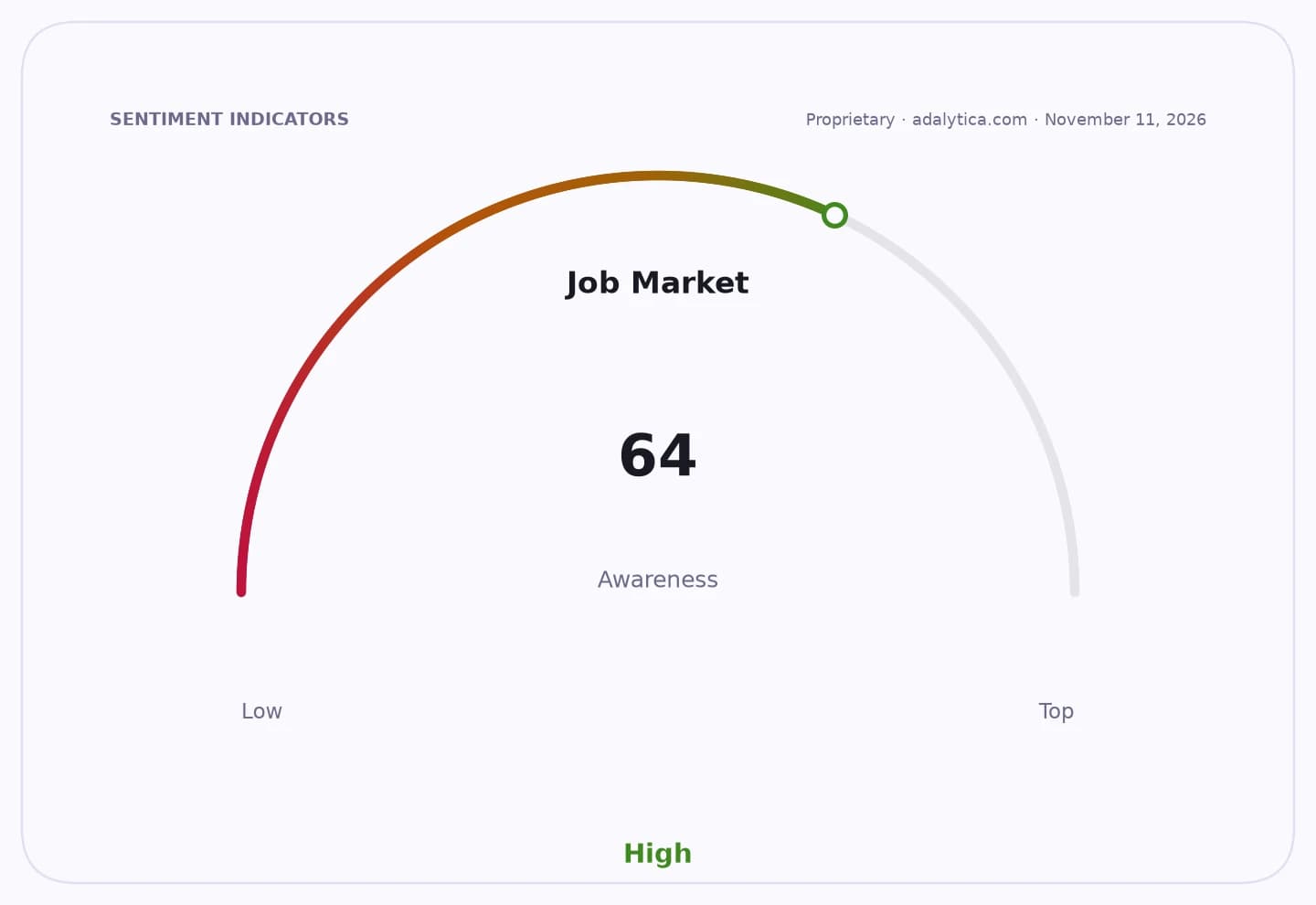
That matters because the change is not being implemented through a single national agreement but through company-by-company talks with individual unions, multiplying the number of negotiations and raising the risk of uneven outcomes. Lawyers interviewed by CNN Money say employers are scrambling to identify clauses that may no longer be valid and to reopen discussions before the December 16 deadline, while unions may be able to extract compensation for shorter hours without accepting equivalent wage restraint. In practical terms, that creates a direct test of how much labor costs can rise in sectors already facing margin pressure.
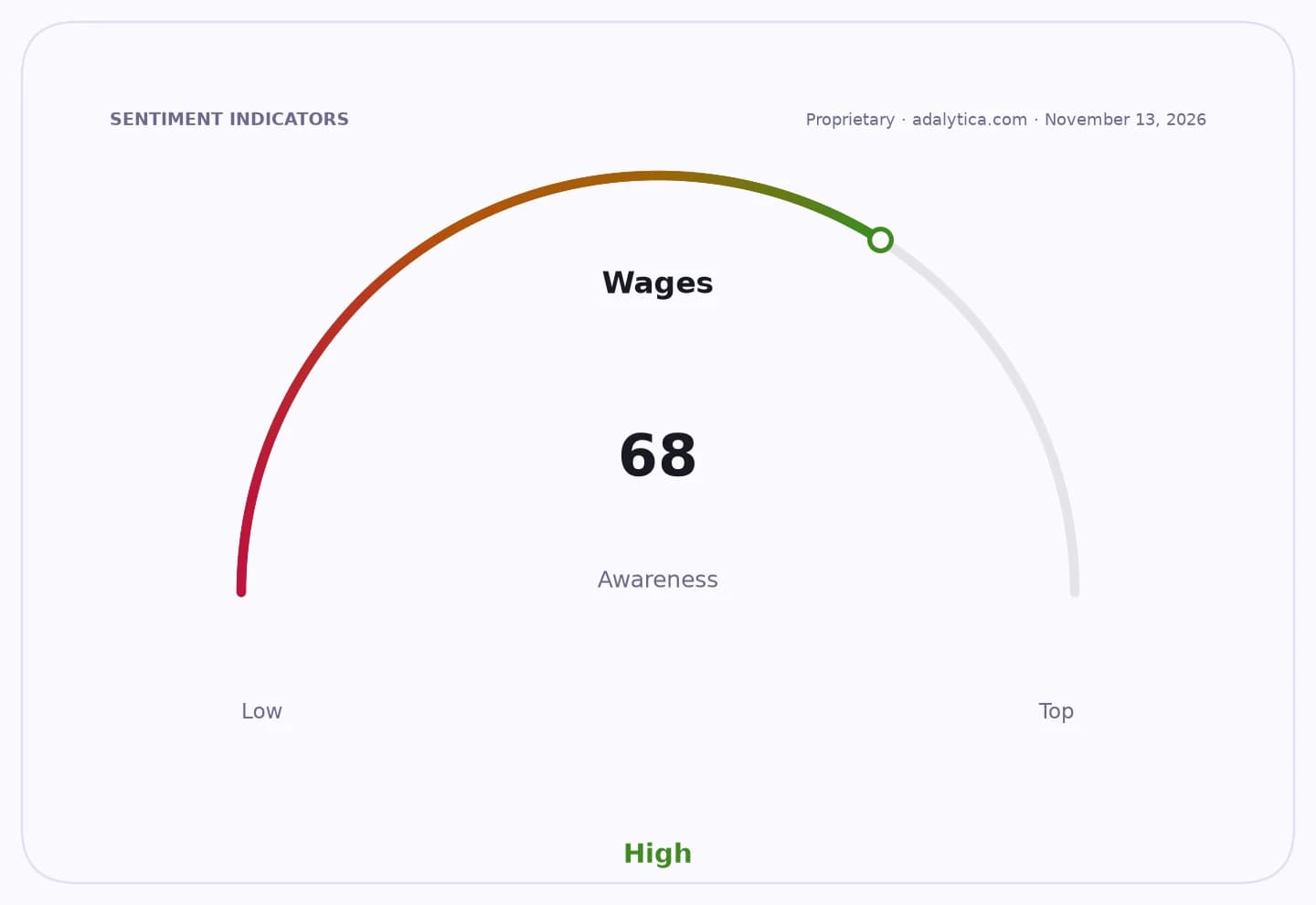
The central uncertainty is wages. Under current pay formulas, fewer weekly hours and fewer workdays can mechanically reduce hourly pay unless companies adjust the calculation; the amendment, however, says workers should not suffer pay cuts during the transition. That leaves a gap between legal intent and payroll mechanics, one that lawyers warn could end up in the courts. For investors, the risk is not just legal noise: if companies are forced to preserve wages while trimming hours, labor expenses per unit of output could rise, feeding through to prices in labor-intensive industries.
The ambiguity is already generating conflicting interpretations. A group of labor judges posted a theory on social media suggesting that if there is no deal within two months, workers could move straight to a 40-hour regime. The Superior Labor Court has not issued a binding ruling or standard interpretation, leaving companies exposed to different readings of the same amendment. That kind of legal uncertainty tends to delay capital planning, complicate hiring decisions and widen the range of outcomes for corporate earnings.
The petroleum sector is among the clearest stress tests. Offshore workers already operate on special rotations, often 14 days on and 14 days off, making it unclear how the end of the 6x1 regime will interact with 24/7 platform operations. Petrobras already has a collective agreement that provides for a 40-hour week and a 14-days-worked, 21-days-rest schedule, but private-sector operators may not be so well insulated. Any need to increase staffing, pay overtime differently or negotiate bespoke offshore terms could lift operating costs in a strategically important industry.
For unions, the amendment is a rare source of leverage. For employers, it is a deadline-driven bargaining problem with potential second-order effects on prices and profits. For policymakers, it is now a question of whether the legal framework can absorb a nationwide shift in working time without creating distortions that spill into litigation, industrial relations and inflation. The next catalyst is the December 16 cutoff, after which the market will know whether Brazil’s shorter workweek is being implemented through orderly bargaining or a wave of disputes.
| Entity | Gains | Losses |
|---|---|---|
| Unions | ▲Stronger bargaining power | ▼Little pressure to concede |
| Employers | ▲More worker retention if agreed smoothly | ▼Higher labor costs, legal risk |
| Offshore oil firms | ▲Clearer rules if sector carve-outs emerge | ▼Disruption to shift schedules |
| Workers | ▲Shorter hours without pay cuts | ▼Uncertain wage formulas |