Brazil’s Air Force shot down an unidentified Venezuelan aircraft carrying drugs after it entered Brazilian airspace without following required protocols, a rare and forceful escalation in the fight against trafficking along one of South America’s most porous borders.
Brazil Air Force Shoots Down Venezuelan Drug Plane
The incident matters because it shows Brazil moving from interception to lethal enforcement in a region where organized crime has taken deeper root and where security risks are increasingly colliding with migration, politics and cross-border trade. Two people aboard the aircraft were killed, underscoring the seriousness of the operation and the extent to which the frontier with Venezuela has become a national security flashpoint.
Sentiment Indicators
The Brazilian military said the plane ignored procedures after crossing into Brazilian territory, prompting fighter jets to act. The episode comes as military activity has intensified in Roraima, the northern state that borders Venezuela and has absorbed much of the spillover from the Venezuelan crisis. Brazil says about 580,000 Venezuelans have crossed that border fleeing Nicolás Maduro’s rule, adding pressure to local infrastructure, policing and public services while complicating enforcement against trafficking networks.
The backdrop is the expansion of the Aragua Train, or TDA, a criminal organization that has become active in human trafficking, weapons smuggling and illegal mining. Brazilian authorities also link the group to some of the country’s most powerful domestic gangs, including the Primeiro Comando da Capital and Comando Vermelho. That makes the border not just a migration route but a supply line for a broader transnational criminal economy.
The timing is politically sensitive. Relations between Brasília and Caracas have deteriorated since Venezuela’s disputed July 28 election, after which Maduro effectively entrenched himself in office through 2031. The worsening diplomatic climate raises the risk that security incidents will be read through a geopolitical lens, even as Brazil frames the response as a law-enforcement and sovereignty issue.
For investors, the immediate market impact is limited, but the story matters because persistent insecurity on Brazil’s northern frontier can raise fiscal and operational costs, sharpen demands for defense and policing spending, and increase political pressure on President Luiz Inácio Lula da Silva’s government to deliver tougher security policy. The broader trend also reinforces the case for companies exposed to logistics, frontier infrastructure and regional risk management to factor in a more volatile operating environment.
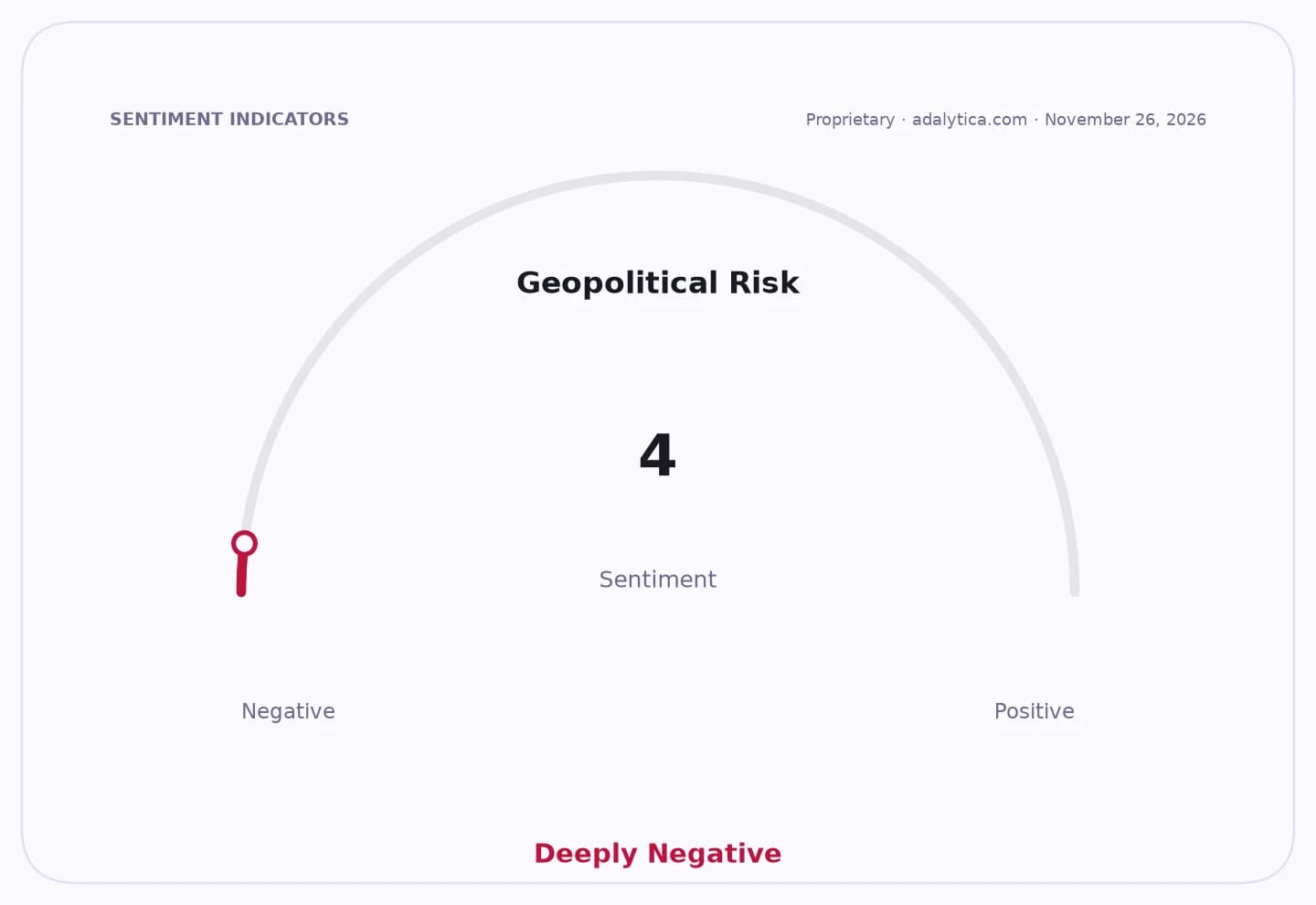
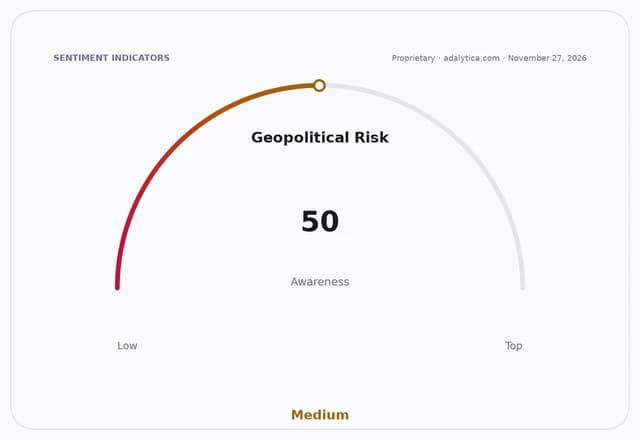
Adalytica’s Global Stability Sentiment gauge sits in extreme fear, reflecting a wider market sensitivity to geopolitical shocks. While this specific event is local, it fits a broader pattern: security risks in Latin America are becoming more material to policy, border enforcement and capital allocation, especially as organized crime adapts faster than institutions.
For Brazil, the key question is whether this becomes an isolated interdiction or the start of a more aggressive doctrine on the Venezuelan frontier. If the military maintains a higher operational tempo, the border could become a sustained source of political friction with Caracas and a continuing test of Brazil’s ability to contain transnational crime without escalating regional tensions.
| Entity | Gains | Losses |
|---|---|---|
| Brazil’s security forces | ▲Deterrence message | ▼Higher operational burden |
| Drug traffickers and TDA | ▲None | ▼Aircraft loss, disrupted route |
| Venezuelan government | ▲None | ▼More diplomatic pressure |
| Local border communities | ▲Tighter enforcement | ▼Higher security tension |