Brazil has approved a sweeping anti-organized crime law that gives prosecutors and police stronger tools to go after cartel leaders, seize assets and isolate criminal factions that control territory through violence.
Brazil anti-faction law boosts crime enforcement

President Luiz Inácio Lula da Silva signed the Anti-Faction Law on March 24, creating a new legal framework aimed at gangs, militias and paramilitary groups that attack public services or govern neighborhoods through intimidation. The law raises maximum sentences for leaders to 40 years, strips key benefits such as bail, amnesty and parole, and requires as much as 85% of a sentence to be served in a closed regime before progression.
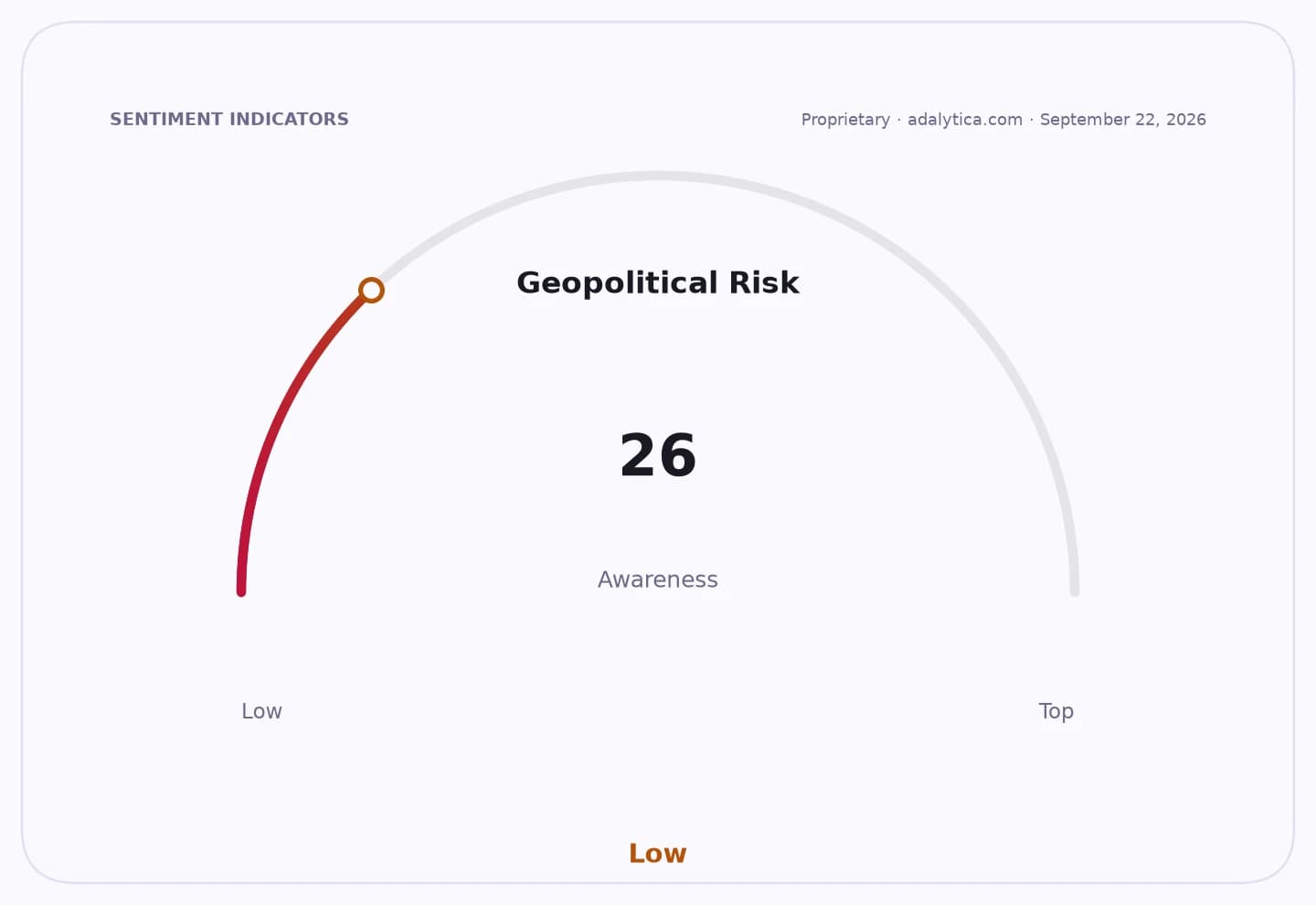
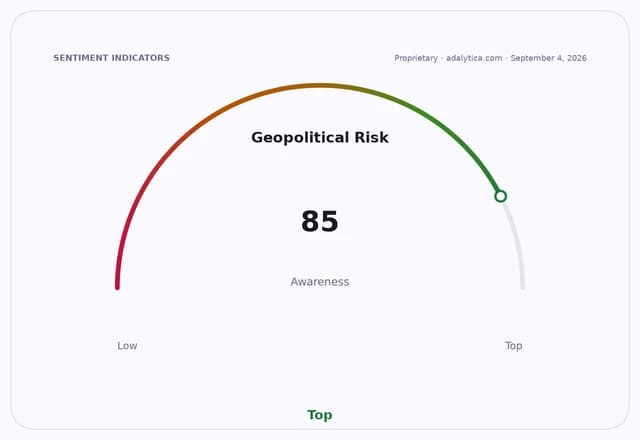
Sentiment IndicatorsⓘProprietary · adalytica.com · September 4, 2026
This is a snapshot — live sentiment, awareness and momentum for 130+ markets update continuously in the dashboard.Open AlphaPulse
For investors, the significance is not the headline sentence length alone but the state’s attempt to cut off the financing and operational networks that let organized crime spread into transport, utilities, real estate and logistics. Lula said the target is the “magnatas do crime,” the drug and violence bosses who often operate from luxury condos and hotels rather than the street level.
The law also broadens authorities’ ability to confiscate assets and resources, a move that could weaken criminal cash flows if enforcement is coordinated across federal and state police. Chico Lucas, Brazil’s national public security secretary, called it a new legal framework that should allow joint action by the federal government, states and police forces.
Lula vetoed two provisions, including one that would have punished people without proven links to criminal organizations and another that would have directed seized crime proceeds into the National Public Security Fund. The vetoes underscore the government’s effort to tighten enforcement while avoiding constitutional challenges.
The policy lands as Brazil faces persistent violence tied to organized crime and as investors continue to watch security conditions that can affect consumer activity, infrastructure execution and broader risk appetite toward the country. Brazil-focused assets, including the EWZ ETF and Petrobras ADRs, have recently shown elevated momentum, with EWZ trading around $37.86 and Petrobras near $20.12, levels that leave the market sensitive to any shift in domestic stability.
Technically, EWZ remains above its 50-day and 200-day moving averages, but the ETF’s RSI reading above 80 points to stretched conditions, while Petrobras is also trading well above its shorter-term averages. That leaves room for any improvement in Brazil’s security outlook to be read as a modest positive for sentiment, even if enforcement gains will depend on execution rather than legislation.
The next test is whether the new law translates into more seizures, arrests and coordination across jurisdictions without running into court challenges or prison-system bottlenecks. If it does, the biggest beneficiaries are likely to be public authorities and businesses exposed to extortion and insecurity; if it does not, organized crime networks will keep the upper hand.
| Entity | Gains | Losses |
|---|---|---|
| Brazilian federal and state authorities | ▲stronger enforcement powers | ▼higher execution pressure |
| Organized crime factions | ▲none | ▼harsher sentences, asset seizures |
| Brazilian businesses and consumers | ▲improved security prospects | ▼continued violence if enforcement fails |
| Brazil-linked investors | ▲lower political-security risk if effective | ▼policy disappointment if impact is limited |