Brazil’s recall of its ambassador to Buenos Aires turns a political spat into a potential economic and market problem for South America’s two biggest economies.
Brazil-Argentina Rift Raises Mercosur Risk
The immediate issue is not just Javier Milei’s offensive remarks, but the signal they send: relations between Brazil and Argentina, already fragile, are now strained enough to disrupt diplomacy, coordination on trade and regional policy, and the broader investment case for the Mercosur bloc. For investors, the escalation raises the risk that rhetoric spills into policy uncertainty at a time when Argentina is trying to stabilize its economy and Brazil is weighing how much regional volatility it can absorb.
Brazil’s foreign ministry summoned its ambassador after Milei accused the government of Luiz Inácio Lula da Silva of financing an anti-Argentina social media campaign during the World Cup, an allegation that has not been substantiated. The ambassador’s recall is a strong diplomatic rebuke and typically precedes a cooling of official ties unless one side moves quickly to de-escalate. In practical terms, that can slow talks on trade, customs, industrial cooperation and cross-border business issues that rely on steady political engagement.
The fallout matters because Brazil and Argentina are central to each other’s commercial flows. Brazil is one of Argentina’s most important trading partners, while Argentina is a key market for Brazilian exporters in autos, machinery, food and industrial inputs. Any deterioration in the relationship can add friction to supply chains and complicate business planning, even if the two countries stop short of formal trade retaliation.
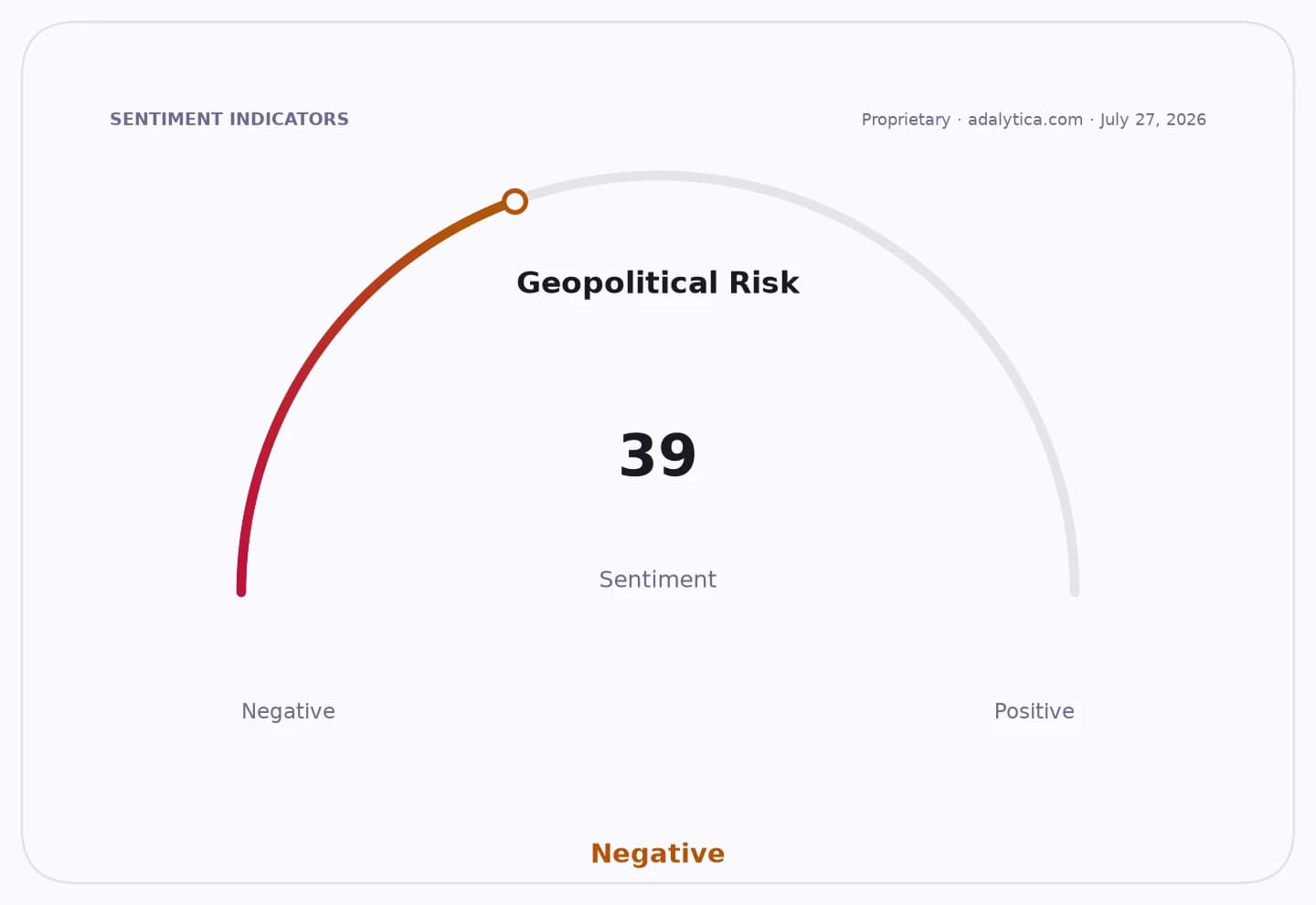
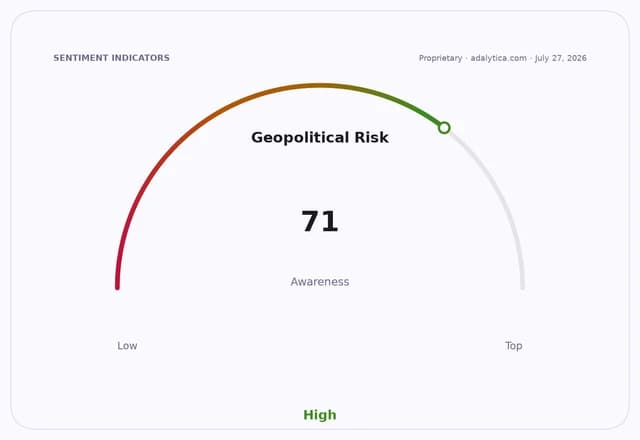
Geopolitical Risk vs EWZadalytica.com
Explore this data interactively — full history, time series and cross-market comparisons.Open AlphaPulse

For markets, the first-order effect is sentiment rather than immediate earnings damage. Still, the episode reinforces a broader geopolitical premium in Latin America just as global investors are already selective on emerging markets. Brazil-focused equities, such as the EWZ ETF, have shown strong recent momentum but remain vulnerable to headlines that alter the outlook for regional stability. Argentina-focused assets, including ARGT, are even more sensitive because diplomatic strain can feed concerns over policy predictability, trade access and foreign capital willingness.
The reaction also lands in a fragile macro backdrop. Adalytica’s Global Stability Sentiment has weakened sharply in recent sessions, while its U.S. dollar trade signals point to extreme fear. That kind of environment tends to amplify geopolitical shocks, even when the underlying dispute is largely rhetorical. Investors tend to reward countries and companies seen as insulated from political crossfire and punish those reliant on cross-border cooperation or import-dependent supply chains.
There are two ways this can play out. In the bullish case, the episode remains a contained diplomatic flare-up with limited commercial consequences, especially if business channels stay open and both governments avoid measures that hit trade. In the bearish case, the rhetoric hardens into a broader breakdown in cooperation, making Mercosur negotiations, investment decisions and bilateral commerce more uncertain at a time when Argentina can least afford it.
The next catalyst is whether either side seeks a face-saving reset. If diplomacy resumes quickly, the market impact should fade. If the dispute deepens, investors will start treating Brazil-Argentina tensions not as a passing spat but as another source of regional policy risk.
| Entity | Gains | Losses |
|---|---|---|
| Brazilian diplomats | ▲leverage for protest | ▼near-term bilateral calm |
| Milei’s domestic supporters | ▲anti-establishment posture | ▼credibility in regional ties |
| Brazilian exporters | ▲potential bargaining pressure | ▼trade certainty |
| Argentina-focused investors | ▲eventual reset if de-escalation follows | ▼policy and FX uncertainty |