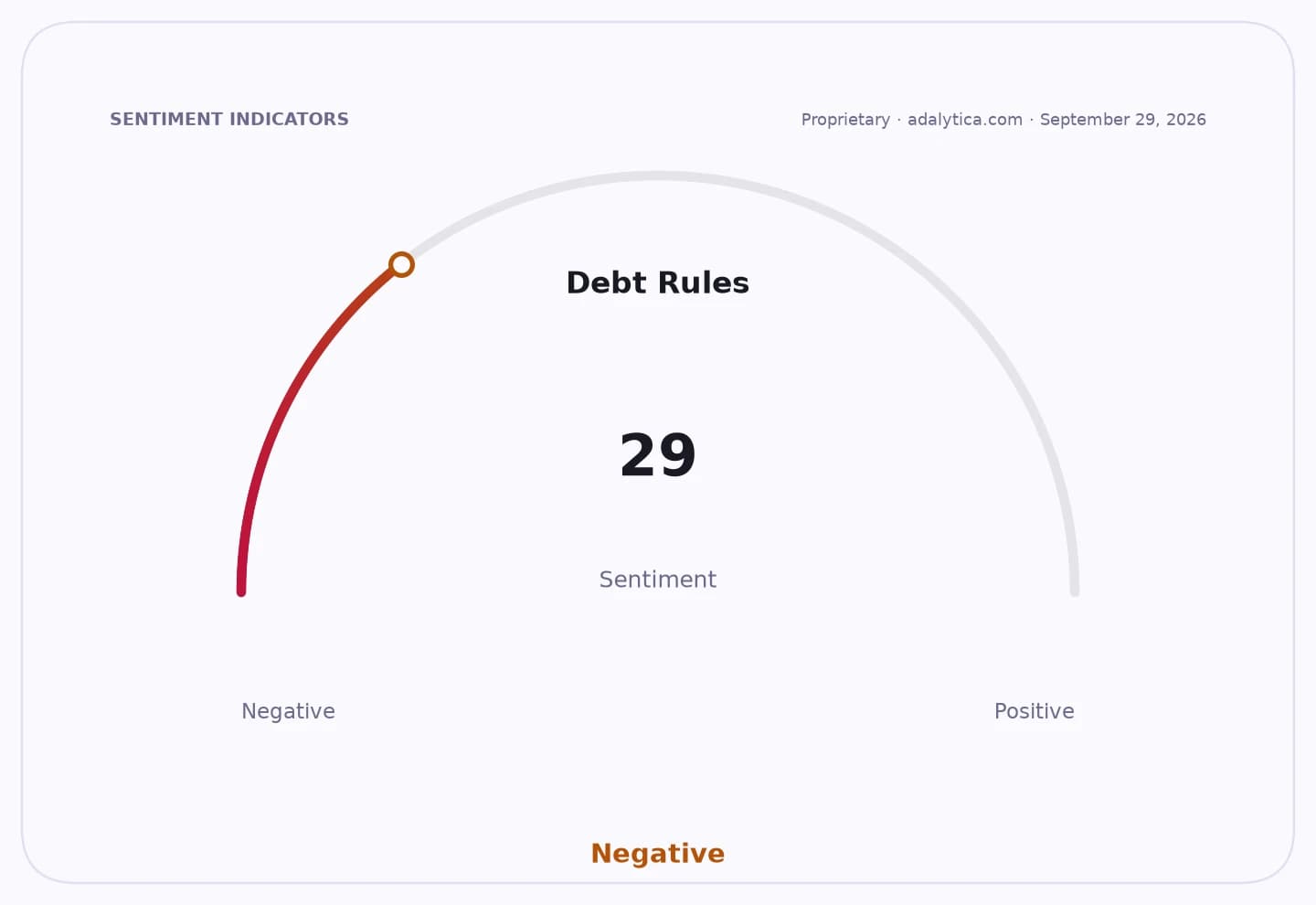
Bolsonaro’s pledge to have the government buy debt from banks in a future administration puts Brazil’s financial system at the center of a policy fight with direct implications for sovereign funding costs, bank balance sheets and investor confidence.
Brazil banks, sovereign debt, Bolsonaro proposal

The proposal matters because it would amount to an intervention in the country’s credit market at a time when investors are already sensitive to sovereign risk across developed and emerging economies. By shifting debt off banks’ books and onto the state, the plan could ease some pressure on lenders in the short term, but it would also raise questions about fiscal discipline, pricing transparency and the ultimate cost to taxpayers.
For investors, the issue is not simply whether the state can absorb the paper. It is whether such a move would strengthen or weaken the credit profile of Brazilian financial institutions and the sovereign at the same time. Banks with large domestic lending books could benefit from cleaner asset quality and lower capital strain if troubled debt is removed, but they could also face margin compression or valuation uncertainty if purchases are made at less-than-market terms. Sovereign bondholders, by contrast, would likely focus on whether the government is effectively socializing private credit losses.
The market backdrop makes those concerns more acute. Brazilian bank shares have been volatile in recent months, with Banco Bradesco preferreds and Banco Santander Brasil both trading below recent highs after sharp swings in volume and momentum. Bradesco’s BBDO closed at $3.60 on Oct. 22, above its 50-day moving average of $3.24 but below a recent peak near $3.95, while Santander Brasil’s BSBR ended at $5.49, slightly under its 50-day average of $5.75. Technical readings on both stocks show neither an outright collapse nor a clean breakout, suggesting investors are still weighing policy and credit risk rather than betting decisively on either outcome.
The wider fixed-income context also matters. Rising sovereign borrowing costs globally have revived concern about the price of public debt, with France’s 10-year yield recently moving above 5% for the first time since 2002. That underscores why a Brazilian plan to buy bank debt would be read through a fiscal lens as much as a banking one: when debt servicing costs are already under scrutiny, investors tend to punish any policy that could blur the line between public support and quasi-fiscal transfers.
If Bolsonaro’s idea were ever converted into policy, the key questions would be scale, pricing and legal authority. A targeted purchase program aimed at distressed assets could stabilize parts of the banking system. A broad or open-ended scheme would likely do the opposite, inviting worries about moral hazard and a heavier sovereign debt load.
For now, the pledge is most important as a signal of how aggressively a Bolsonaro government might be willing to use the state balance sheet to influence credit conditions. That makes it relevant not only to Brazilian lenders, but also to holders of Brazilian sovereign debt, currency traders and global investors comparing emerging-market fiscal risk.
| Entity | Gains | Losses |
|---|---|---|
| Brazilian banks | ▲Cleaner balance sheets | ▼Less pricing certainty |
| Brazilian sovereign | ▲Short-term financial stability | ▼Higher fiscal burden |
| Equity investors in BBDO/BSBR | ▲Policy support for lenders | ▼Valuation volatility |
| Sovereign bondholders | ▲Potentially lower bank stress | ▼Greater debt-supply concern |