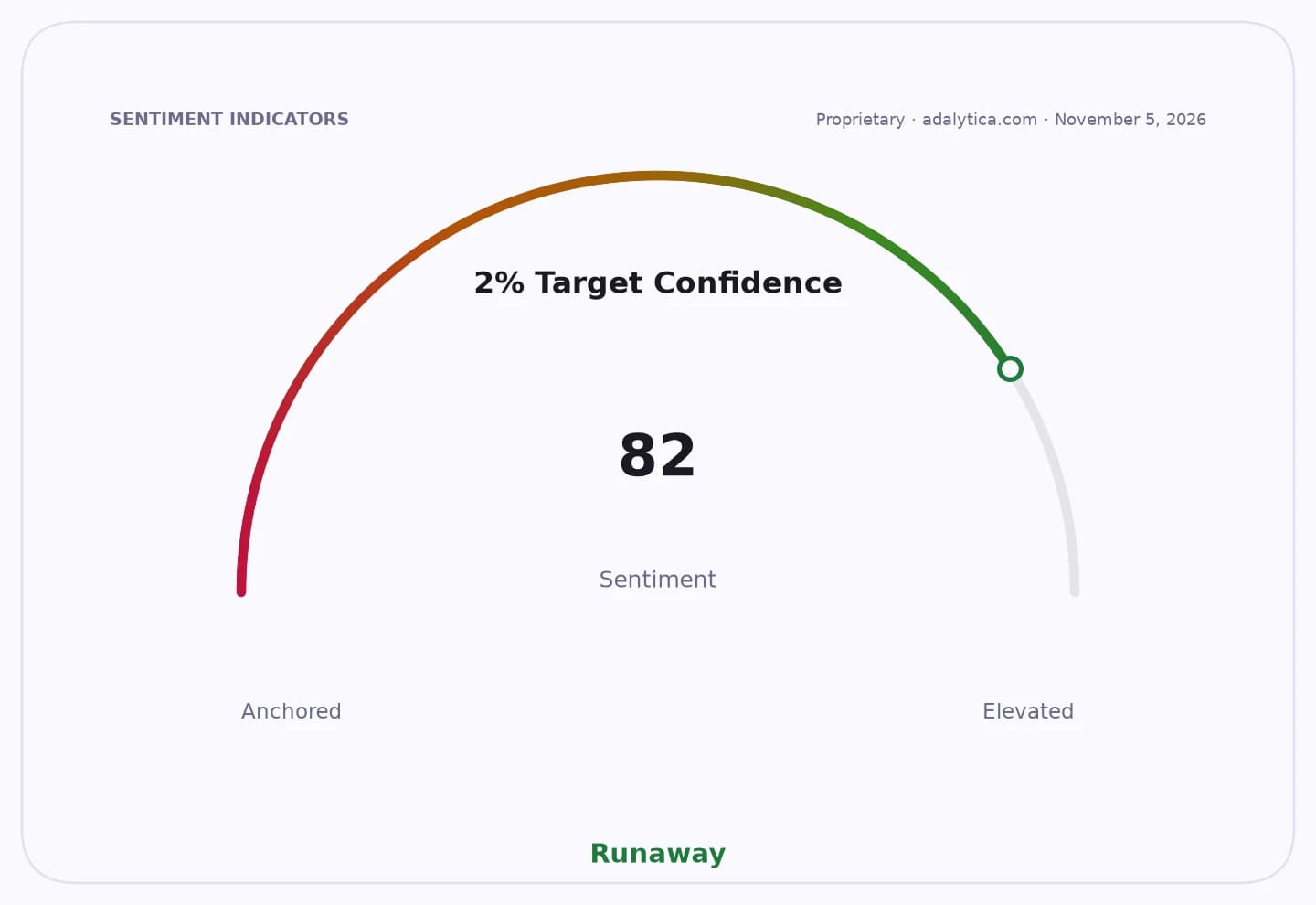
Brazil’s central bank paused its easing cycle and left the Selic rate at 13.75% on Wednesday, a decision that underscores how quickly a weakening fiscal backdrop and a stronger dollar have overtaken signs of slower growth.
Brazil Central Bank Holds Selic at 13.75%

The unanimous hold was widely expected after markets reassessed Brazil’s policy path in the wake of Luiz Inácio Lula da Silva’s election victory and the subsequent jump in risk premia. Traders had previously been pricing another 25-basis-point cut, but expectations shifted sharply as the real weakened, the dollar rose and long-dated borrowing costs climbed on concern that a new government would struggle to deliver a credible fiscal adjustment.
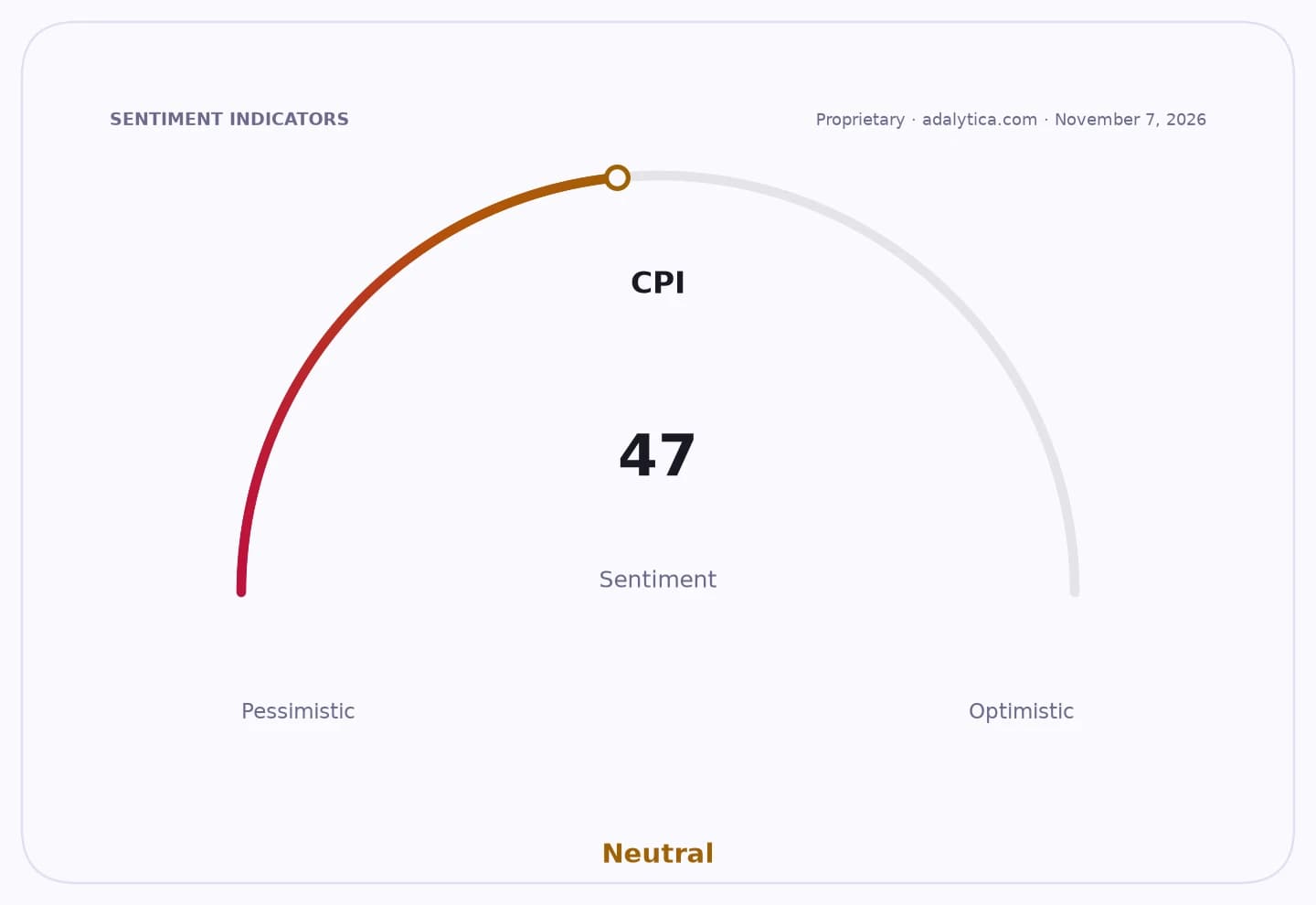
Sentiment Indicators
That matters because Brazil is trying to bring inflation back to target without choking off activity, a balance that has become harder as imported price pressures build. The central bank said the external environment has turned more adverse because of prolonged Middle East conflicts, higher oil prices and tighter monetary conditions in advanced economies. At home, it said data since the last meeting point to a more pronounced cooling in activity, while the labor market remains resilient but is showing early signs of loss of momentum.
The decision also reflects a tougher inflation outlook. The bank raised its projection for inflation in the relevant policy horizon, while market expectations for 2026 and 2027 have drifted further away from the 3% target. The official IPCA inflation rate remains above target at 4.58% over 12 months through September, keeping pressure on policymakers to err on the side of restraint.
For investors, the hold is a signal that Brazil’s high-yield story may last longer than many had hoped. The real has been under pressure, futures curves have repriced higher and the central bank’s unwillingness to pre-commit suggests borrowing costs could remain restrictive for an extended period. That supports carry trades and can attract fixed-income flows, but it also raises funding costs for companies, weighs on credit growth and limits the upside for domestic-demand sectors.
The biggest beneficiaries of a prolonged high-rate regime are savers and fixed-income investors, while banks, retailers and highly leveraged companies face a slower earnings backdrop. The move may also temper optimism in Brazil equities, where exporters can benefit from a weaker currency but local cyclicals are more exposed to tighter financial conditions.
With inflation expectations still unanchored and fiscal credibility under scrutiny, the central bank is likely to keep policy tight until it sees clearer evidence that price pressures are easing and the government can stabilize market confidence. The next catalyst will be whether fiscal policy and the currency improve enough to reopen room for cuts, or whether the Selic remains elevated well into 2028 as some economists now expect.
| Entity | Gains | Losses |
|---|---|---|
| Brazilian savers / fixed income | ▲Higher yields | ▼Lower loan demand |
| Banks / lenders | ▲Wider lending margins | ▼Slower credit growth |
| Local cyclicals / consumers | ▲— | ▼Higher financing costs |
| Real / inflation fight | ▲Stronger policy credibility | ▼Weaker growth outlook |