Brazil’s government is heading into next month’s election with one of the world’s highest real interest rates and a debt path that is still worsening despite near-balanced day-to-day finances.
Brazil Debt, Rates, and Election Market Impact
That is the central market problem: the Selic rate at 14% versus inflation at 4.4% leaves Brazil with a real policy rate of about 9%, a level that is propping up the real and keeping capital in local bonds, but also driving the state’s borrowing costs high enough to overwhelm the budget.
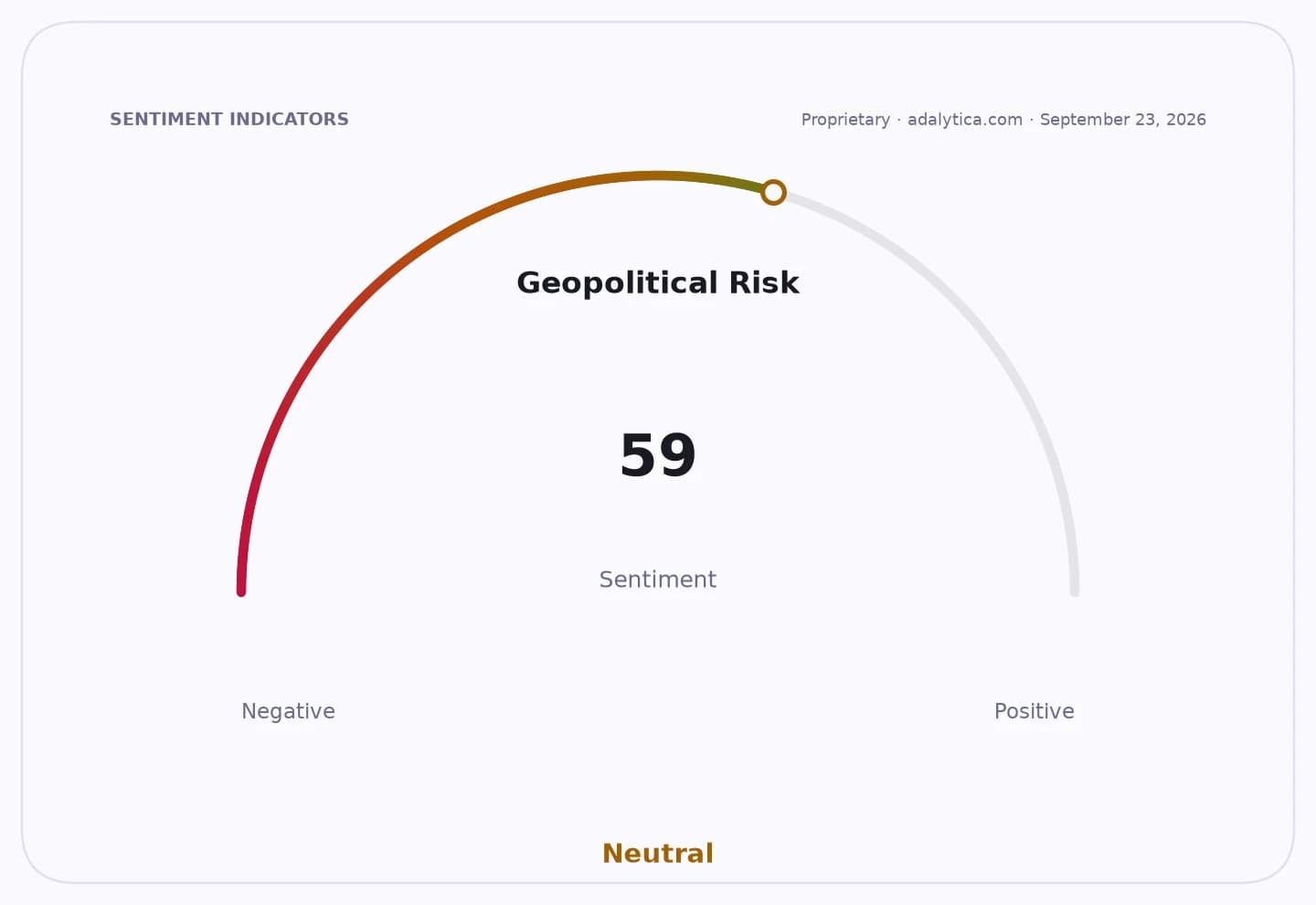
Sentiment IndicatorsⓘProprietary · adalytica.com · September 6, 2026
This is a snapshot — live sentiment, awareness and momentum for 130+ markets update continuously in the dashboard.Open AlphaPulse
The arithmetic is brutal. Brazil’s primary balance, which excludes interest, is roughly flat. But interest spending alone has reached 8.35% of GDP on a 12-month basis, and in July the government still posted a nominal deficit of almost 100 billion reais even after a primary surplus.
Debt is rising because of the cost of servicing debt, not because of a large new spending blowout. The debt ratio has climbed by nearly five percentage points in the past 12 months, a classic compounding problem that economists describe as a debt snowball.
That leaves policymakers trapped. The central bank cannot cut aggressively because inflation expectations are not anchored — the 3% target contrasts with market expectations of about 5% for this year — while investors do not believe the inflation target because they do not trust the fiscal path. The higher rates worsen the fiscal math, which in turn keeps borrowing costs elevated.
The election in October is therefore the market’s main catalyst. Polls show a tight race between President Luiz Inácio Lula da Silva and challenger Flávio Bolsonaro, and markets have already shown a clear preference for a more fiscally conservative outcome.
When Bolsonaro’s odds improve, long yields fall. When Lula strengthens, investors sell. On Aug. 11, foreign investors pulled 4.7 billion reais out of Brazilian equities in a single day, the biggest daily outflow since April 2021, and the benchmark fell almost 6% over seven trading days.
Goldman Sachs has sketched four paths from here, but the market is really trading two broad outcomes: either a credible fiscal shift after the vote brings long rates down and the real up, or the current pattern persists, leaving bonds as the cleaner trade and equities stuck in place. A Lula win paired with more spending is the clearest downside case, with analysts warning of higher yields, a weaker currency and a 10% to 15% equity correction.
The consumer backdrop makes the stakes higher. Brazilian households are devoting a record 28.5% of income to debt service, delinquent loans are at the highest level since the central bank’s series began in 2011, and banks have already admitted they lent too aggressively. That means a softer labor market could quickly turn a credit problem into a broader financial stress.
For investors, Brazil is now a leveraged bet on politics as much as growth. The next move in bonds, the real and bank stocks will likely depend on whether October produces a credible fiscal reset or another round of policy drift.
| Entity | Gains | Losses |
|---|---|---|
| Brazilian bondholders | ▲High real yields | ▼Higher default/fiscal risk |
| Brazilian banks | ▲Strong lending margins | ▼Rising delinquencies |
| Equity investors in Brazil | ▲Cheap valuations if fiscal reset | ▼Weak returns if policy drifts |
| Brazilian consumers | ▲More credit and income support | ▼Heavy debt-service burden |