Flavio Bolsonaro said Brazilians are “tired of waiting” and want change, putting economic frustration, crime and unfinished public works at the center of a tightly contested presidential runoff in Brazil.
Brazil election race tight as Bolsonaro attacks Lula
The message matters because the vote is now less about ideology than whether households believe Lula da Silva has delivered on growth, security and living standards. With a new CNT/MDA poll showing Bolsonaro ahead 46.3% to 45%, well within the 2.2-point margin of error, the contest looks too close to call ahead of a ballot that will be decided by about 159 million voters.
Sentiment Indicators
Bolsonaro used the final day of campaigning to attack Lula’s economic record, accusing the government of higher taxes, excessive spending and too much bureaucracy while vowing tougher public security, lower taxes and leaner government. He also leaned on crime, including violence against women, and on incomplete infrastructure projects, issues that resonate beyond the campaign trail because they speak to public services, fiscal priorities and the state’s capacity to deliver.
The runoff has become a referendum on whether Brazil keeps Lula’s more interventionist, left-leaning policy course or shifts toward a more market-friendly agenda. For investors, that split matters for the outlook on taxation, spending discipline, regulation and security policy, all of which can affect corporate margins, consumer confidence and foreign capital flows.
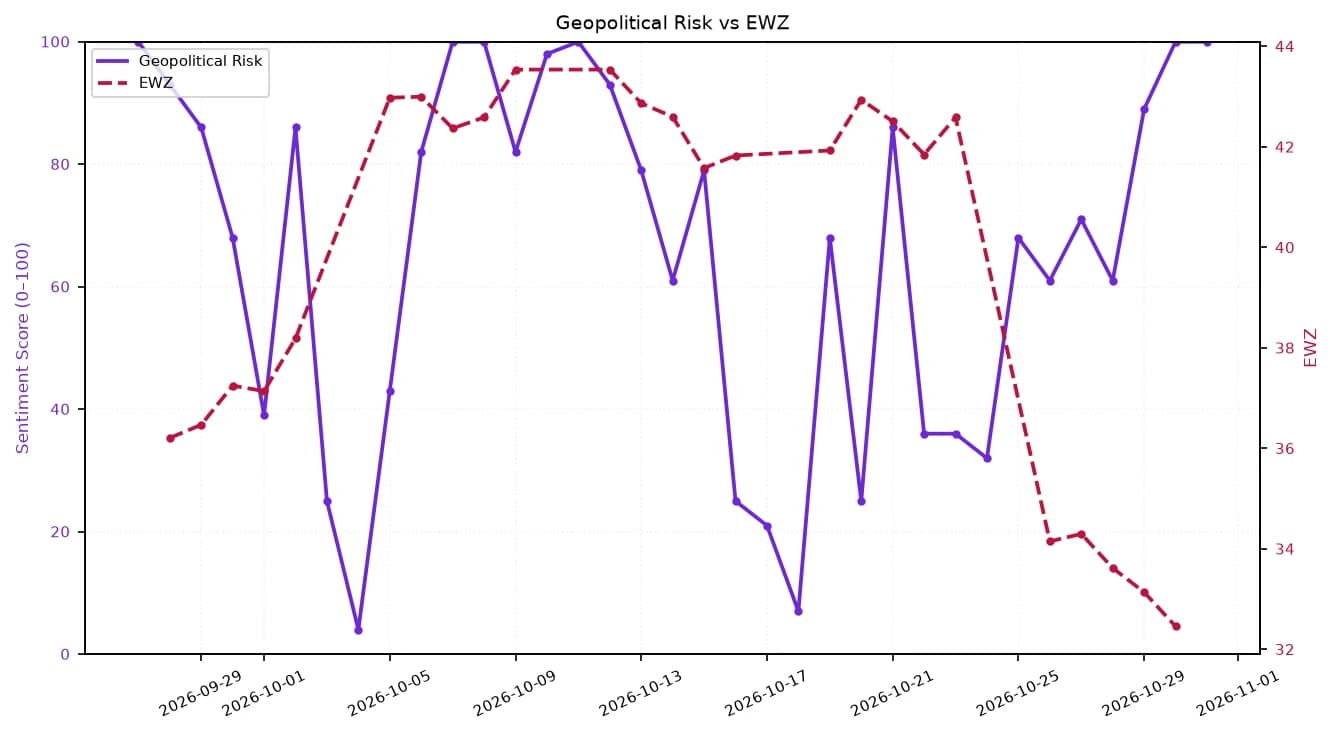
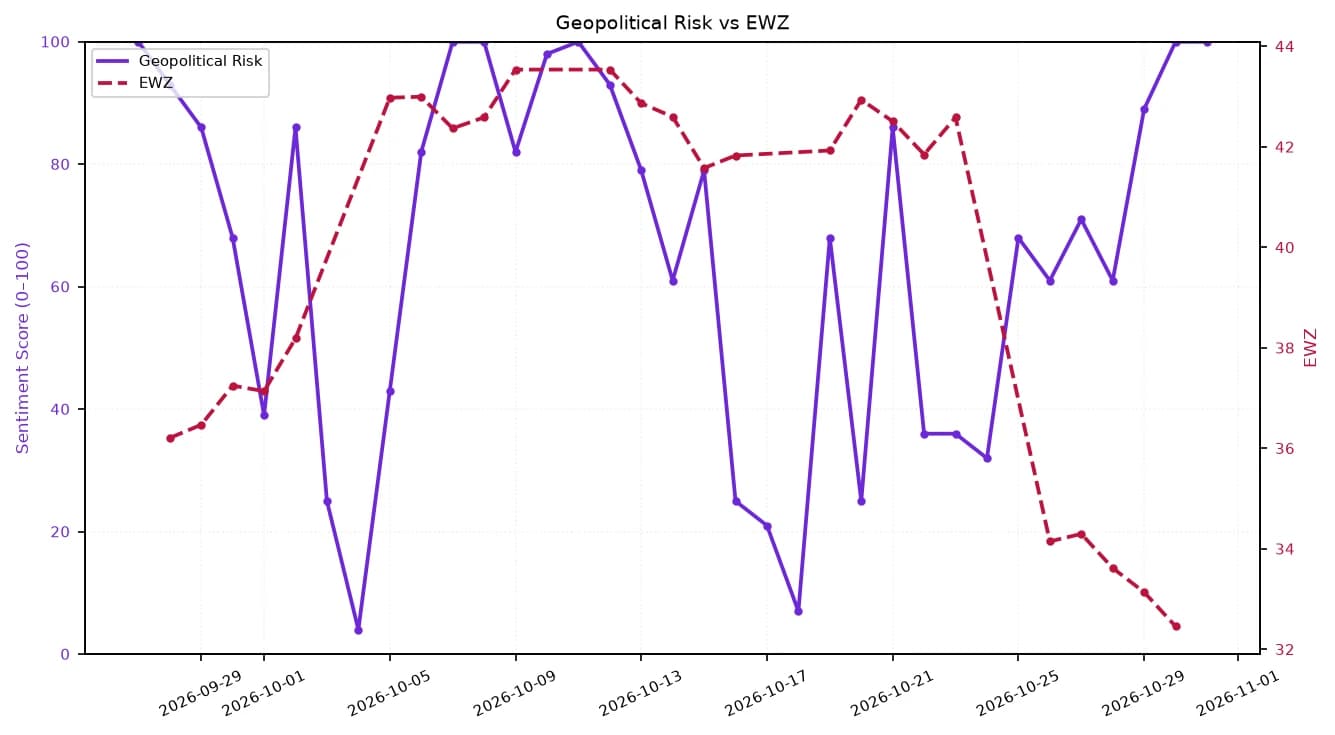
Markets are already sensitive to the result. Brazil-linked assets, including the iShares MSCI Brazil ETF EWZ, have swung sharply in recent sessions, underscoring how quickly traders are repositioning around the election outcome and the policy mix that could follow.
Flavio Bolsonaro’s pitch in Minas Gerais and Rio de Janeiro is aimed at mobilizing voters in swing-heavy states and turning discontent into turnout. The final result will set the tone for Brazil’s fiscal stance, investment climate and social policy for the next four years, with the biggest near-term risk being another period of political friction regardless of who wins.
| Entity | Gains | Losses |
|---|---|---|
| Bolsonaro camp | ▲Anti-incumbent momentum | ▼If turnout disappoints |
| Lula camp | ▲Incumbency advantage | ▼Tighter race pressure |
| EWZ investors | ▲Policy clarity if outcome settles | ▼Volatility until result |
| Brazilian consumers | ▲Promise of change | ▼Policy uncertainty short term |