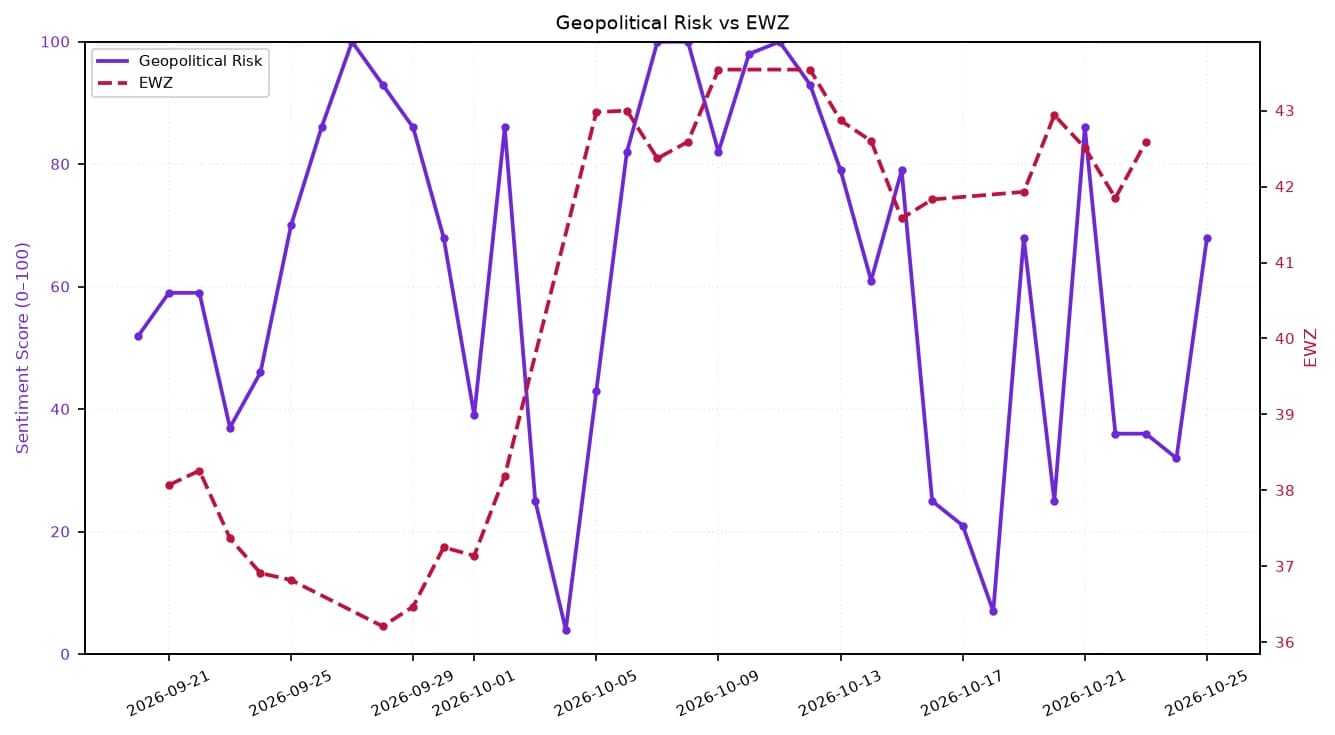
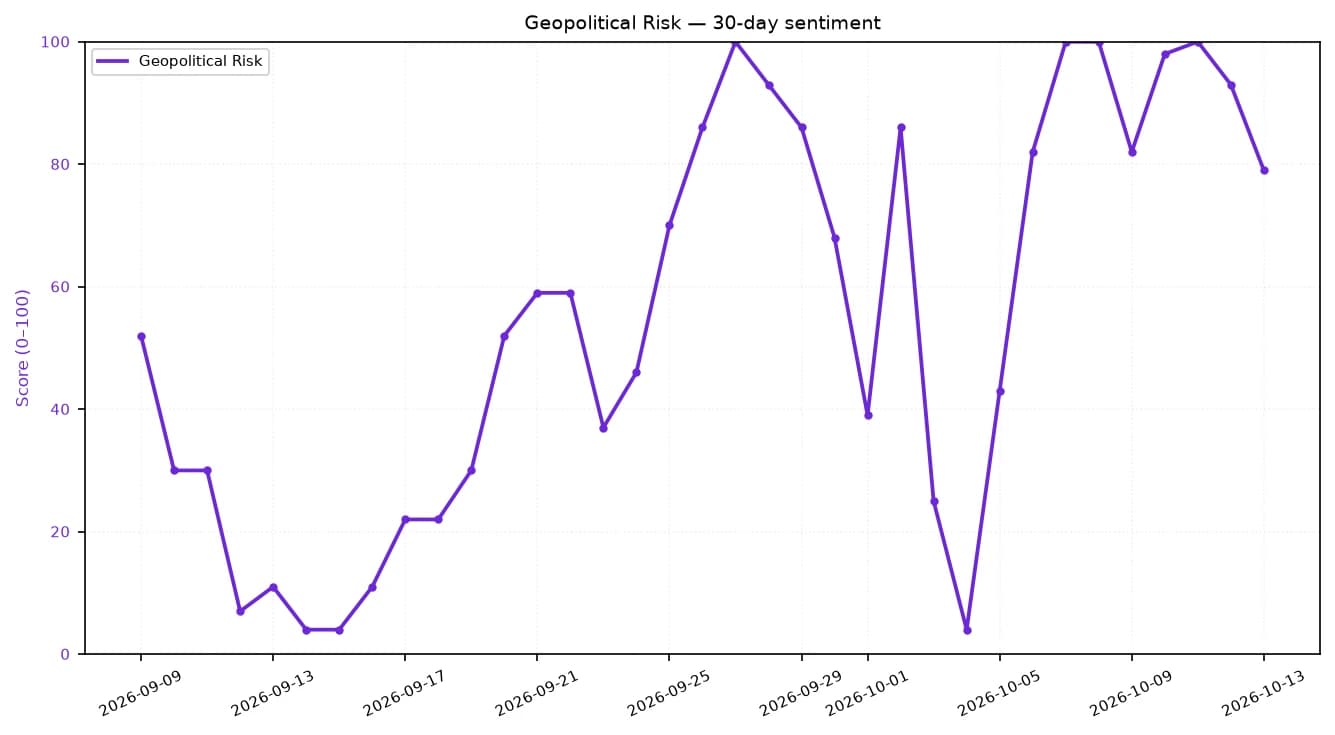
Brazil’s presidential runoff is turning into a market event, not just a political one, and the selloff in the iShares MSCI Brazil ETF shows investors are quickly repricing the risk of an outcome that could reshape policy, capital flows and the real economy.
Brazil EWZ Falls on Election Uncertainty

EWZ dropped to $32.46 by Oct. 30 from $42.59 on Oct. 23, a decline of more than 23% in a matter of sessions, as traders confronted a race that analysts and observers described as highly uncertain. The move is far bigger than a normal election wobble: it takes the fund well below its 50-day moving average of $38.41 and its 200-day moving average of $37.02, while RSI readings have collapsed to 14.4, a level that points to extreme oversold conditions.
Sentiment Indicators
That matters because Brazil is one of the most tradeable emerging-market proxies in global portfolios. When election risk rises there, the first casualties are usually equities tied to domestic demand, credit conditions and policy credibility. The market is signaling that investors are not yet willing to assign a clean policy path for the next administration, whether the result is seen as more market-friendly reform or a sharper turn toward intervention.
The economic stakes are larger than one exchange-traded fund. Brazil enters the runoff with growth already moderating, household consumption under pressure from elevated debt burdens and still-restrictive monetary policy, according to recent company disclosures and central-bank-linked commentary. That makes the next government’s stance on fiscal discipline, rates and state involvement especially important for banks, commodity producers, utilities and consumer-facing companies.
Geopolitical Risk vs EWZadalytica.com
Explore this data interactively — full history, time series and cross-market comparisons.

For investors, the setup is classic election asymmetry. A decisive, market-comforting result could trigger a relief rally as short positioning is unwound and foreigners move back into a market that has already been punished. But if the vote produces a contested or destabilizing outcome, the hit could spread beyond local equities into the currency, sovereign risk premia and Brazil’s cost of capital. Adalytica’s Global Stability Sentiment is flashing “Extreme Greed,” a reminder that headline-driven swings can get violent when positioning is crowded and attention is low.
The playbook here is to treat Brazil as a volatility trade with a longer-term value angle, not a one-day event. Investors who want exposure should focus on high-quality franchises with dollar revenues, pricing power or export leverage, while those chasing domestic beta are likely to face the sharpest swings. The runoff is not just deciding who governs Brazil; it is deciding how much risk global markets are willing to price into the country’s assets.
| Entity | Gains | Losses |
|---|---|---|
| Market-friendly Brazil assets | ▲Relief rally, lower risk premium | ▼Political uncertainty if runoff stalls |
| Domestic Brazilian equities | ▲Higher valuations on clear result | ▼Funding costs if volatility persists |
| Exporters and dollar earners | ▲Currency weakness tailwind | ▼Import-heavy companies |
| Short-term traders | ▲Volatility and oversold bounce | ▼Whipsawed by election headlines |