Luiz Inacio Lula da Silva and Jair Bolsonaro’s son Flavio Bolsonaro are entering the runoff campaign with Brazil’s asset market already signaling that the vote is about more than politics: it is about the next phase of fiscal policy, regulation and investor confidence in Latin America’s biggest economy.
Brazil election runoff lifts EWZ and EWZS
The first televised face-off between Lula and the Bolsonaro camp comes after a bruising first round in which Bolsonaro outperformed poll expectations and forced Lula to sharpen a campaign that had looked disorganized. For investors, the immediate question is not who wins the debate, but whether the runoff locks in a more market-friendly policy path or revives the kind of populist spending and institutional friction that can punish Brazilian assets.
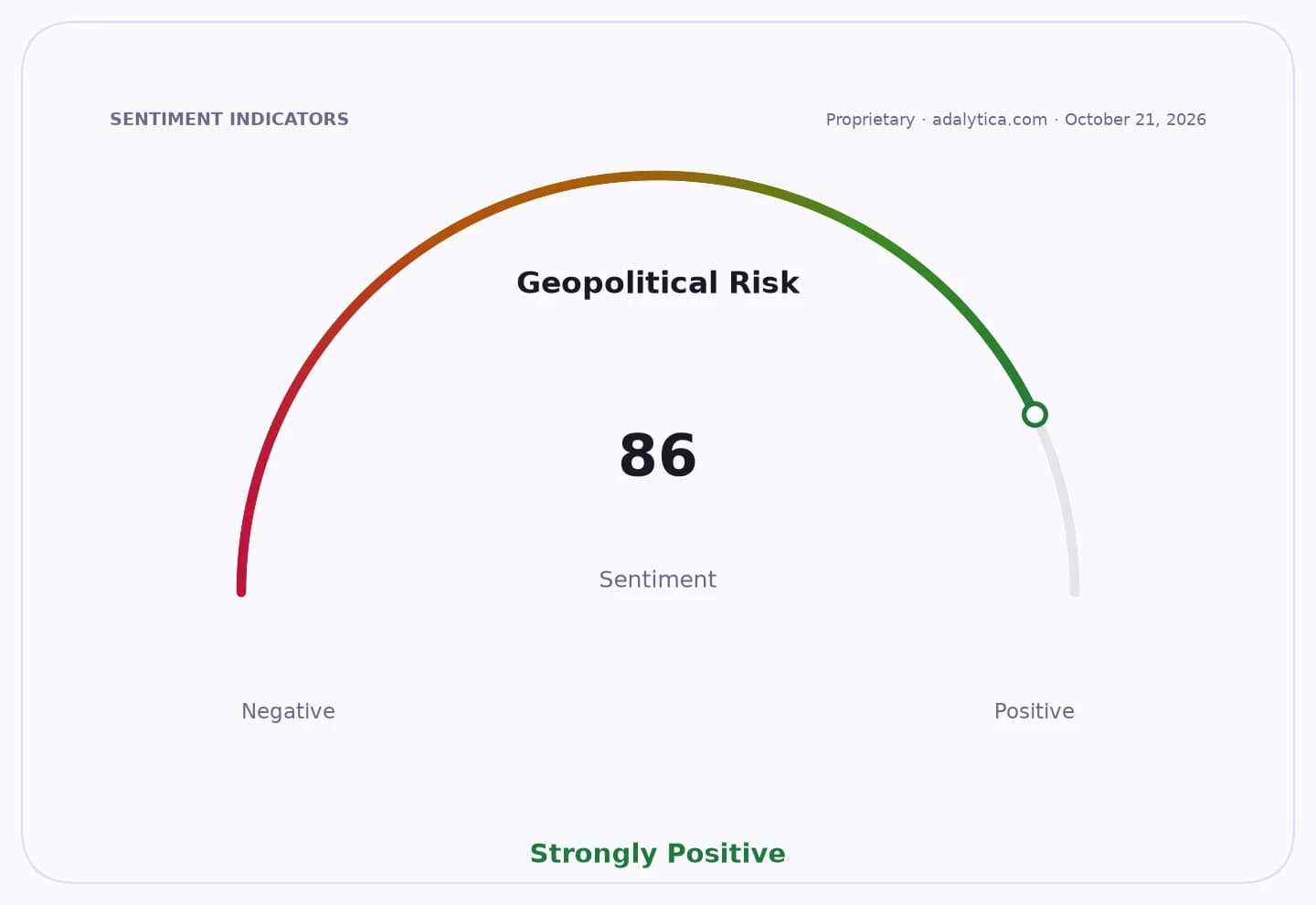
Sentiment IndicatorsⓘProprietary · adalytica.com · October 21, 2026
This is a snapshot — live sentiment, awareness and momentum for 130+ markets update continuously in the dashboard.Open AlphaPulse
That tension is showing up in exchange-traded funds tied to Brazil. EWZ has rallied to $42.83, near its 52-week highs, with the fund’s 50-day moving average at $38.13 and its 200-day average at $36.90, while RSI readings above 75 point to a technically stretched move. EWZS, which tracks small-cap Brazil, has climbed to $16.72 from $11.77 in August, a sign that traders are aggressively positioning for a post-election relief trade even as the runoff risk remains unresolved.
The debate matters because the next Brazilian government will shape the country’s stance on taxes, spending, labor rules and state influence over key sectors. Lula has already used the campaign to push through or promise wage, debt-relief and fuel-tax measures, while Bolsonaro is leaning on crime, constitutional reform and a harder line on the role of the state. Those are not just campaign slogans; they are the outlines of competing capital-allocation regimes.
Lula’s latest moves are aimed squarely at the worker and consumer vote. Congress approved a constitutional amendment guaranteeing two days of paid rest per week instead of one, while his camp has also pledged debt forgiveness for microentrepreneurs, university scholarships and the removal of fuel taxes. Bolsonaro’s side called the labor measure opportunistic, but the more important point for markets is that Lula is showing a willingness to use fiscal tools aggressively if he thinks the runoff is close.
Bolsonaro, meanwhile, is trying to broaden his base by doubling down on public security, one of the strongest voter concerns. His tougher rhetoric, along with promises to limit presidential mandates and free his father from house arrest, signals a campaign that is becoming more polarizing rather than less. That raises the risk of policy volatility regardless of who wins, because neither side is campaigning on a technocratic consensus.
The social-media fight is another investor issue. Lula has accused Meta of interference and asked prosecutors and police to examine whether Bolsonaro’s campaign received economic advantages through the platform. Meta denies favoritism, but the dispute underscores a broader concern in emerging markets: electoral legitimacy is now tied to digital distribution, and any perception of unfair access can spill into market confidence fast.
For global investors, Brazil remains a high-beta macro trade with an unusually large upside if policy looks disciplined after the runoff. The currency, local rates and commodity-linked equities can all respond quickly to a cleaner fiscal trajectory, while banks, domestic consumer names and infrastructure plays stand to gain if political noise fades. But if the next administration pushes deeper into subsidy politics and confrontational institutions, the recent rally in Brazil equities could prove fragile.
That is why this debate matters now. Brazil is not just voting for a president; it is pricing the country’s policy premium for the next several years. If Lula softens enough to reassure capital, or if Bolsonaro’s camp convinces markets it can govern without fresh instability, the upside in Brazilian risk assets could extend. If not, the current strength in EWZ may be the market’s most expensive political bet.
| Entity | Gains | Losses |
|---|---|---|
| EWZ bulls | ▲Policy clarity rally | ▼Runoff volatility |
| EWZS buyers | ▲Small-cap re-rating | ▼Fiscal uncertainty |
| Lula campaign | ▲Worker-populist appeal | ▼Credibility on markets |
| Bolsonaro camp | ▲Security voters | ▼Reform credibility |