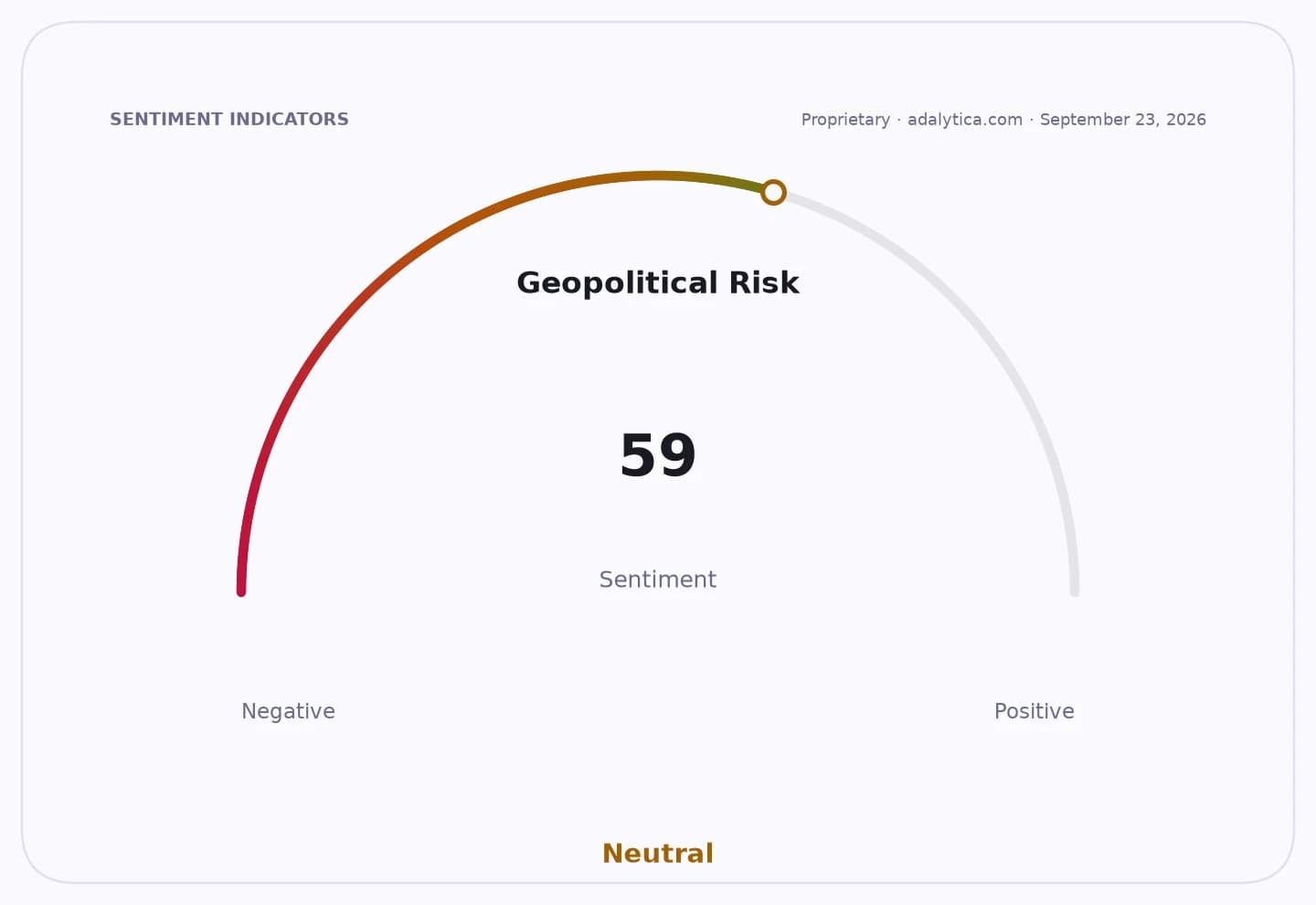
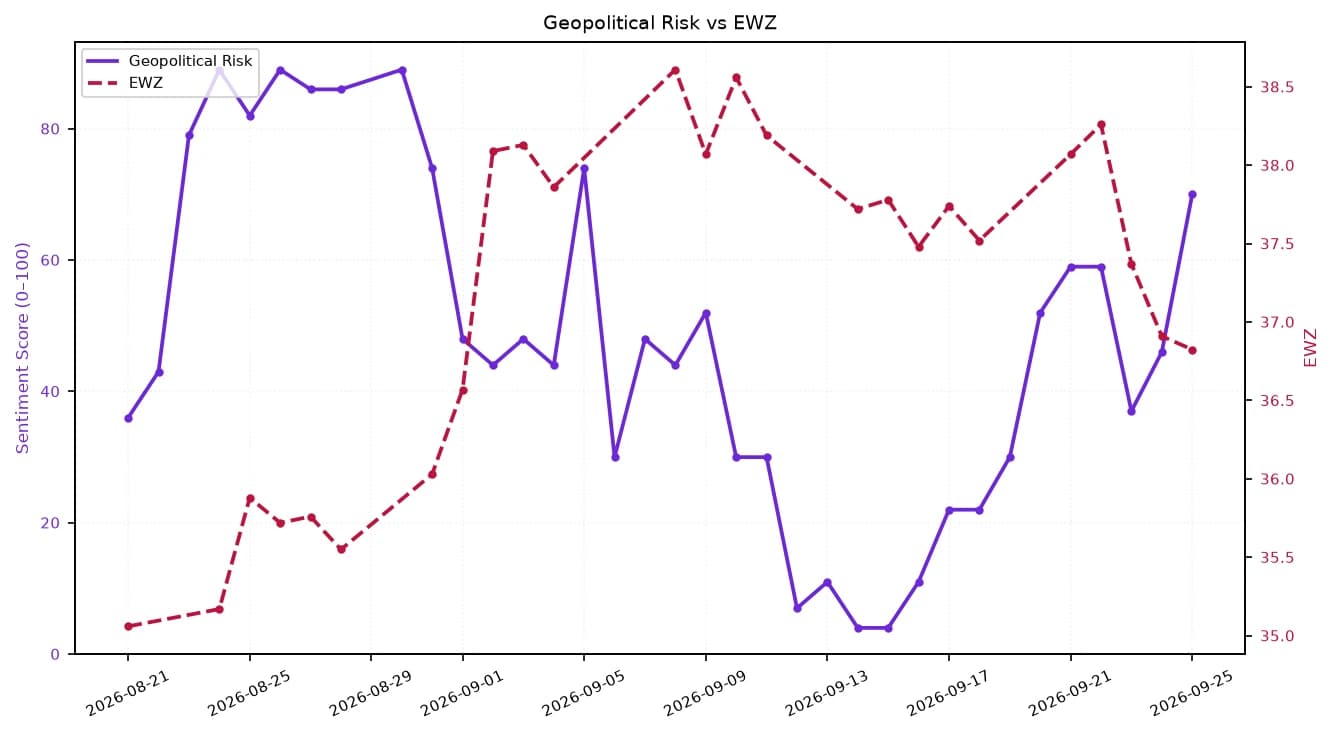
Luiz Inácio Lula da Silva is taking his fight against foreign interference to the UN, a move that underscores how Brazil’s 2026 election is becoming not just a domestic contest but a geopolitical and market risk event.
Brazil election risk rises as Lula heads to UN

Lula plans to use the UN platform to tell Donald Trump not to interfere in Brazil’s presidential election, sharpening tensions just as polls show a knife-edge race between the incumbent and a Bolsonaro-aligned challenger. That matters because Brazil’s vote is no longer being priced as a routine transfer of power. It is increasingly being treated as a potential flashpoint for institutional stress, policy volatility and capital flight risk.
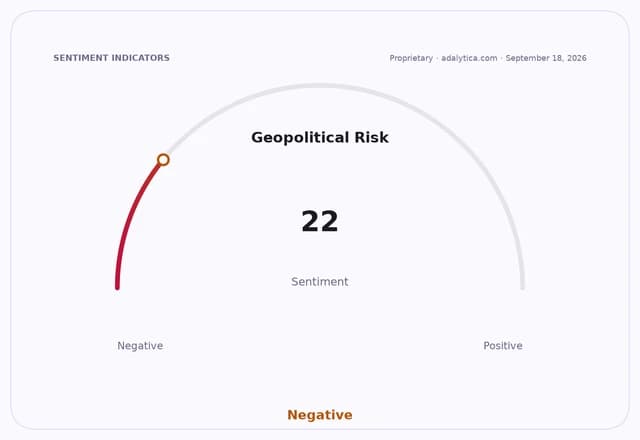
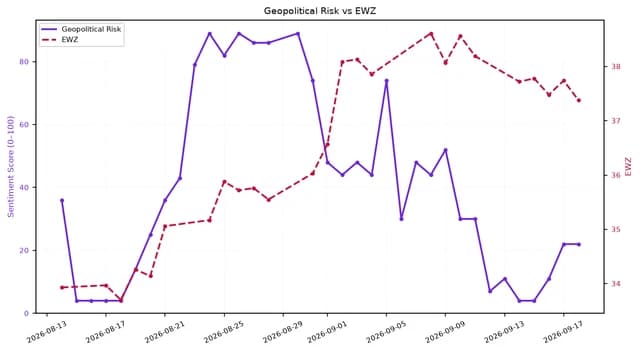
The market has good reason to pay attention. The Adalytica Global Stability Sentiment gauge is sitting in fear territory at 22, reflecting how quickly geopolitical noise can spill into emerging markets. Brazil is especially exposed because investors are already balancing political uncertainty against still-favorable asset performance. The EWZ Brazil ETF has climbed to $37.38, with its 50-day moving average at $36.04 and its 200-day moving average at $35.89, showing the market has been willing to lean bullish. But the relative strength index near 64 and the ETF’s proximity to the upper Bollinger Band suggest momentum is stretched, leaving little room for a shock-free political run-up.
That is where the real investment question begins. If Lula is framing the election as a sovereignty issue before the UN, he is effectively signaling that Brazil’s campaign will be fought on legitimacy, foreign influence and institutional credibility, not just taxes, spending and growth. For investors, that usually means a wider risk premium, stronger volatility around poll data and a premium for companies with hard-dollar earnings or export protection.
Brazil’s main listed proxies are already showing how quickly expectations can swing. Petroleo Brasileiro, or Petrobras, has rallied to $20.78, far above its 50-day moving average of $18.68 and 200-day average of $16.88, while Bradespar and BRF are also trading above their short- and long-term averages. That tells you global money is still hunting for value and commodity exposure in Brazil. But an election shaped by confrontation with Washington changes the calculus: domestically oriented names face more policy whiplash, while commodity-linked exporters and dollar earners remain the cleaner trade.
The deeper narrative is that Brazil is moving into a phase where politics, not just economics, will set the discount rate. A close race, accusations of interference and a highly visible clash with Trump create the conditions for a runoff-driven volatility spike, even if the macro backdrop stays intact. That opens opportunity for investors willing to stay selective: favor exporters, energy and hard-currency revenue, and be cautious on domestic cyclicals that depend on policy continuity.
If Lula’s UN message escalates the sovereignty fight, Brazil equities could experience another repricing before October. In that environment, the asymmetric bet is not on chasing the headline rally, but on owning the names that can survive — and even benefit from — a messier election.
| Entity | Gains | Losses |
|---|---|---|
| Lula / governing bloc | ▲Sovereignty narrative | ▼Policy continuity premium |
| Trump / Bolsonaro camp | ▲Campaign leverage | ▼Perceived legitimacy |
| Petrobras / exporters | ▲Dollar-linked cash flow | ▼Domestic policy risk |
| Brazil domestic cyclicals | ▲— | ▼Election volatility |