Brazil’s election observers say the country’s vote remained credible, even as a highly polarized campaign raised the risk of political instability that investors cannot afford to ignore.
Brazil election observers say vote remained credible
That is the key takeaway from a preliminary report by the Organization of American States, which praised the logistics and integrity of Brazil’s electoral system while warning that the campaign unfolded in a “climate of tension” marked by deep polarization, legal disputes and disinformation. For long-term investors, the significance is bigger than one election cycle: Brazil’s ability to keep confidence in its voting process intact helps reduce the odds of the kind of institutional crisis that can overwhelm currencies, capital flows and asset prices.
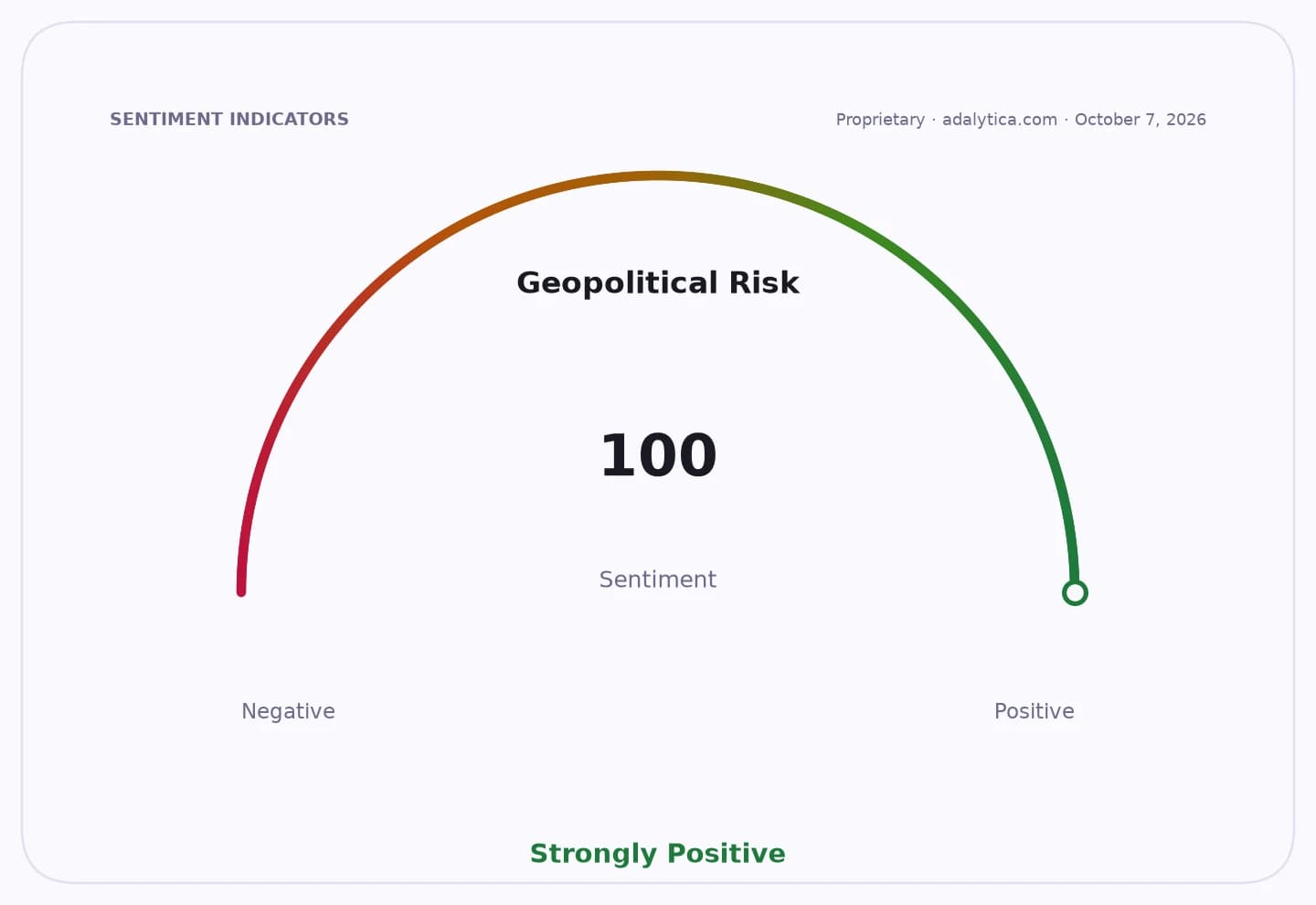
Sentiment IndicatorsⓘProprietary · adalytica.com · October 7, 2026
This is a snapshot — live sentiment, awareness and momentum for 130+ markets update continuously in the dashboard.Open AlphaPulse
The OAS said it saw widespread concerns over false information on social media, violent content and efforts to sow distrust in electronic voting. It also noted a lack of harmonized legal criteria in Brazil’s electoral courts for the use of real or AI-generated images of political figures in digital and physical campaigning. That matters because artificial intelligence is making election misinformation cheaper, faster and harder to police, not just in Brazil but across emerging markets.
Still, the most important political signal in the report was reassuring: the armed forces did not take part in election oversight this year. That stands in contrast with the 2022 race, when military involvement in electoral debates helped fuel attacks on the legitimacy of Brazil’s electronic voting system. Keeping the military out of the process removes one of the biggest sources of institutional risk in Latin America’s largest economy.
For investors, political calm is not a headline-grabber until it disappears. A credible vote supports risk appetite in Brazilian assets, from the real to local equities and country-focused funds such as the iShares MSCI Brazil ETF. In recent sessions, the ETF has climbed to about $42.37, well above its 50-day and 200-day moving averages, while Petrobras shares have also stayed strong, closing near $23.99. Those gains reflect optimism around Brazil’s market exposure, but they still depend on a functioning political framework.
That is why the OAS report matters beyond the immediate election. Brazil is a major oil producer, a large consumer market and one of the most important emerging-market allocations for global portfolios. If its institutions can absorb polarization without breaking, the country remains investable. If distrust in elections escalates, capital tends to demand a higher risk premium.
For now, the message is constructive: Brazil’s democracy remains under strain, but the vote itself appears intact. Long-term investors should keep watching whether political rhetoric cools, election courts maintain clear standards on digital campaigning and the government preserves confidence in the rules of the game.
| Entity | Gains | Losses |
|---|---|---|
| Brazil’s election system | ▲Credibility | ▼Distrust campaigns |
| Investors in Brazilian assets | ▲Institutional stability | ▼Political risk premiums |
| OAS and election monitors | ▲Influence | ▼Uncertainty |
| Disinformation networks | ▲Attention | ▼Electoral trust |