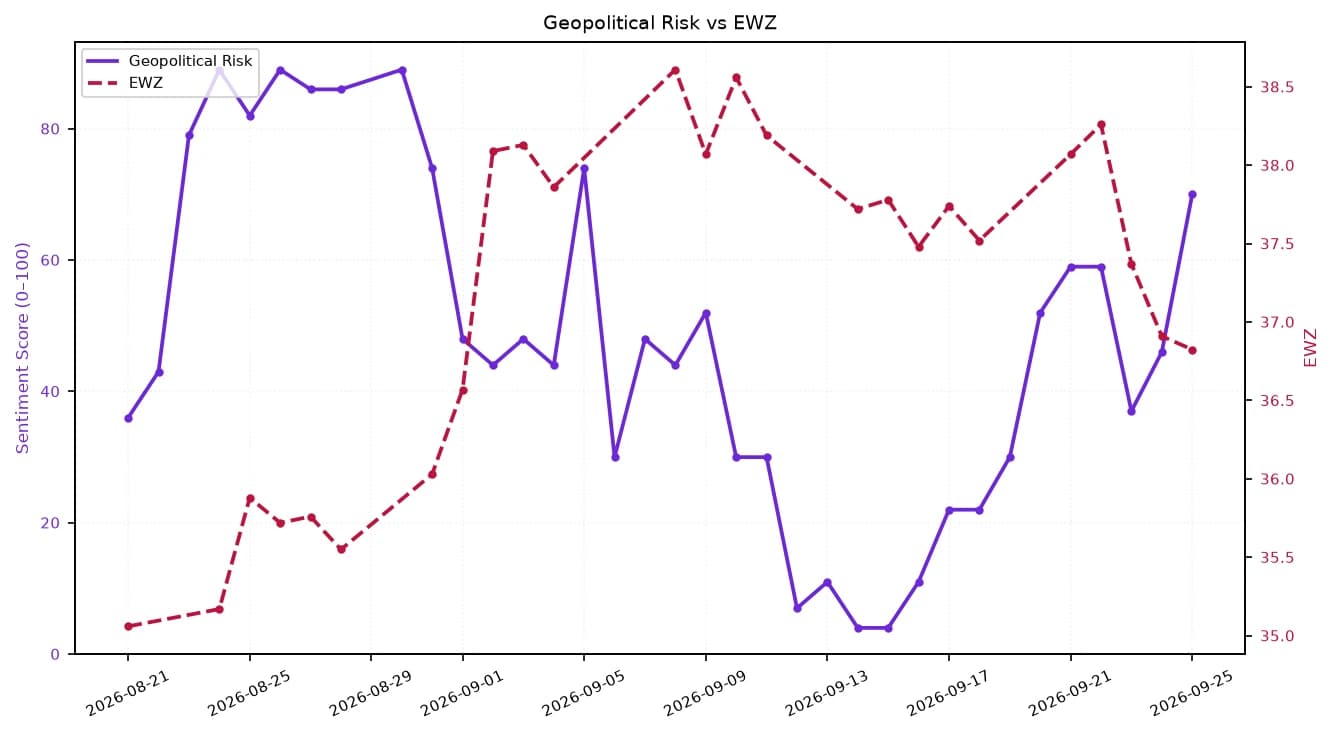
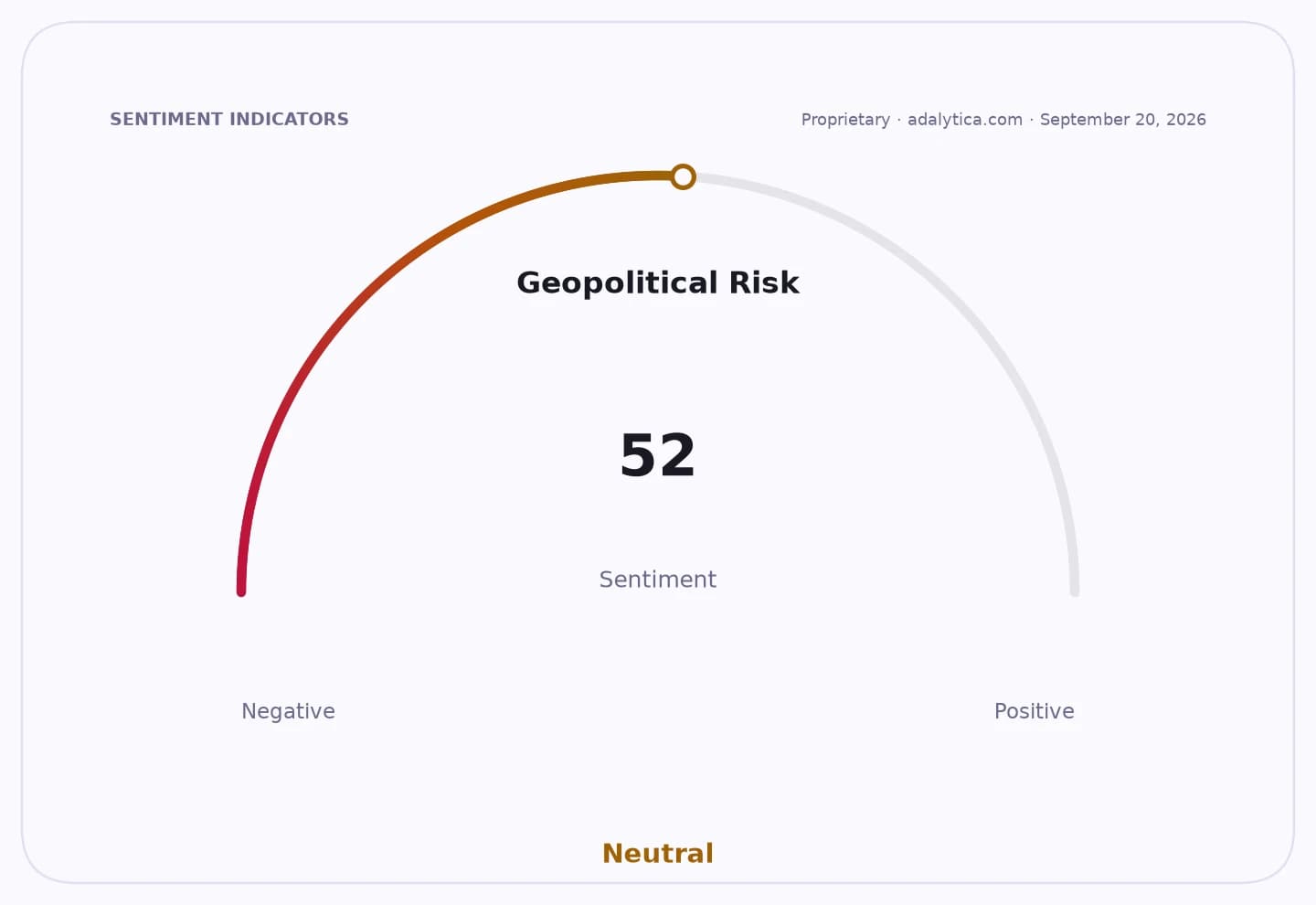
Brazil’s electoral prosecutor has opened a probe into whether major AI platforms are violating election rules, raising the prospect of tighter compliance demands on some of the world’s largest technology groups ahead of the 2026 vote.
Brazil probes AI platforms over election rules
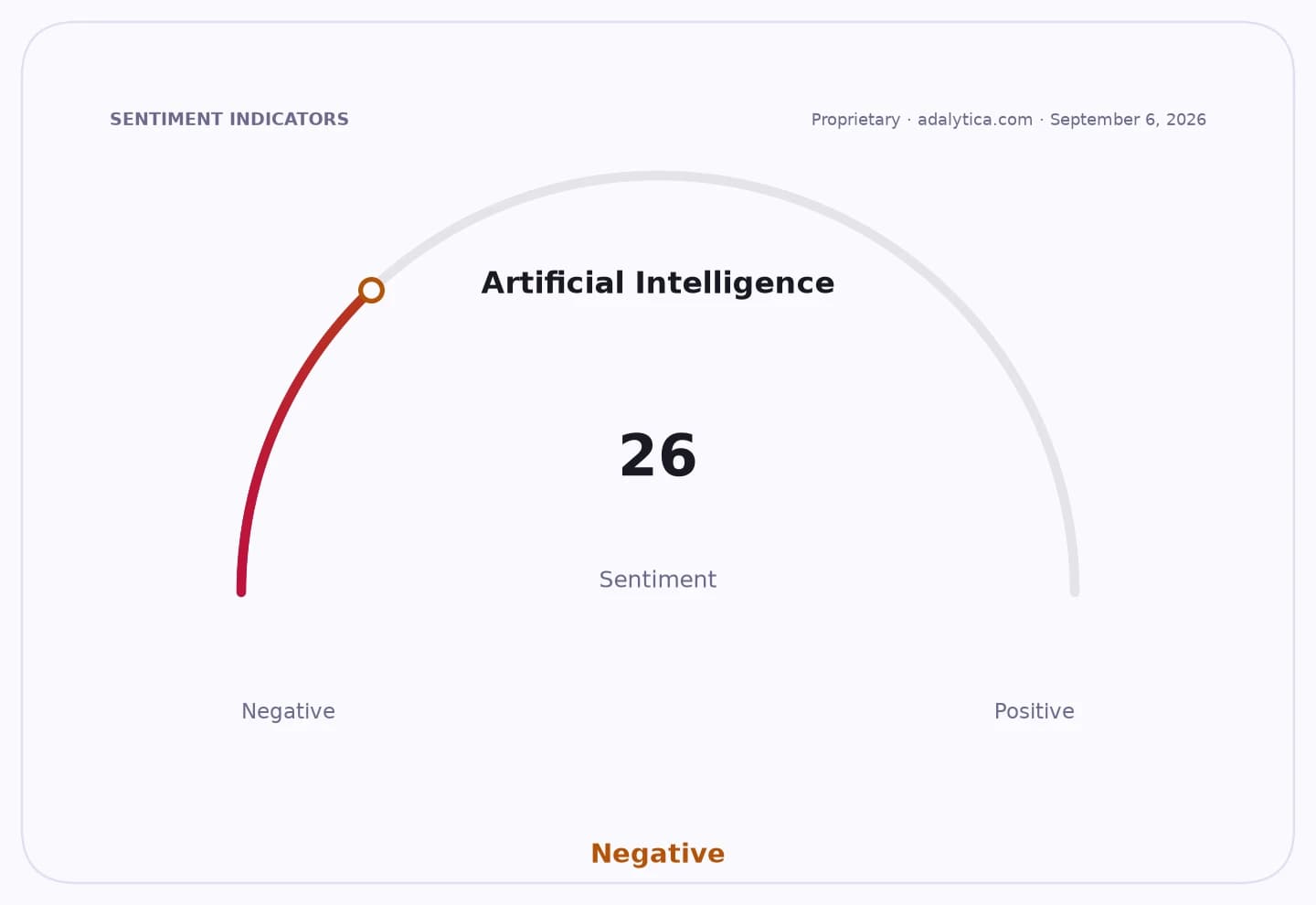
The move matters because generative AI is becoming a new gatekeeper for political information, and Brazilian authorities are warning that chatbots could distort candidate visibility, amplify partisan content or evade traditional election oversight. For investors, the case adds another layer of regulatory risk to Alphabet, Meta-linked platforms and other AI providers already facing rising scrutiny over how their systems surface political content.
Sentiment IndicatorsⓘProprietary · adalytica.com · September 6, 2026
This is a snapshot — live sentiment, awareness and momentum for 130+ markets update continuously in the dashboard.Open AlphaPulse
The Procuradoria-Geral Eleitoral asked the Superior Electoral Court to share information from meetings it has held with platforms and AI companies, according to a document seen by Folha de S.Paulo. It also sent notices to OpenAI, Google’s Gemini, xAI’s Grok, DeepSeek, Anthropic’s Claude and Perplexity seeking preliminary responses to studies by civil society groups.
Brazil’s electoral court this year banned AI chatbots from ranking or suggesting candidates and parties, or from generating positions that could create political favoritism. Civil society reports cited by prosecutors say several platforms were not meeting those requirements during the pre-campaign period.
The investigation was triggered by complaints filed in July by rights groups including Conectas Direitos Humanos, Article 19, Sleeping Giants Brasil and Justa, who asked prosecutors to bring a case at the TSE against ChatGPT, Gemini, Grok and DeepSeek. The case file also cites research from Data Privacy Brasil, Aláfia Lab and the ITS Rio project “Boca de IA,” as well as recent reporting that the TSE had already been meeting some platforms on the issue.
Enforcement, however, remains uneven. The TSE can demand compliance plans but has limited staff and no direct sanction power in most cases, leaving parties and prosecutors as the main route for action if platforms are deemed to be breaking the rules.
Alphabet’s shares, which have been volatile on broader AI concerns, closed at $338.46 on Sept. 4, below a 50-day moving average of $348.35, while Meta finished at $616.77, just under its 50-day average of $595.49 and near its upper Bollinger Band. Apple closed at $319.97, also above its 50-day average, reflecting a market that is still pricing in AI growth even as regulatory pressure intensifies.
The immediate focus now shifts to whether the TSE and prosecutors move from inquiry to formal enforcement, and whether Brazil’s 2026 election becomes a test case for how far governments can force AI companies to police political output.
| Entity | Gains | Losses |
|---|---|---|
| Brazil prosecutors / TSE | ▲stronger oversight | ▼compliance gaps exposed |
| AI platforms | ▲clearer rules if compliant | ▼legal and reputational risk |
| Civil society groups | ▲leverage for enforcement | ▼slow court action |
| Investors in GOOGL, META, AI names | ▲potential clarity | ▼more regulatory uncertainty |