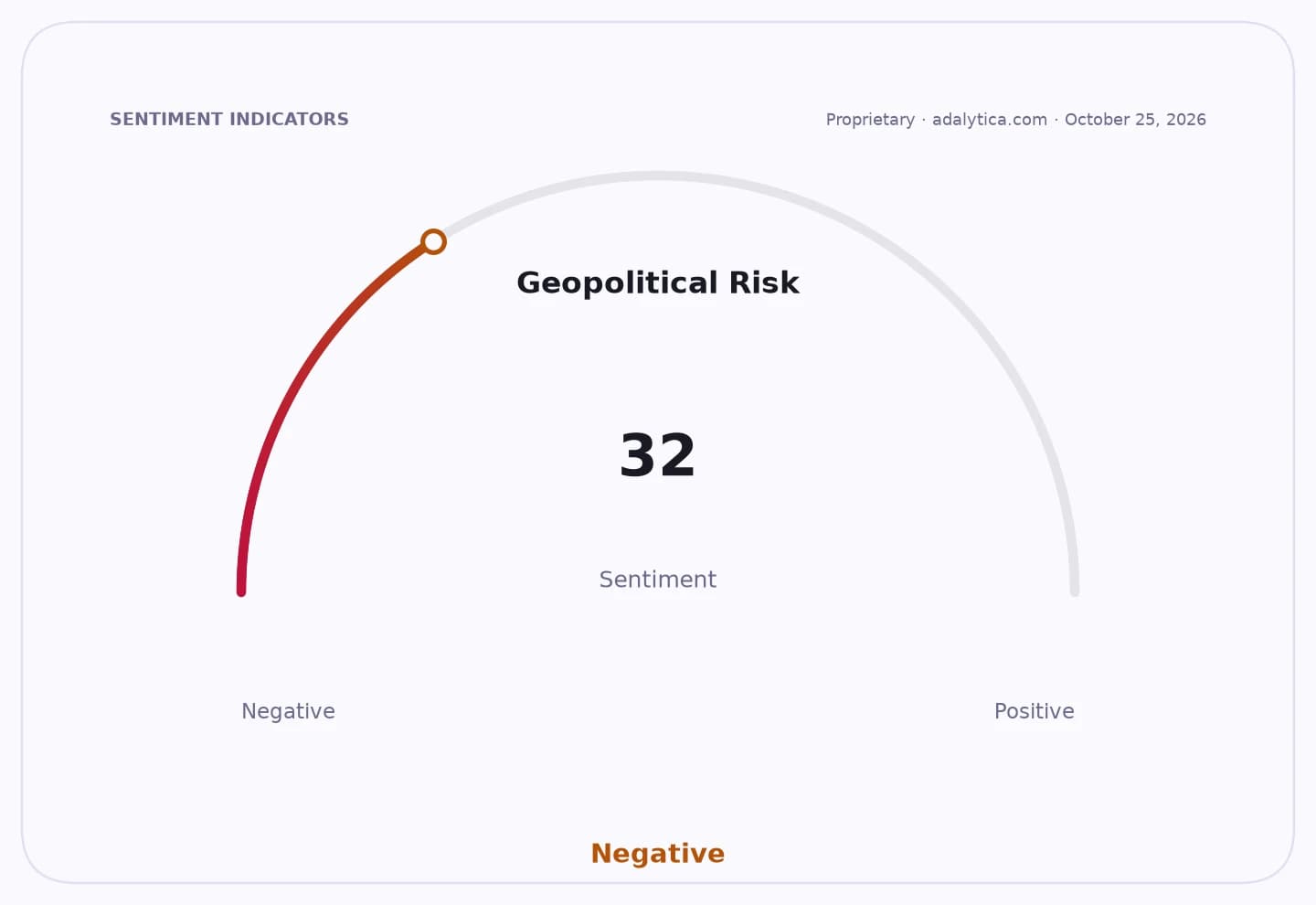
Brazil’s evangelical vote is emerging as one of the decisive forces in the country’s runoff, with polls showing 62% of evangelicals backing Jair Bolsonaro and their pastors still shaping political loyalties in communities that reach far beyond the church walls.
Brazil evangelicals back Bolsonaro in runoff

That matters because Brazil’s 48 million evangelicals are not just a voting bloc — they are an increasingly organized political network with reach into the poorer peripheries, the interior and fast-growing urban districts where the state often has a weak presence. In a tight election, that can swing not only the presidency but also the policy mix around morals, education, social programs and the government’s relationship with business and markets.

The influence is highly local and highly personal. At Lagoinha, one of Brazil’s most prominent evangelical churches, more than 5,000 worshippers gathered under a show-like service with lights, music and a pastor urging the faithful on. Three out of four evangelicals, according to the reporting cited by political scientist João Botelho, say they consider their pastor’s guidance when voting. That gives religious leaders an outsized role in translating moral authority into ballots — and helps explain why Bolsonaro, despite Lula’s attempts to court the group, remains their preferred candidate.
For investors, the evangelical alignment matters because it reinforces a political constituency that tends to favor a harder line on law and order, cultural conservatism and resistance to the left’s economic messaging. That can influence Brazil’s risk premium, the composition of Congress and the durability of any future administration’s reform agenda. When Bolsonaro’s base is strong, markets often price in a more market-friendly but also more politically volatile Brazil; when Lula’s coalition broadens, investors typically assess whether social spending and interventionist instincts will dominate.
That is part of why Brazil-linked assets remain so sensitive to the election narrative. The iShares MSCI Brazil ETF, EWZ, has surged to $42.59 from $34.73 in late March, while the leveraged Brazil fund BRZU has climbed to $129.12 from $92.93 in the same period. Both have been extremely strong on a technical basis, though momentum has cooled from overheated levels, with EWZ’s RSI down to 47.2 from above 70 earlier this week and BRZU’s RSI easing to 46.5 after a stretch of sharp gains. Investors are clearly trading the election as much as the economy.
The deeper story is that Brazil’s political battlefield is no longer defined only by class or geography. It is increasingly shaped by a disciplined evangelical bloc that has built its own media ecosystem, its own social infrastructure and a moral vocabulary that resonates where government delivery falls short. That makes the vote harder to predict, harder to fade and more consequential than a simple polling contest.
If Bolsonaro can hold that coalition together, the market will read it as a sign that Brazil’s right-wing bloc remains potent and that a future government could preserve a more business-friendly tone even amid political noise. If Lula narrows the evangelical gap, investors may have to reconsider how much of Brazil’s conservative vote is truly locked in. Either way, the evangelical electorate is not a side story — it is one of the main levers determining Brazil’s next economic and market chapter.
| Entity | Gains | Losses |
|---|---|---|
| Bolsonaro camp | ▲Evangelical bloc support | ▼Lula’s outreach effort |
| Evangelical churches | ▲Political influence | ▼State-centered rivals |
| Brazilian equities/EWZ | ▲Election clarity, pro-market tilt | ▼Policy uncertainty |
| Lula/PT | ▲Broader coalition if outreach works | ▼Moral-conservative vote split |