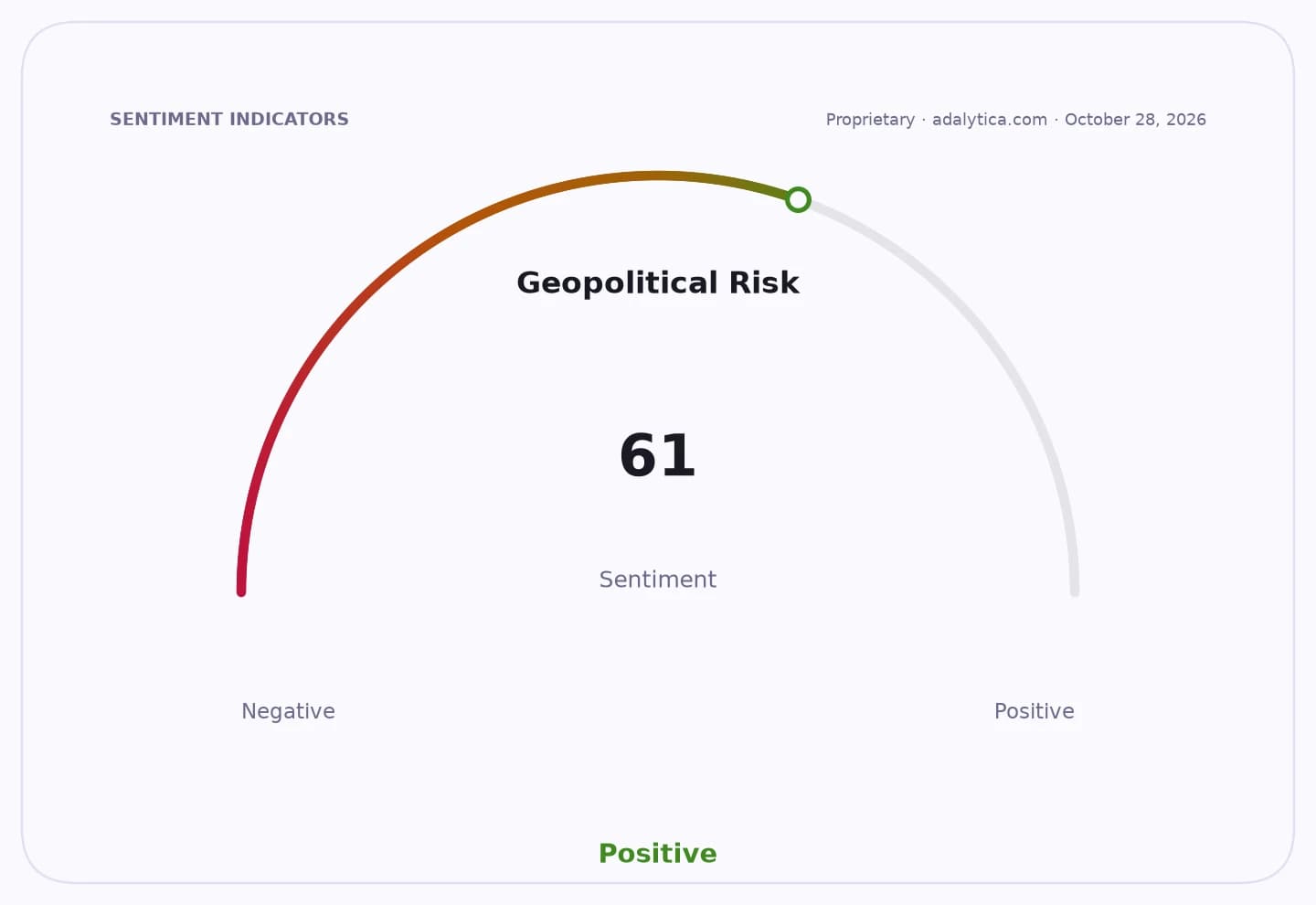
Brazil’s clash with Google is moving from rhetoric to regulatory risk, with lawmakers testing how far the state can go in curbing the power of a platform that shapes search, advertising and news distribution in one of Latin America’s biggest digital markets.
Brazil lawmakers test Google regulation

The confrontation matters because it goes to the heart of who captures value in Brazil’s expanding internet economy. If Brasília forces changes on Google’s business model, the outcome could alter traffic flows for publishers, raise compliance costs for big tech and set a template for broader platform regulation across the region. If the company prevails, it preserves a highly profitable model built on scale, default placement and data-driven advertising.
Sentiment Indicators
The political edge is sharp. The senator’s challenge to the president — “Who governs Brazil, you or Google?” — captures a growing frustration among lawmakers who argue that foreign technology groups exercise too much influence over public debate and commercial visibility. That tension has been building as governments from Europe to Latin America move to rein in dominant digital intermediaries on antitrust, taxation and content-moderation grounds.
For investors, the issue is not just headline risk. Alphabet’s Brazilian exposure may be modest relative to its global revenue base, but Brazil is a large and strategically important market, and regulatory moves there can echo beyond one country. Any restrictions on search prioritization, news links or ad practices could pressure local monetization and add to the policy overhang facing the stock. The timing matters too: Alphabet shares have already been under heavy pressure, with both GOOGL and GOOG having fallen more than 17% in the latest two sessions to around $280, far below their 50-day and 200-day moving averages, while RSI readings near 13-14 point to deeply oversold conditions.
That technical backdrop does not change the fundamental question. Brazil is weighing whether digital platforms should remain largely self-directed or be treated as infrastructure with tighter public obligations. The bull case for investors is that any Brazilian action ends up incremental, forcing process changes without materially impairing ad economics. The bear case is that Brasília uses the dispute to justify broader intervention that could raise legal costs, constrain product design and embolden other regulators.
The immediate market takeaway is that the fight is as much about precedent as it is about Google. What happens in Brazil could influence how governments in other emerging markets approach the same question: whether a handful of global platforms should be allowed to mediate information, commerce and political discourse on their own terms.
| Entity | Gains | Losses |
|---|---|---|
| Brazilian lawmakers | ▲More regulatory leverage | ▼Political capital if enforcement weakens |
| Google / Alphabet | ▲If rules stay limited | ▼If compliance costs rise |
| Local publishers | ▲Potentially more traffic protection | ▼If Google changes ranking rules |
| Brazilian consumers | ▲Greater oversight of platforms | ▼Less seamless search and ad services |