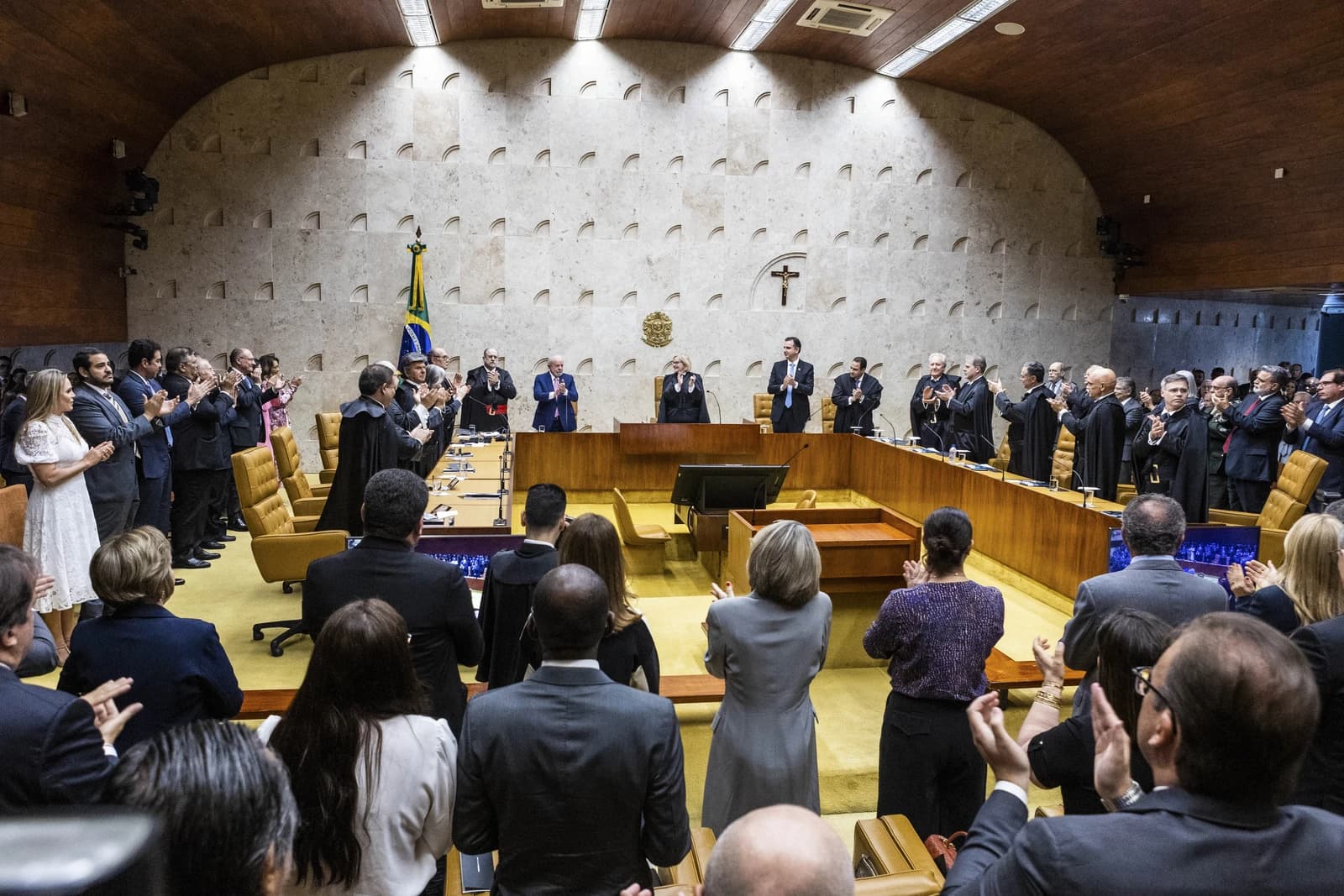
Brazil’s narrow 5-4 vote to keep Prosecutor-General Paulo Gonet in charge of cases tied to Banco Master is underscoring a deeper problem for investors: the country still struggles to credibly investigate senior authorities, and that keeps governance risk high even when allegations are serious.
Brazil probe vote keeps governance risk in focus

That matters far beyond one legal dispute. In emerging markets, the cost of capital is shaped not just by interest rates and growth, but by whether institutions can punish misconduct at the top. When the system appears reluctant to even open an inquiry, the market prices in a higher premium for political interference, weaker accountability and slower resolution of scandals that can spill into banks, regulators and the broader financial system.
Sentiment IndicatorsⓘProprietary · adalytica.com · October 2, 2026
This is a snapshot — live sentiment, awareness and momentum for 130+ markets update continuously in the dashboard.Open AlphaPulse
Nicolau Cavalcanti, a criminal law specialist at the University of São Paulo, said the result carried a tone of “frustration” because it showed “how difficult it is to open an investigation against high authorities” in Brazil. He rejected the idea that launching an inquiry would conflict with the presumption of innocence, arguing that the two principles are not in tension. That distinction is central for markets: failure to investigate is not prudence, it is institutional drag.
The vote also split the council exactly down the middle of the argument over whether there was enough evidence to begin a probe. Four members backed opening an investigation, a meaningful minority that signals concern inside the state apparatus itself. Cavalcanti noted that all three women on the panel voted for an investigation, a detail he interpreted less as a gender issue than as a reflection of concern over impartiality and ethics at a time when public anger over the Master case is rising.
Geopolitical Risk — 30-day sentimentadalytica.com
Explore this data interactively — full history, time series and cross-market comparisons.Open AlphaPulse
For investors, the immediate issue is not Banco Master alone. It is what this episode says about Brazil’s rule-of-law premium at a moment when the country is trying to attract capital into banks, infrastructure, energy and industrial projects. If authorities at the top are hard to scrutinize, then due diligence on financial institutions, state-linked entities and politically exposed sectors becomes harder to trust, and risk-adjusted returns suffer.
That is why governance has become an investable macro theme in Brazil, not a courtroom footnote. The broad market can rally on commodity support or a softer dollar, but persistent doubts about institutional enforcement can cap valuations and keep foreign money selective. Brazil’s recent market strength, reflected in the EWZ ETF trading around $37.14, may look constructive on the surface, but the bigger question is whether the country can sustain multiple expansion without stronger confidence that elite misconduct will be investigated when warranted.
The next catalyst is political, not legal: if the Master case broadens or if other high-profile probes stall, the message to capital will be the same. Brazil can still produce returns, but the best opportunities will remain in businesses with less regulatory and political exposure, while banks, domestic cyclicals and any asset tied to discretionary enforcement will continue to trade with a governance discount. For now, investors should treat this as a reminder that in Brazil, institutions are still part of the market price.
| Entity | Gains | Losses |
|---|---|---|
| Transparency advocates | ▲Stronger accountability case | ▼Institutional resistance |
| Political insiders | ▲Short-term protection | ▼Scrutiny and exposure |
| Brazilian equities | ▲Selective governance premium | ▼Broad valuation upside |
| Banco Master-linked stakeholders | ▲Delay in probe | ▼Reputation risk remains |