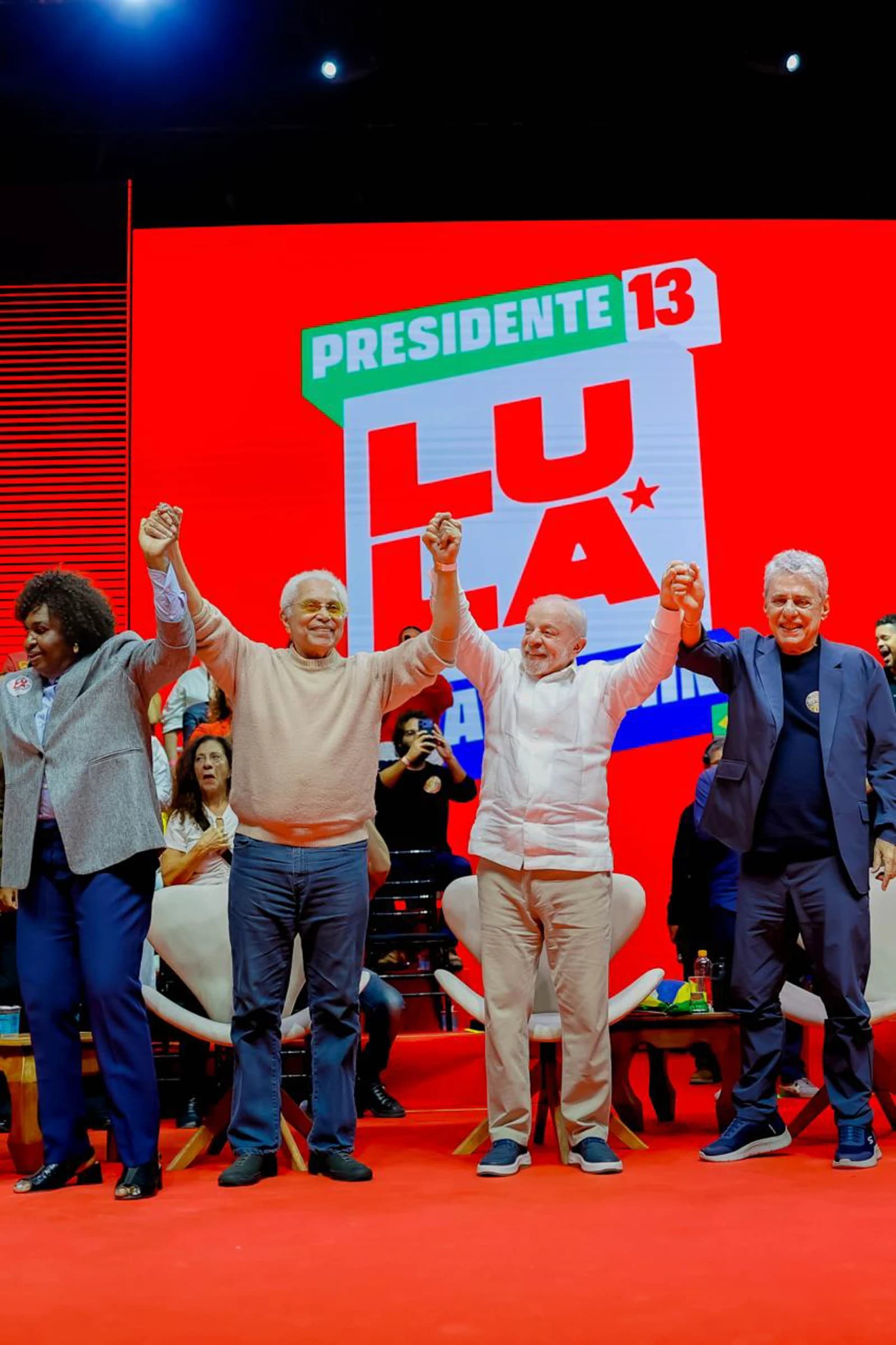
José Guimarães is using fresh IMF projections and falling hunger rates to sharpen the political case that Luiz Inácio Lula da Silva’s Brazil can grow while distributing income, a message that matters because it underpins the government’s economic credibility heading into a tougher policy and election cycle.
Brazil Growth, Hunger Data Support Lula Narrative
In a post on X, the Institutional Relations minister said “Lula’s Brazil is the Brazil that grows and distributes wealth,” arguing that the country is on track to become the world’s eighth-largest economy by 2027. The IMF estimates Brazil’s GDP will reach $2.8 trillion in 2027, up from a projected $2.65 trillion in 2026, with growth of 2.2% this year and 1.9% next year.
The pitch is politically useful because it links macro expansion with social policy at a time when Brazil is still dealing with inflation, high borrowing costs and only modest near-term growth. Recent labor data showing unemployment at 5.2% and a continuing decline in food insecurity give the administration evidence to argue that the economy is broadening beyond headline GDP.
Markets, however, are looking at a more mixed picture. Brazil’s economy expanded just 0.1% in the third quarter of 2025, and the country’s growth forecast for 2025 has been trimmed to 2.16%, underscoring the drag from tight monetary policy. That leaves investors weighing a stronger longer-run story against near-term pressure on demand, credit and corporate earnings.
The investment angle is clearest in Brazilian assets that are already reacting to the country’s growth narrative and commodity backdrop. EWZ, the iShares MSCI Brazil ETF, closed at $42.94 on Oct. 20, its highest level in the data, while Petrobras and Vale have also been volatile as oil and iron ore prices swing. A stronger Brazil story typically supports risk appetite for local stocks and the real, but any disappointment on growth or inflation can quickly reverse the trade.
Guimarães also tied Lula’s government to Brazil’s removal from the UN hunger map for a second time, framing social progress as part of the same economic model. He used the post to attack proposals associated with Flávio Bolsonaro, casting them as a threat to social rights, a reminder that Brazil’s growth debate is already turning into a proxy fight over the country’s economic model.
For investors, the next test is whether Brazil can keep unemployment low and inflation contained without choking off growth. If the IMF path proves right, the country’s corporate winners will be the ones exposed to domestic consumption and a steadier exchange rate; if policy tightens or confidence weakens, the losers will be debt-sensitive sectors and cyclical names tied to local demand.
| Entity | Gains | Losses |
|---|---|---|
| Lula government | ▲Political capital from growth narrative | ▼Pressure if growth slows |
| Brazilian consumers | ▲Lower unemployment, more income support | ▼Inflation and high rates |
| EWZ / Brazil equities | ▲Stronger macro story, foreign inflows | ▼Policy or growth disappointment |
| Flávio Bolsonaro / opposition | ▲— | ▼Lula’s social-growth messaging |