Brazil’s inflation cooled in October, but the bigger message for markets is that price pressures are still sticky enough to keep the central bank cautious even as energy costs eased.
Brazil Inflation Eases as Food Costs Stay Sticky
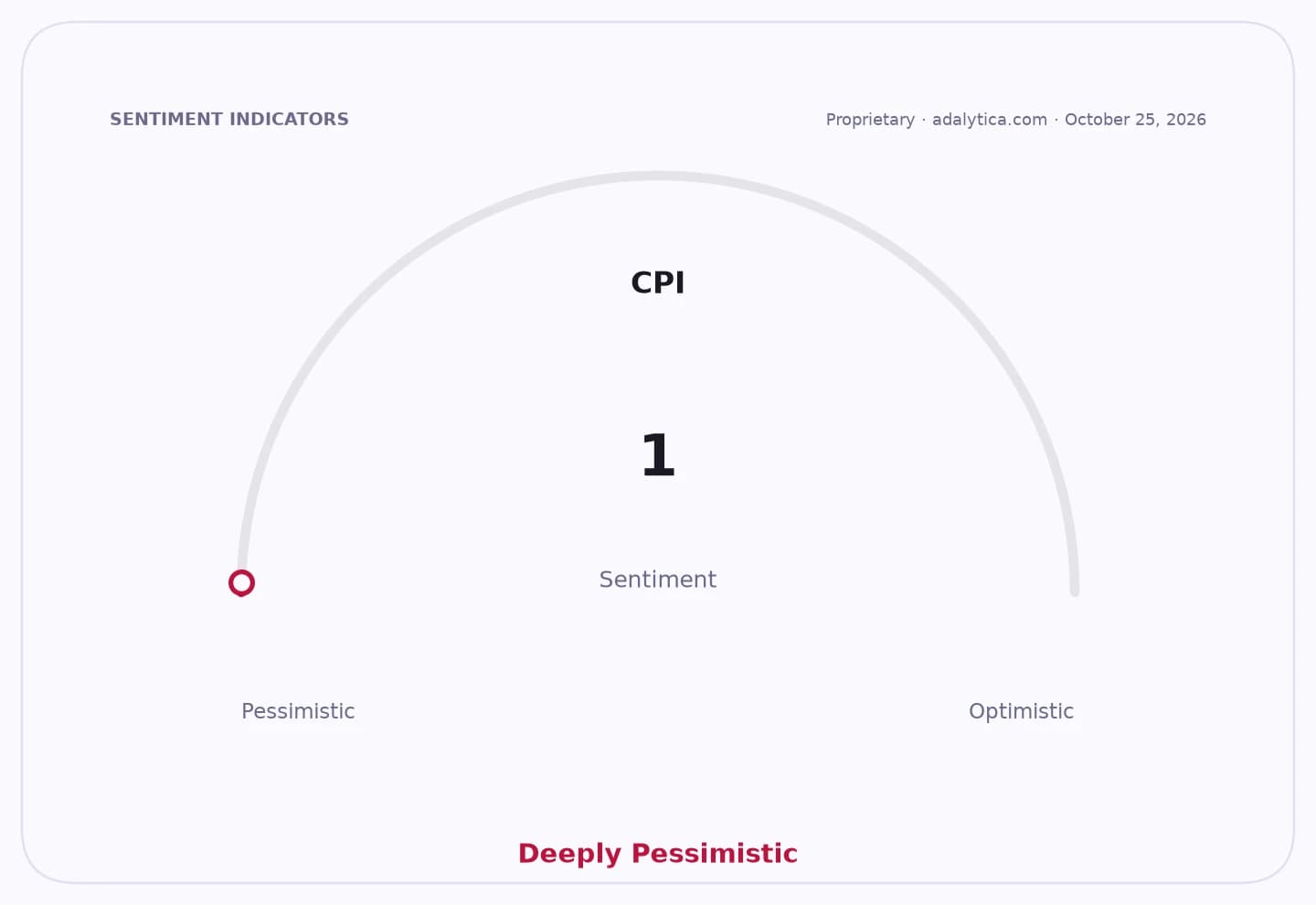
CPI
The preliminary IPCA-15 rose 0.32% in the month, down sharply from 0.70% in September, according to the IBGE. That brought 12-month inflation to 4.62%, up from 4.47% in the prior reading and above the central bank’s comfort zone, even as the monthly pace slowed. For investors, that is the key tradeoff: softer headline inflation gives policymakers some breathing room, but the acceleration in food and fuel means Brazil is not yet seeing the kind of broad disinflation that would open the door to faster rate cuts.
Sentiment Indicators
Food was the main source of pressure. The food and beverages group climbed 0.88%, accounting for more than half of the month’s overall rise, as tomatoes, onions, potatoes and rice all got more expensive. Household food inflation accelerated to 1.01% from 0.38% in September, while eating out also firmed. That matters because food inflation hits consumer confidence quickly and tends to seep into wage expectations, making it harder for the central bank to declare victory.
Offsetting that was a sharp drop in electricity costs. The housing group fell 0.10% after a 2.07% increase in September, helped by a switch in the power tariff flag from yellow to green. Airfares also tumbled 9.24%, blunting the impact of faster fuel prices. But the quality of the slowdown matters more than the headline number: transport costs still rose 0.05% even as diesel, ethanol and gasoline all became more expensive.
For Brazilian assets, the reading reinforces a market that is already split between hopes for easing inflation and concerns that sticky prices will keep real yields elevated. The Bovespa has already been swinging violently, and the recent plunge in the benchmark underscores how quickly sentiment can reverse when investors fear policy or macro missteps. Lower inflation would normally support local equities and rate-sensitive assets, but the persistence of food and energy pressure argues against a clean re-rating just yet.
The regional breakdown also shows how uneven the inflation pulse remains. Belém posted the highest increase, while Curitiba was the only area with deflation, underlining that price dynamics are still being driven by local shocks as much as by the national trend.
For now, the investment case is straightforward: Brazil remains an inflation story, not a disinflation triumph. That favors investors who can benefit from high real rates and selective pricing power, while cautioning against chasing a broad rebound in consumer-sensitive or rate-dependent assets until the 12-month pace begins to ease convincingly.
| Entity | Gains | Losses |
|---|---|---|
| Brazilian central bank | ▲More room to stay cautious | ▼Pressure to cut rates faster |
| Consumers | ▲Lower electricity bills | ▼Higher food and fuel costs |
| Rate-sensitive equities | ▲Potential support if inflation cools further | ▼Still-high real rates and volatility |
| Food producers and retailers | ▲Ability to pass through prices | ▼Households facing tighter budgets |