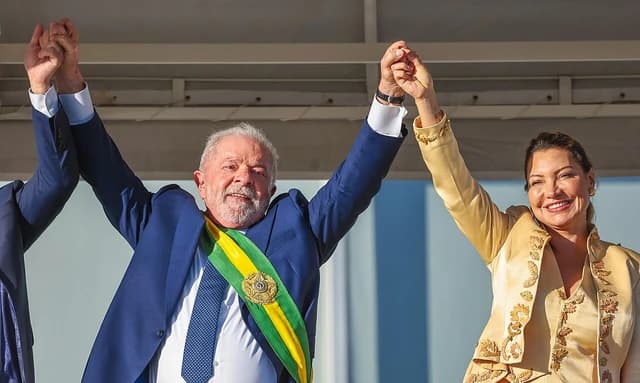
A founder of Brazil’s Clean Record Law has thrown his support behind President Luiz Inácio Lula da Silva, undercutting one of the Bolsonaro camp’s most potent attacks just as the country’s political risk premium rises again.
Brazil Lula support from Clean Record Law founder

Márlon Reis, one of the architects of the landmark law that bars certain convicted politicians from office, said he will vote for Lula in the runoff and rejected criticism over the president’s eligibility, arguing that the Supreme Court’s annulment of Lula’s corruption convictions erased any legal basis for the “disqualified” label. He also said there is no such thing in Brazilian law as a “de-convicted” politician, pushing back on a line repeatedly used by Lula’s opponents.
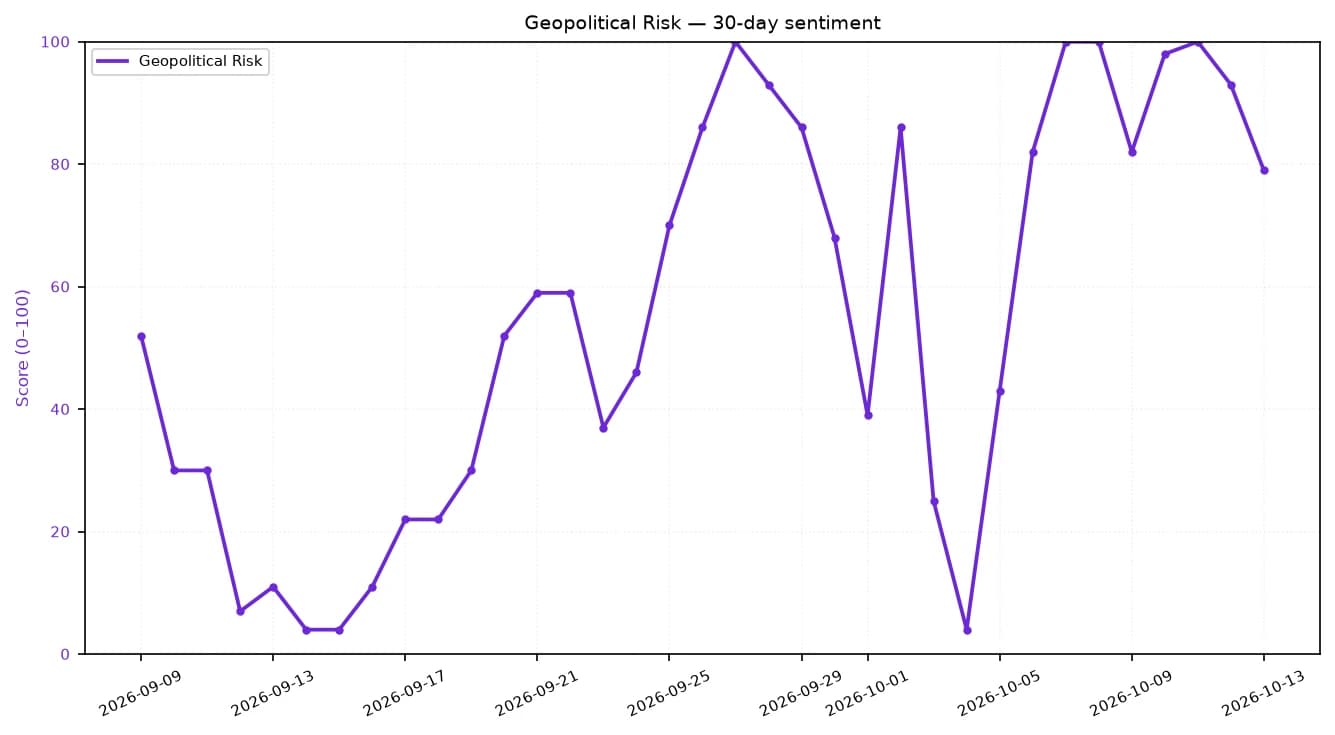
Sentiment Indicators
The timing matters. Brazil’s election is now being shaped less by policy and more by the legitimacy battle around the candidates, with the Bolsonaro family leaning heavily on anti-Lula rhetoric while Flávio Bolsonaro has fled to Miami and declared himself the “elected president” from abroad. That raises the temperature in a market that had already been prone to swings on every signal of legal, fiscal and institutional instability.
For investors, the immediate takeaway is that Brazil’s governance narrative is becoming an investable variable again. When a lawmaker or jurist associated with anti-corruption reform publicly sides with Lula, it helps normalize the legal basis for his candidacy and weakens the opposition’s attempt to turn the runoff into a referendum on judicial procedure. That can matter for foreign capital, which tends to demand a wider discount when political noise threatens policymaking continuity.
The market already knows Brazil can move sharply on politics, and the latest price action in EWZ shows how fast sentiment can reverse. The iShares MSCI Brazil ETF has been volatile, while Petrobras and other Brazil proxies have remained sensitive to every shift in Brasília. The bigger point is that investors are still pricing Brazil as a country where institutions can either stabilize risk or amplify it, and this episode points to a narrower path for the Bolsonaro camp’s legal argument.
At the same time, the broader backdrop is not friendly to complacency. Global risk appetite remains elevated, but Brazil’s domestic uncertainty is colliding with a stronger need for policy credibility, fiscal discipline and institutional calm. If Lula is seen as the more constitutionally secure option, that could support Brazilian assets relative to a market that has spent too much time trading on headline panic rather than fundamentals.
My thesis is simple: the market underestimates how much legal legitimacy matters for Brazil’s asset mix. If Lula’s standing is reinforced by figures tied to anti-corruption reform, that helps reduce one of the largest overhangs on Brazilian equities, the real and local rates. If Bolsonaro-aligned attacks keep escalating from abroad, the political noise will likely stay high — but so will the opportunity for investors willing to buy into a stabilization trade before consensus catches up.
| Entity | Gains | Losses |
|---|---|---|
| Lula campaign | ▲Legitimacy boost | ▼Less room for eligibility attacks |
| Bolsonaro camp | ▲Mobilizing base | ▼Legal narrative weakened |
| EWZ / Brazil equities | ▲Lower political discount | ▼Volatility fades slower if turmoil persists |
| Foreign investors | ▲Clearer institutional signal | ▼Higher risk premium if crisis deepens |