Brazil’s biggest political risk is no longer just who wins power, but whether the country’s winners and losers still accept the rules of the game.
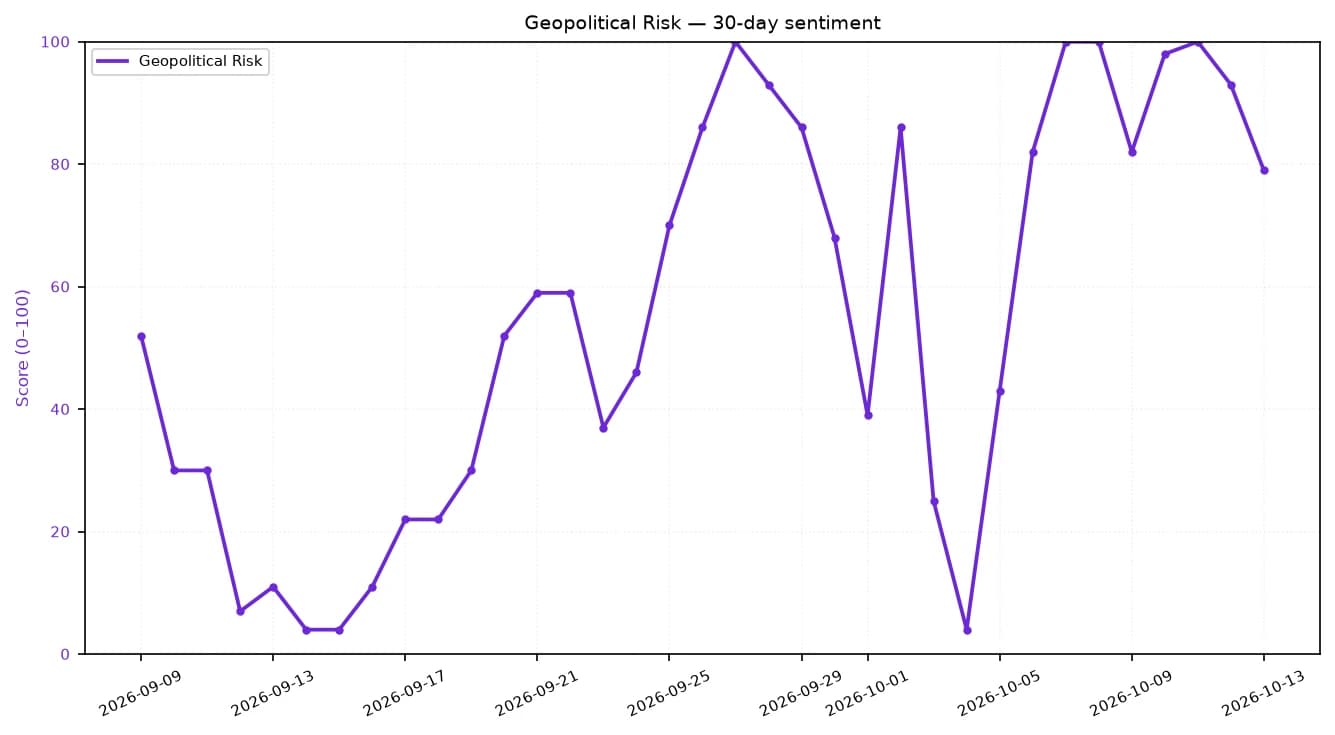
Brazil political risk and EWZ, Petrobras volatility

That matters far beyond Brasília. A democracy that can transfer power cleanly tends to keep policy more predictable, institutions more durable and investment risk lower. When the opposition increasingly treats victory as illegitimate and defeat as something to be fought in the courts, the ballot box stops being the end of the story — and markets have to price in more volatility, more institutional strain and a weaker policy premium.
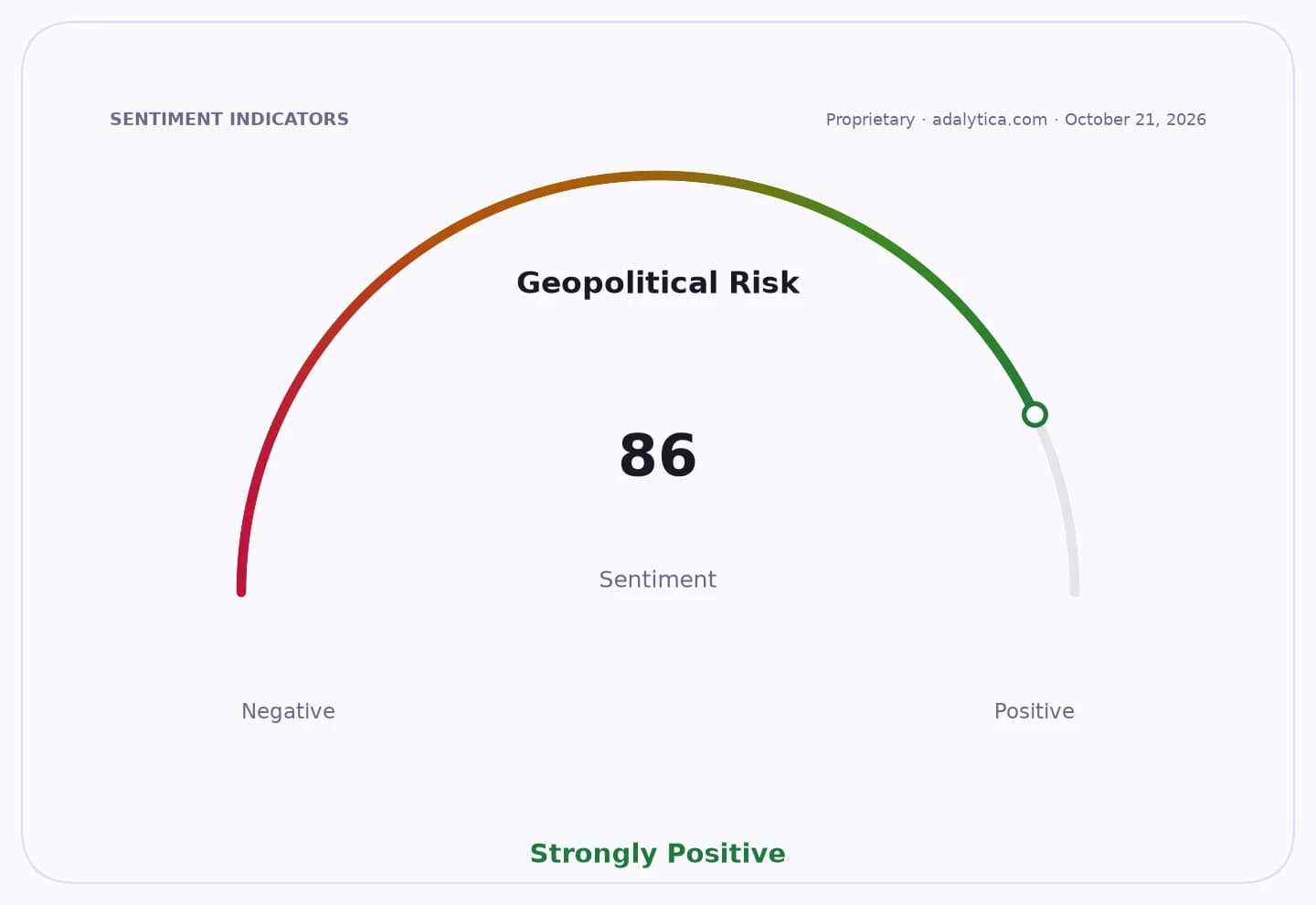
Sentiment Indicators
The latest flash point is the Bolsonaro family’s continued advance even after Jair Bolsonaro’s conviction and removal from center stage. The patriarch is serving a 27-year-and-three-month sentence at home after the failed coup effort following his 2022 defeat. Yet the political machine built around him remains formidable. His sons and allies have won seats across Congress and state politics, and Flávio Bolsonaro now stands at the center of the right’s presidential bid after outpolling Lula in the first round.
This is what makes the story more than a routine left-right contest. Brazil’s old democratic compromise — built after military rule ended in 1985 and reinforced by the 1988 constitution — relied on rival blocs accepting each other as legitimate and bargaining within institutions. For decades, the center helped hold that bargain together. The PT, PSDB and MDB once commanded roughly 46% of the lower house combined; by the 2026 cycle, that share had fallen to 23%, leaving less room for moderation and more space for identity politics, personalism and confrontation.
That erosion matters economically because governments need compromise to govern. Brazil’s sprawling federal system already makes majorities hard to assemble. If the president cannot rely on a stable legislative coalition, policy becomes harder to execute and easier to reverse. That is especially important for investors in a country where fiscal policy, taxes, state intervention and energy strategy can swing sharply with political pressure.
The market backdrop reflects that mix of opportunity and risk. Brazil’s U.S.-listed iShares MSCI Brazil ETF, EWZ, jumped above $42 in late October before sliding to $33.14 by Oct. 29, a drop of more than 20% in a week. The move left the fund well below its 50-day and 200-day moving averages, with the relative strength index deep in oversold territory and the MACD turning negative. In plain English, investors had rushed into Brazilian exposure on politics, then quickly pulled back as uncertainty returned.
Petrobras shares have also been volatile. PBR climbed to $26.16 on Oct. 23 before falling to $21.90 by Oct. 29. The stock is still above its 200-day average, but the recent drop has dragged it much closer to its 50-day trend and cooled momentum sharply. For long-term investors, that is a reminder that Brazil’s state-linked champions can be attractive cash-generating businesses, but they still trade with heavy political baggage.
The real issue is not one election cycle. It is whether Brazil still has a democratic center strong enough to absorb defeat, police extremism and keep governing institutions intact. That matters for everything from central bank credibility to state-owned company strategy to foreign capital flows. If the Bolsonaro camp continues to reject adverse outcomes while building power through Congress, states and digital mobilization, the country may keep its elections but lose some of the compromise that made its democracy economically valuable.
For investors, the lesson is straightforward: Brazil remains investable, but the political discount is not disappearing soon. The best way to own the country is still through patience, diversification and a focus on businesses that can compound through noise rather than depend on it. That means watching whether institutions hold, whether policy stays predictable and whether the next chapter of Brazilian politics restores the habit of losing gracefully — or makes every result a new crisis.
| Entity | Gains | Losses |
|---|---|---|
| Bolsonaro family | ▲Political relevance | ▼Institutional trust |
| Lula and centrist allies | ▲Short-term mandate if stable | ▼Coalition leverage |
| Brazilian investors | ▲Opportunities in oversold assets | ▼Higher policy uncertainty |
| EWZ/PBR holders | ▲Potential rebound if stability returns | ▼Near-term volatility |