Brazil’s federal prosecutors have opened an inquiry into whether Meta and Elon Musk’s X imposed disproportionate restrictions on election-related content, a move that underscores how quickly social platforms’ political speech policies are becoming a regulatory and investment risk.
Brazil probes Meta and X over election content restrictions
For investors, the significance is bigger than a local dispute. The probe lands squarely on two of the internet’s most valuable distribution channels at a time when governments from India to the EU are tightening scrutiny of online political content, moderation practices and platform accountability. Any finding that the companies overreached could sharpen pressure on how they police elections, raise compliance costs and invite broader challenges to automated moderation systems that already sit at the center of trust-and-safety budgets.
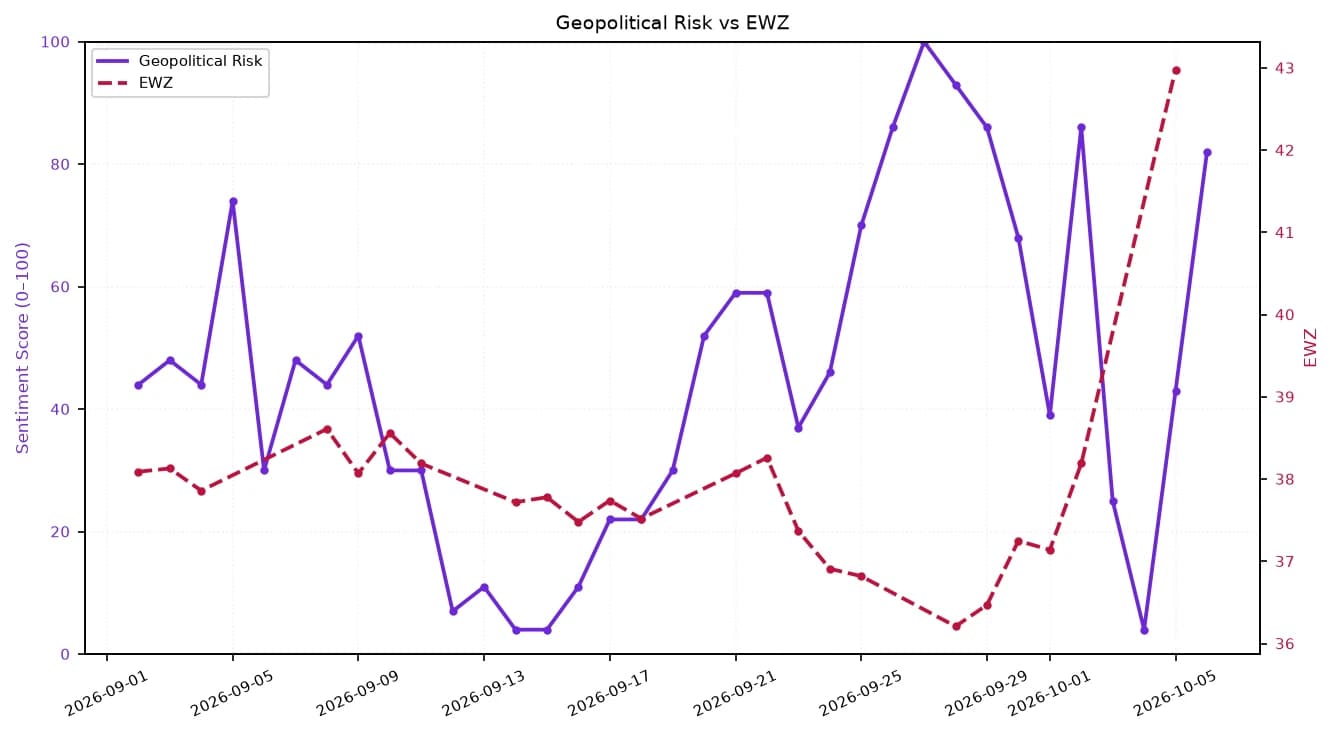
Sentiment IndicatorsⓘProprietary · adalytica.com · October 16, 2026
This is a snapshot — live sentiment, awareness and momentum for 130+ markets update continuously in the dashboard.Open AlphaPulse
Brazil’s Federal Public Defender’s Office said it is investigating “disproportionate or unjustified” takedowns of profiles, posts and platform functions affecting citizens, journalists, independent media, student groups and social movements. The inquiry was triggered by non-profits including Article 19, Conectas, Sleeping Giants Brasil and CTRL+Z, which said they compiled nearly 100 complaints between Sept. 25 and Oct. 9 involving account bans and posts that were not tied to party propaganda.
The platforms have been asked to explain within five days the legal and factual basis for the measures and whether the restrictions remain in place or have been reversed. Meta declined to comment, while X could not immediately be reached.
The economic stakes are easy to miss if you focus only on content policy. Elections drive engagement, advertiser attention and user trust, but they also expose platforms to the most politically sensitive moderation decisions they make. If regulators conclude that moderation is too aggressive, platforms face legal and reputational blowback. If they pull back, they risk being accused of allowing misinformation, which can be just as damaging to the franchise. That squeeze is why trust-and-safety is no longer a side function; it is a material operating expense and a recurring policy overhang for the digital ad model.
The market is already pricing some of that tension unevenly. Meta has remained the stronger large-cap internet name on the back of ad resilience and AI monetization hopes, but its stock has shown that regulatory shocks can still knock sentiment around. X is more difficult to value as a private company, but any widening campaign of election-content scrutiny adds pressure to a platform already battling advertiser caution, moderation controversy and a thinner commercial cushion than Meta.
The broader narrative is that the world’s largest platforms are being forced to choose between two politically fraught outcomes: stricter moderation or looser policing. Neither is cost-free. Brazil is not an isolated case; it is another sign that election integrity has become a global compliance issue for Big Tech, much like privacy and antitrust before it. That creates a durable tailwind for companies that help with digital governance, content review, identity verification and brand safety, while keeping a lid on multiples for the platforms most exposed to policy shocks.
For investors, the takeaway is straightforward: the headline risk around elections is not going away, and the cost of running global social networks is becoming more regulatory and less purely technological. I believe the better long-term trade is in the picks-and-shovels layer around moderation, compliance and ad safety, not in assuming the big platforms can keep absorbing political risk without margin pressure or periodic multiple compression.
| Entity | Gains | Losses |
|---|---|---|
| Compliance and trust-and-safety vendors | ▲Higher demand | ▼— |
| Meta | ▲— | ▼Regulatory scrutiny |
| X | ▲— | ▼Moderation backlash |
| Digital advertisers | ▲Better brand-safety standards | ▼Policy uncertainty |