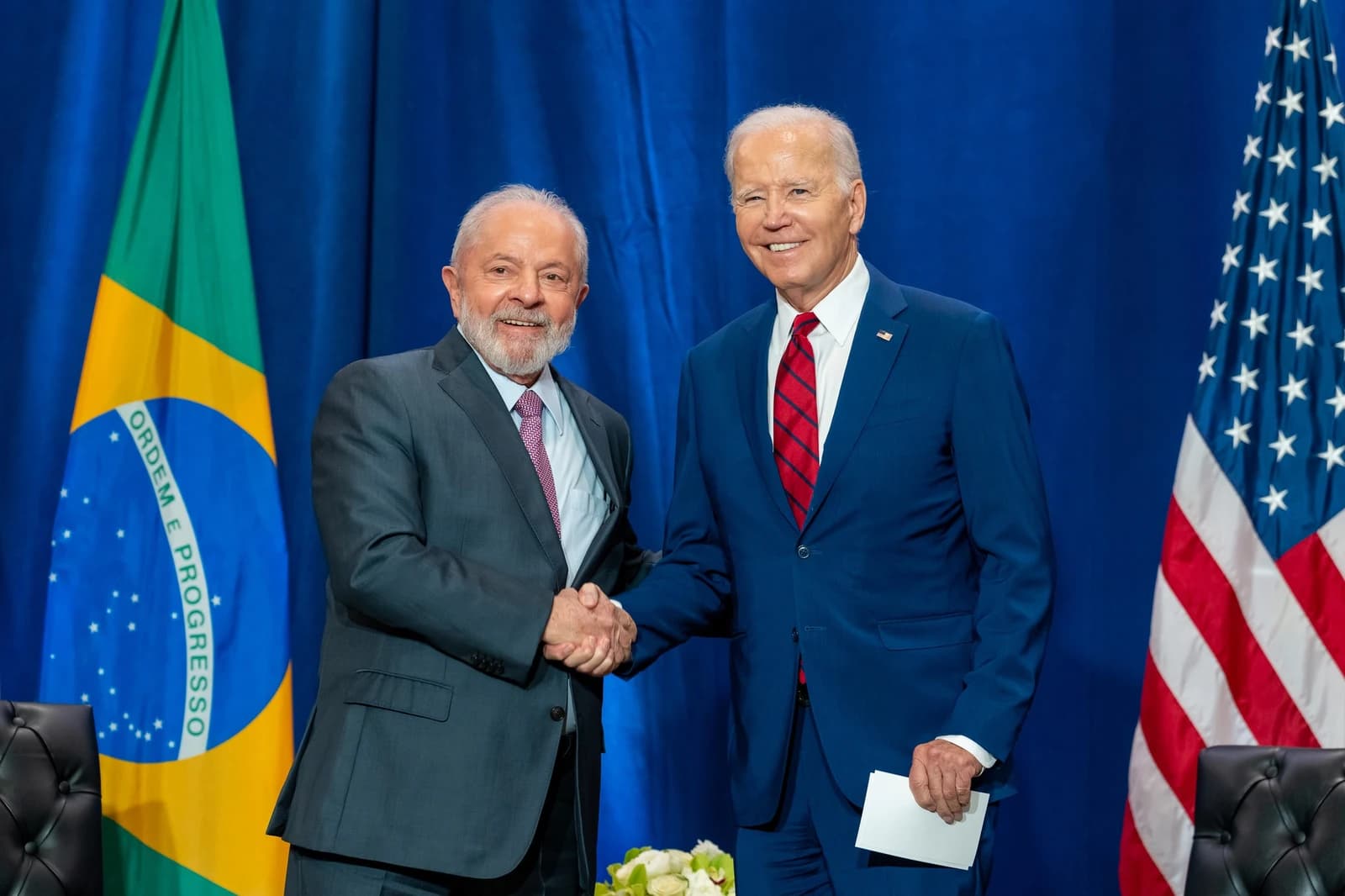
A former CIA officer’s unproven claim that U.S. intelligence could be intervening in Brazil’s election adds a geopolitical risk premium to an already consequential vote, but the real market issue is whether political noise starts to affect Brazil’s risk appetite, capital flows and the tradeable exposure in Brazilian assets.
Brazil election claim lifts EWZ volatility
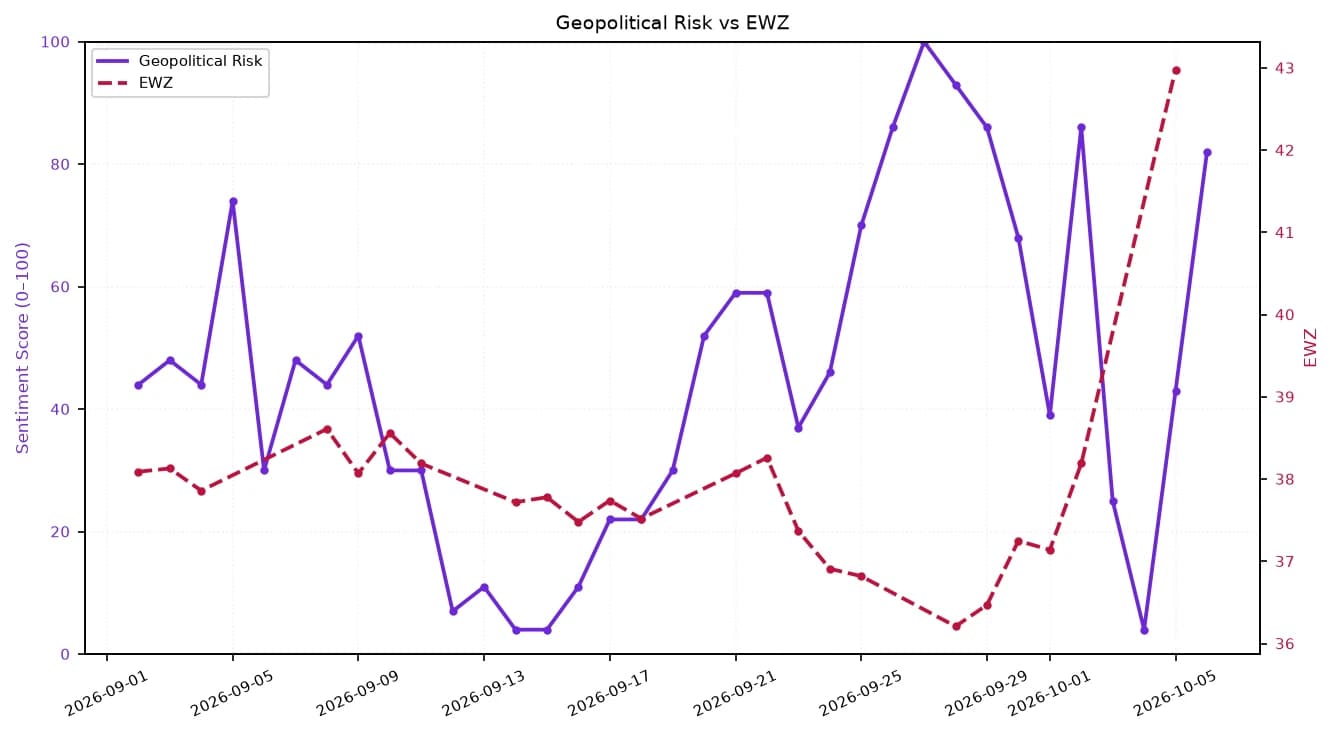
John Kiriakou’s accusation, and his later correction that a prior conversation was with President Luiz Inácio Lula da Silva rather than Jair Bolsonaro, matters less for the evidence he has not produced than for the attention it draws to Brazil’s fraught political backdrop. The Central Election Commission says there are no signs of foreign interference, and that should be the baseline for investors. Still, in a country where elections can reprice the currency, sovereign risk and equity multiples quickly, even a fringe allegation can feed uncertainty around the policy path that emerges from Brasília.
Sentiment IndicatorsⓘProprietary · adalytica.com · October 7, 2026
This is a snapshot — live sentiment, awareness and momentum for 130+ markets update continuously in the dashboard.Open AlphaPulse
That is why the investable story is broader than the claim itself. Brazil is not being traded on a single X post, but on the market’s view of institutional stability, the durability of democratic rules and the policy mix that follows the vote. If the election consolidates a market-friendly coalition, local assets can re-rate on lower political discount rates and renewed foreign inflows. If it hardens polarization or raises questions about the integrity of the process, investors will demand a bigger risk premium across equities, the real and sovereign debt.
The immediate market read through is Brazilian equities, especially the iShares MSCI Brazil ETF, EWZ, which has already been on a sharp run. EWZ closed at $42.98 on Oct. 5, far above its 50-day moving average of $36.49 and 200-day average of $36.22, while its RSI reading of 74.6 suggests the fund is already in overbought territory by a standard technical measure. That tells you positioning is crowded enough that political headlines can still trigger sharp swings, even if the underlying thesis remains constructive.
The same is true for the state-linked energy names that often act as proxy trades on Brazil macro sentiment. Petrobras ADRs, PBR, jumped to $24.14, well above its 50-day average of $19.45, while BRF rallied to $19.06 from a 200-day average of $17.30. Those moves show investors are already hunting for beta to Brazil’s improving risk tone. But that also means any escalation in election-related allegations could unwind gains fast, especially if it revives concerns about governance, intervention risk or policy unpredictability.
Our view is that the market is underestimating how quickly Brazil can become a capital-flow story rather than just a political story. The combination of a contested election narrative, foreign-interference rhetoric and a still-elevated global appetite for risk creates room for sharp rotations between domestic beneficiaries and defensive exporters. For investors, that means staying with liquid Brazil exposure only if they can tolerate headline volatility, and pairing it with names that benefit from a stronger commodity backdrop or a weaker local risk premium.
The bigger catalyst now is whether the election result closes the loop on the interference narrative or keeps it alive. If authorities continue to find no evidence, the market can return to fundamentals: fiscal policy, rates, energy policy and corporate governance. If the story deepens, Brazilian assets could see a temporary risk-off flush that ultimately creates a better entry point for long-term buyers. In either case, the opportunity lies in positioning before the political premium fully reprices, not after the noise has already hit the tape.
| Entity | Gains | Losses |
|---|---|---|
| Bolsonaro camp | ▲Narrative momentum | ▼Scrutiny over legitimacy |
| Lula government / election authorities | ▲Institutional credibility | ▼Noise from foreign-interference claims |
| EWZ buyers | ▲Potential re-rating on clarity | ▼Volatility from headlines |
| Brazilian risk assets skeptics | ▲Short-term downside setup | ▼Missed upside if fears fade |