Hands off our kids is becoming a policy market, and big-tech investors should not assume the latest child-safety drive will stay a political headline for long.
Meta Alphabet Apple Face Child-Safety Rule Costs
The immediate issue is that governments are moving from broad rhetoric about online harms to tougher, more expensive rules on how platforms and device makers handle children’s data, content and access. That matters because it raises compliance costs, increases legal risk and could force product changes across the digital advertising and app ecosystems that still depend on frictionless engagement. In other words, this is not just a social policy debate — it is a margin and growth debate for the biggest names in tech.
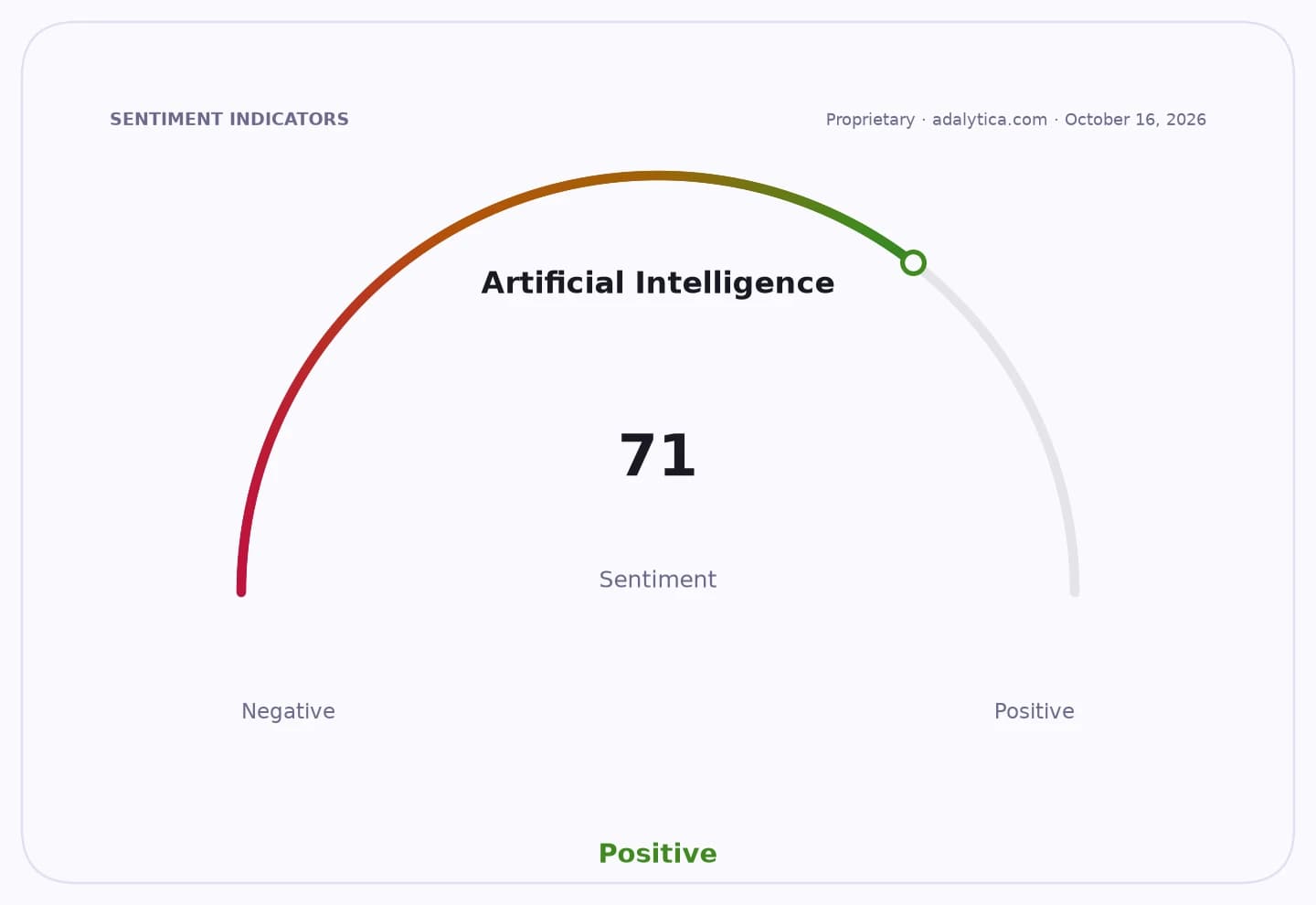
Sentiment IndicatorsⓘProprietary · adalytica.com · October 15, 2026
This is a snapshot — live sentiment, awareness and momentum for 130+ markets update continuously in the dashboard.Open AlphaPulse
Meta, Alphabet and Apple are all exposed. Meta’s latest filing warns of legislative and executive efforts to impose new obligations on online platforms, while Alphabet says it already faces rules governing children’s privacy and age-appropriate experiences. Apple, too, has flagged the cost of complying with changing requirements that can force product redesigns. The market has largely treated these risks as background noise, but the political momentum is clearly building. The UK Cabinet’s renewed focus on online child protection shows where the regulatory arc is heading: tighter gatekeeping, more verification, and less tolerance for platforms that optimize for attention first and safety second.
For investors, the crucial point is that regulation rarely hits only one line item. Once governments start demanding stronger child-safety controls, the burden spreads through advertising targeting, recommendation engines, app distribution, age verification, cloud moderation, and payments. That creates a two-sided trade. The megacap platforms can absorb some of the cost, but the smaller ad-tech, gaming and social-media players are far more vulnerable to compliance drag. Meanwhile, security, identity, moderation and parental-control vendors stand to gain as spending shifts toward the “safety layer” of the internet.
The market is also leaving a lot of this unpriced in. Meta has rallied sharply this year, but the stock is still exposed to any rule set that makes youth engagement harder to monetize. Alphabet’s share price has been steadier, yet its ad model remains dependent on scaling targeted services without triggering harsher restrictions. Apple may be better insulated on advertising, but any rules that force deeper content controls or age-gating across devices can still add friction to the ecosystem. With the S&P 500 trading in a nervous but not panicked state, according to Adalytica’s S&P 500 Trade Signals, the broader market is not pricing a full-blown regulatory repricing in mega-cap tech.
The smarter way to invest here is to look past the headlines and toward the second-order beneficiaries. I believe the next leg of value creation in this policy cycle will come from companies that make digital environments safer, verifiable and easier to police. That includes identity verification, AI moderation, parental-control software, and compliance infrastructure — the toll roads of the regulated internet. If lawmakers keep tightening the screws, those names should see durable demand even if the platform giants do what they always do: absorb the blow, lobby hard, and pass part of the cost down the stack.
The takeaway is simple: child-safety regulation is no longer just a reputational issue for Big Tech. It is becoming a structural cost of doing business, and that makes the picks-and-shovels of digital safety more attractive than ever.
| Entity | Gains | Losses |
|---|---|---|
| Child-safety software and identity firms | ▲Higher compliance demand | ▼None |
| Meta, Alphabet, Apple | ▲Limited reputational cover | ▼Higher compliance costs |
| Smaller ad-tech and social apps | ▲Niche safety demand | ▼Margin pressure |
| Parents and regulators | ▲More control | ▼Less platform flexibility |