Brazil’s election result is already hitting Argentine consumers and companies through a stronger real, with the currency’s jump making trips to Brazil more expensive even as it improves the competitiveness of Argentine exports and industrial shipments.
Brazil Real Rise Hits Argentine Trade and Travel

Markets moved first and fastest. In early trading, the real rose as much as 4.5% against the dollar and briefly broke below five reais per dollar, while Brazil’s Bovespa climbed about 8% as investors priced in a better-than-expected outcome and a higher chance of a Bolsonaro victory in the runoff. The move matters because Brazil is Argentina’s largest regional trading partner, and currency swings there quickly filter into tourism, trade balances and manufacturing margins on the Argentine side of the border.
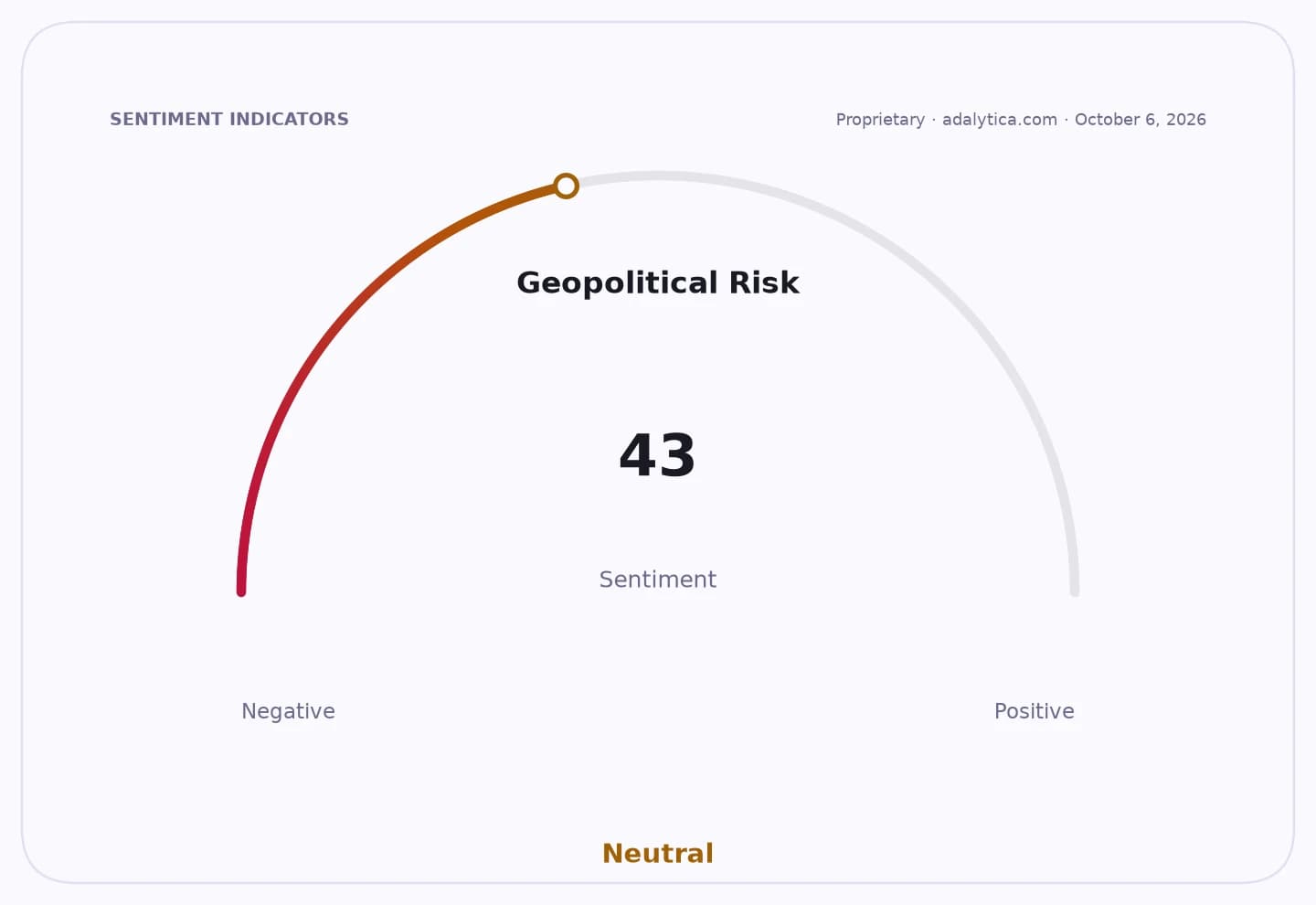
Sentiment IndicatorsⓘProprietary · adalytica.com · October 6, 2026
This is a snapshot — live sentiment, awareness and momentum for 130+ markets update continuously in the dashboard.Open AlphaPulse
For Argentine travelers, a firmer real translates into higher holiday costs if the peso does not keep pace. But for exporters, especially industrial firms, the same move makes Argentine goods cheaper in real terms and Brazilian products relatively more expensive. That is particularly important for the automotive sector, which accounts for roughly 40% of bilateral trade, and for a range of manufactured goods that depend on Brazilian demand. Argentina’s purchases from Brazil also already skew toward energy and steel, with imports of electricity up 58% this year and iron and steel up 79.8%, underscoring how exposed the economy is to changes in Brazilian prices and demand.
The bigger economic issue is not just the exchange rate, but what it says about Brazil’s policy path. Analysts expect the next government to push for a primary fiscal surplus of two to three percentage points of GDP in its first year, a tightening that could cool activity in the short term even as it supports the currency and lowers interest rates. Abeceb projects Brazilian growth of 1.9% in 2026, but warns that if fiscal adjustment coincides with Argentina’s 2027 election cycle, both economies could slow together and squeeze trade flows.
That is why investors are looking beyond the initial rally in Brazilian assets. If Bolsonaro wins comfortably, the case for a stronger real and lower rates in Brazil strengthens, supporting exporters into the market and lifting Argentine industrial names with Brazilian exposure. If Lula stages a comeback, the currency could reverse course, erasing much of the competitiveness gain. The technical backdrop in Brazil-linked U.S. ETFs reflects that volatility: the iShares MSCI Brazil ETF, EWZ, surged to $42.98 on Oct. 5, far above its 50-day and 200-day moving averages, after a sharp jump from $38.19 two sessions earlier, while Argentina-focused ARGT recovered to $89.53 from $84.52 but remained below both moving averages and well under its recent highs.
The political angle may prove even more consequential over time. A Bolsonaro victory would likely align more closely with Argentina’s government, opening the door to a more flexible Mercosur and potentially a reopening of stalled investment and trade projects. That could benefit exporters and capital goods firms, but it would also expose protected Argentine industries to more competition if the bloc moves toward broader external trade deals. For investors, the immediate trade is in the real and Brazilian equities; the longer-term story is whether the election marks the start of a regional shift toward looser trade rules, faster policy coordination and a more open market for Argentine companies.
| Entity | Gains | Losses |
|---|---|---|
| Argentine exporters | ▲More competitive pricing | ▼— |
| Argentine tourists | ▲— | ▼Higher Brazil travel costs |
| Brazilian equities | ▲Post-election rally | ▼Short sellers |
| Protected Argentine industry | ▲— | ▼More import competition |