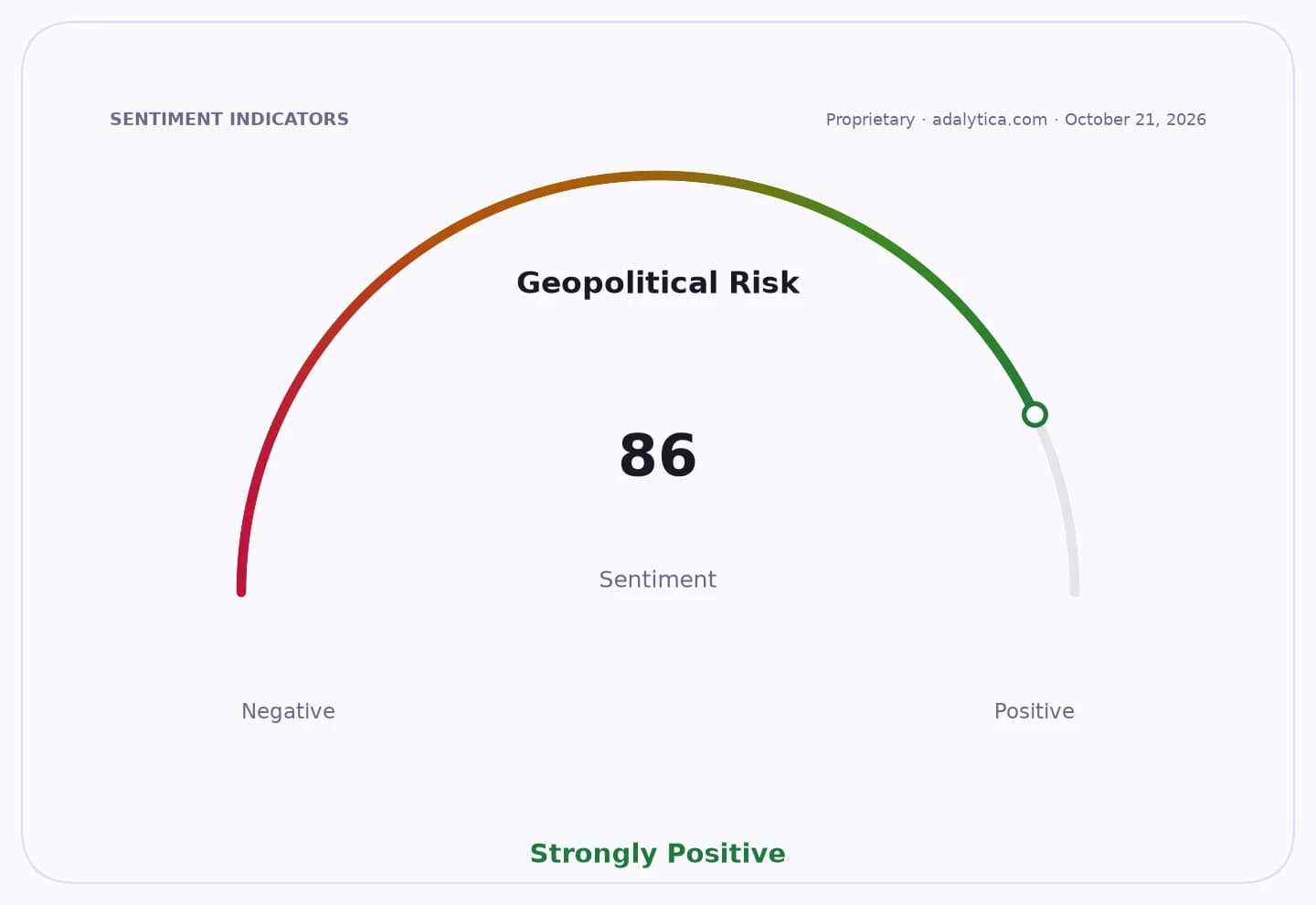
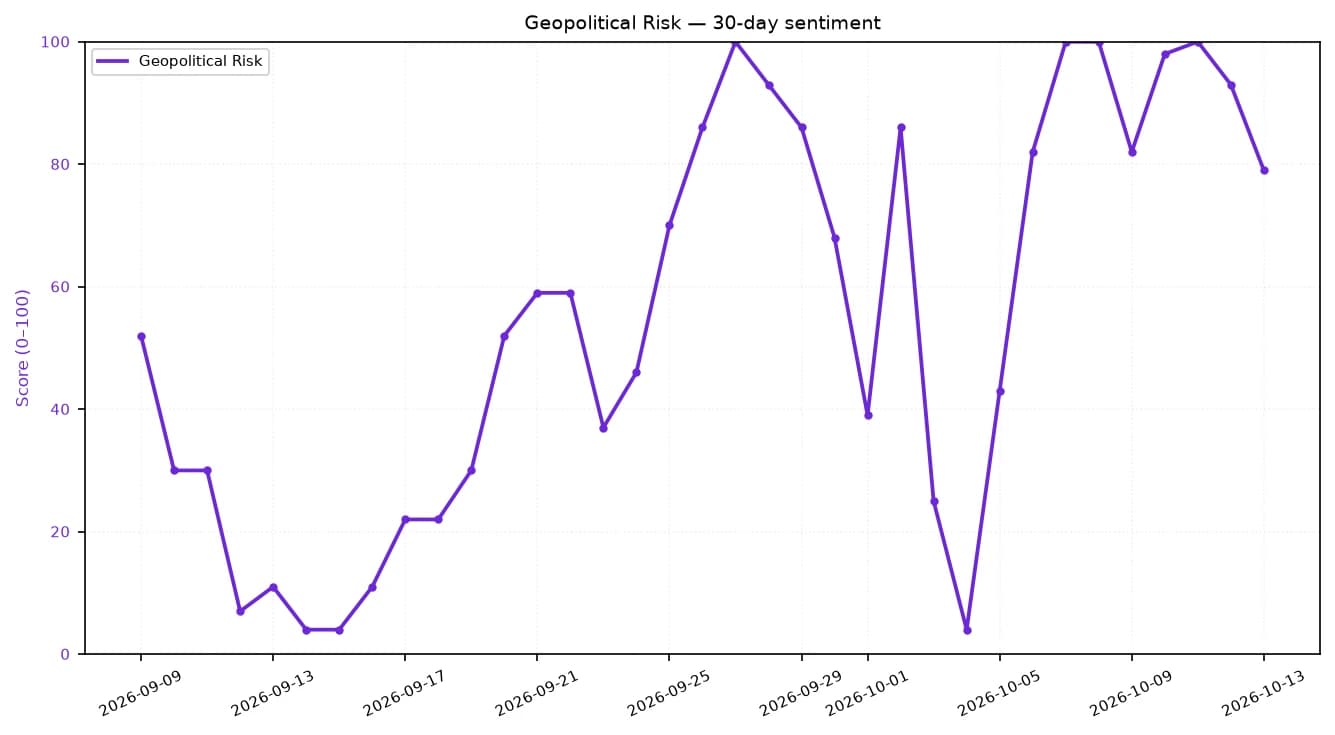
Brazil’s runoff election is now a market event as much as a political one, with Jair Bolsonaro’s ability to assemble a governing bloc likely to determine the country’s policy mix, fiscal discipline and the near-term path for Brazilian assets.
Brazil runoff election and market implications
The contest remains tight, but what matters for investors is not just who wins the presidency. It is whether Bolsonaro can translate that win into a workable congressional and state-level coalition capable of advancing his agenda. That raises the stakes for Brazil’s currency, rates and equity market, where traders are already positioning for a sharper policy shift than would be expected from a fragmented result.
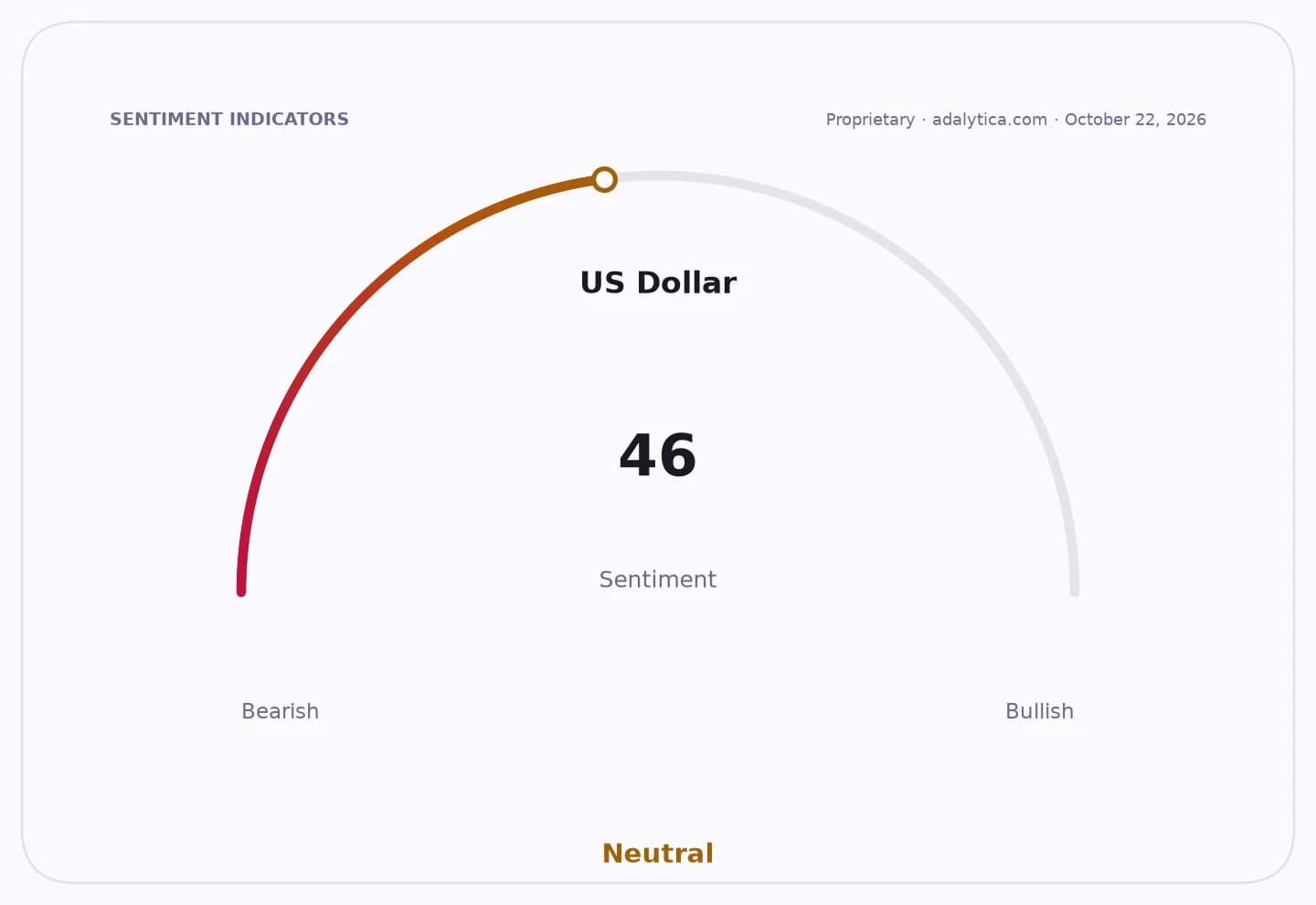
Sentiment IndicatorsⓘProprietary · adalytica.com · October 22, 2026
This is a snapshot — live sentiment, awareness and momentum for 130+ markets update continuously in the dashboard.Open AlphaPulse
The Brazilian real has held around 5.02 per dollar, little changed in recent sessions, but that stability masks the market’s sensitivity to political outcome risk. Adalytica’s US dollar trade signals show neutral sentiment at 46, while awareness has fallen into fear territory, suggesting investors are still braced for volatility rather than conviction. In Brazil’s own market, iShares MSCI Brazil ETF EWZ has climbed to $42.51, up more than 12% from $37.68 in early February, and well above its 50-day moving average of $38.12. The move points to a market that has already priced in some election optimism, but is still vulnerable if the coalition math disappoints.
The benchmark 10-year U.S. Treasury yield at 5.12%-5.15% underlines the broader backdrop: global borrowing costs remain high, leaving less room for policy missteps in emerging markets. For Brazil, that means a Bolsonaro-led bloc would be judged not only on the size of its mandate, but on whether it can restrain spending, anchor inflation expectations and avoid a repeat of policy drift that could pressure the real and local bonds. By contrast, a weaker or more divided governing alliance would probably keep fiscal risk premia elevated and limit the upside for Brazilian assets, even if the election itself is settled cleanly.
US Dollar vs EWZadalytica.com
Explore this data interactively — full history, time series and cross-market comparisons.Open AlphaPulse
The equity market is already reflecting that tension. Banco Bradesco’s U.S.-listed shares, BBD, have risen to $4.05 from $3.21 in March, while still trading below the year’s high and only modestly above the 200-day moving average. That suggests investors are not yet pricing in a decisive structural rerating. Financials and domestic cyclicals would likely benefit most from a more market-friendly policy coalition, while state-linked and rate-sensitive names could underperform if the runoff produces another round of political stalemate.
For Bolsonaro, the challenge is that a presidential victory alone may not deliver the policy continuity investors want. His camp would need enough support to push through tax, spending and reform priorities, while also managing the corruption concerns and polarization that have defined the campaign. Lula’s base still sees an opening if undecided voters turn against Bolsonaro’s rhetoric or campaign controversies, which would shift the market narrative toward a more interventionist economic stance.
The next catalyst is not just the runoff result, but the shape of the post-election bloc. If Bolsonaro can broaden his support, Brazil’s assets could extend recent gains and the real may stabilize. If not, investors are likely to demand a higher political risk premium, especially with global rates still elevated and emerging-market sentiment fragile.
| Entity | Gains | Losses |
|---|---|---|
| Bolsonaro bloc | ▲Policy control and market support | ▼Coalition failure and weaker mandate |
| Brazilian equities | ▲Reform hopes and capital inflows | ▼Political deadlock and volatility |
| Brazilian real | ▲Fiscal credibility and stronger confidence | ▼Higher risk premium and currency pressure |
| Lula opposition | ▲Gains if anti-Bolsonaro vote consolidates | ▼Loses if Bolsonaro broadens his coalition |