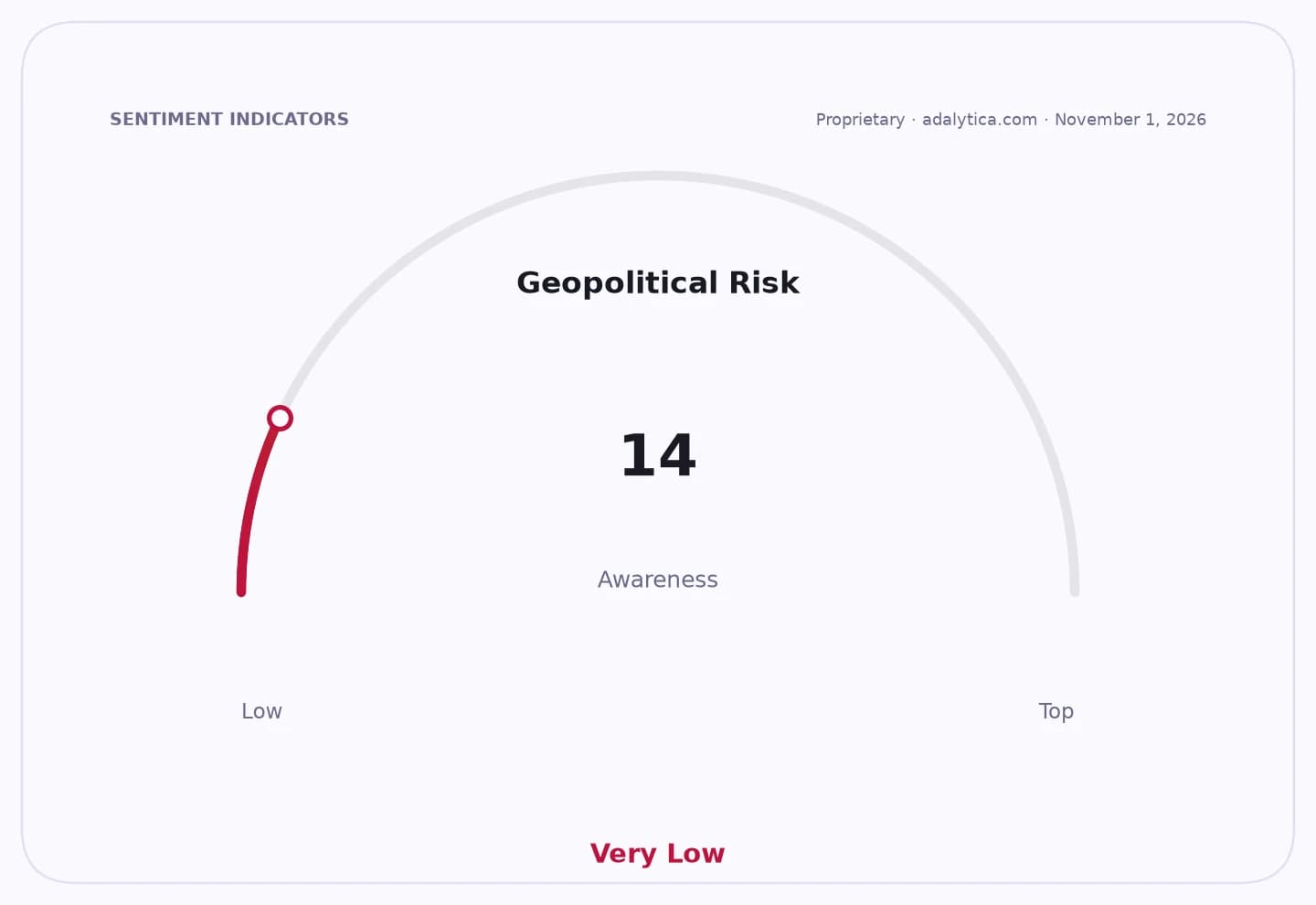
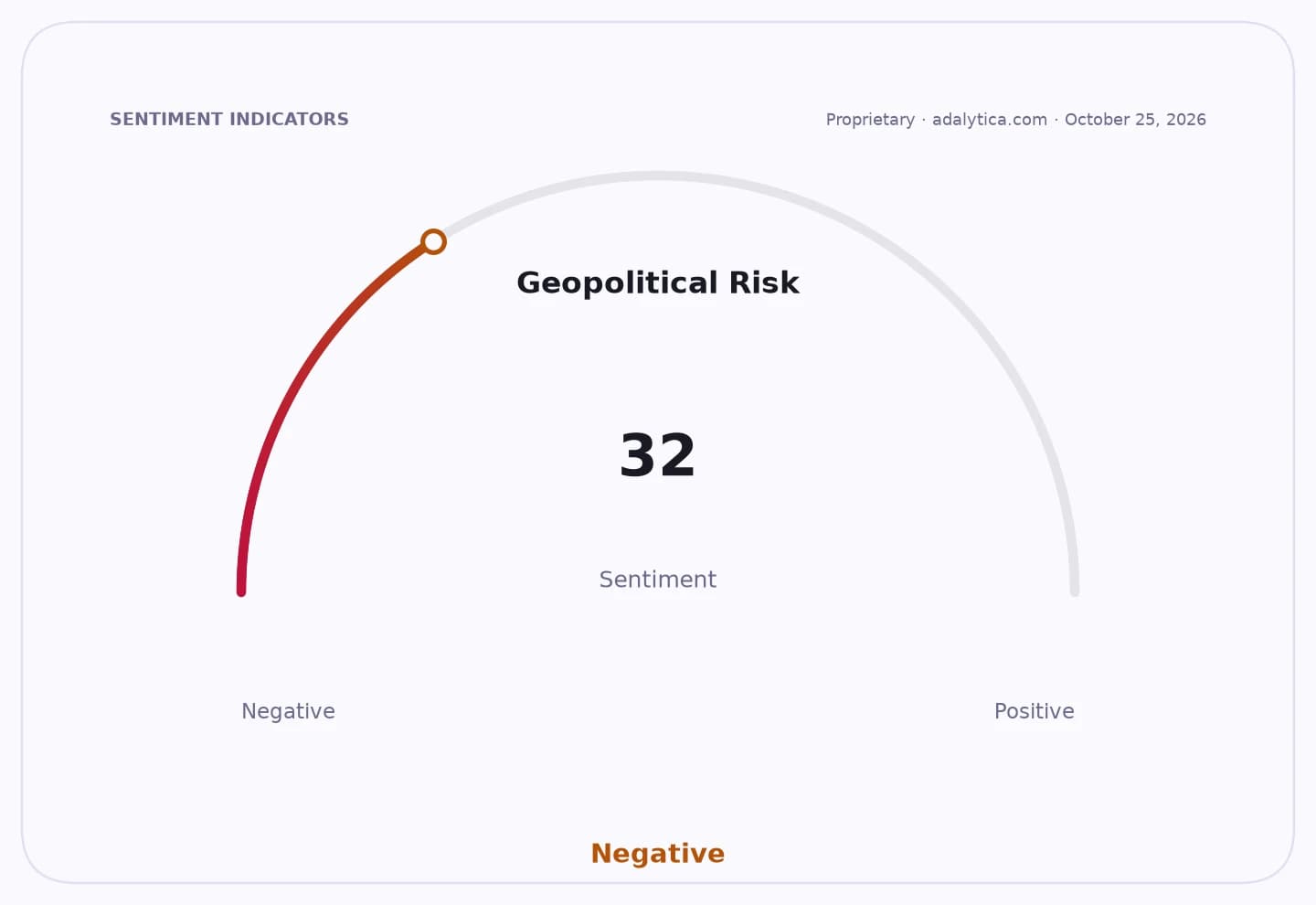
Brazil’s runoff was defined by mass mobilization rather than policy detail, and the market is treating that as a warning that the next phase of governance could be more volatile than investors expected.
Brazil runoff drives EWZ, Petrobras selloff
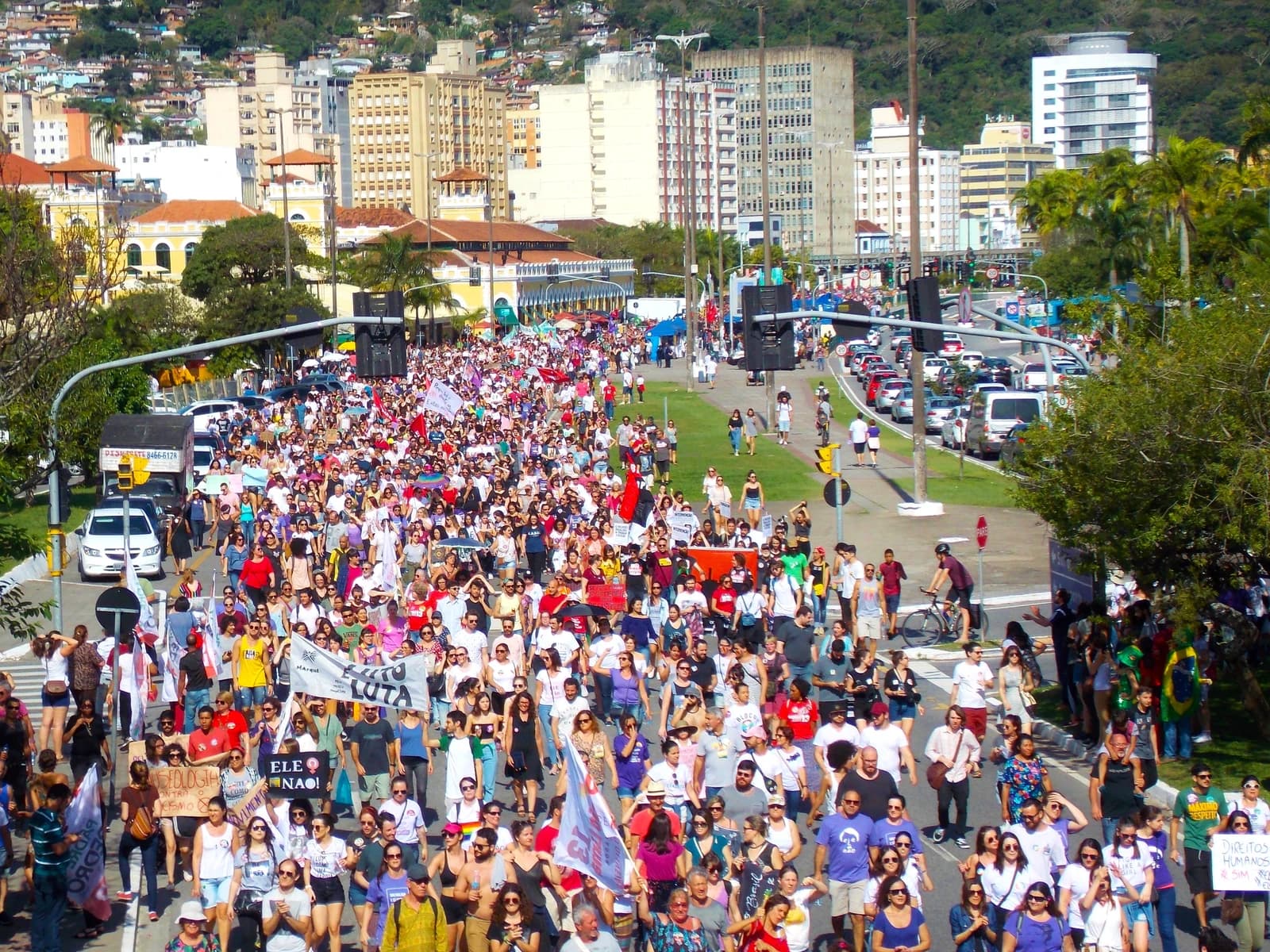
That matters because elections in Brazil are not just about who wins office; they determine the durability of reform, the pace of fiscal tightening and the stability of the commodity, energy and consumer earnings streams that foreign capital has been buying for months. When the vote is driven by popular mobilization, it usually means polarization is still high, institutions will face more friction and the policy path can swing faster than equities can digest.
Sentiment Indicators
Geopolitical Risk
The reaction in Brazilian assets has been blunt. The iShares MSCI Brazil ETF, EWZ, has slumped to $32.16 from $42.59 on Oct. 23, a drop of more than 24% in a matter of sessions, while its 14-day RSI has collapsed to 14.8, a classic oversold reading. Petrobras ADRs, PBR, have been hit just as hard, sliding to $21.16 from $26.16 over the same period, with RSI at 23.8. BRF, the food producer often seen as a domestic demand and export proxy, has been cut nearly in half from $20.19 to $12.95. The common denominator is not company-specific deterioration so much as a wholesale repricing of Brazilian political risk.
For investors, that creates two very different trades. The first is the obvious one: Brazil’s political premium has risen sharply, and anything tied to local policy, state intervention or consumer confidence is vulnerable to further de-rating if the runoff’s mobilization translates into a more fragmented mandate. The second is the more interesting one: the selloff may be creating a rare entry point in names that have already been punished well beyond the move in the underlying country risk gauge. EWZ is now trading below both its 50-day and 200-day moving averages, and Petrobras has already given back a large part of its 2026 advance despite still sitting above both long-term trend lines. That kind of washout often leaves behind the strongest medium-term setups if the post-election policy picture calms.
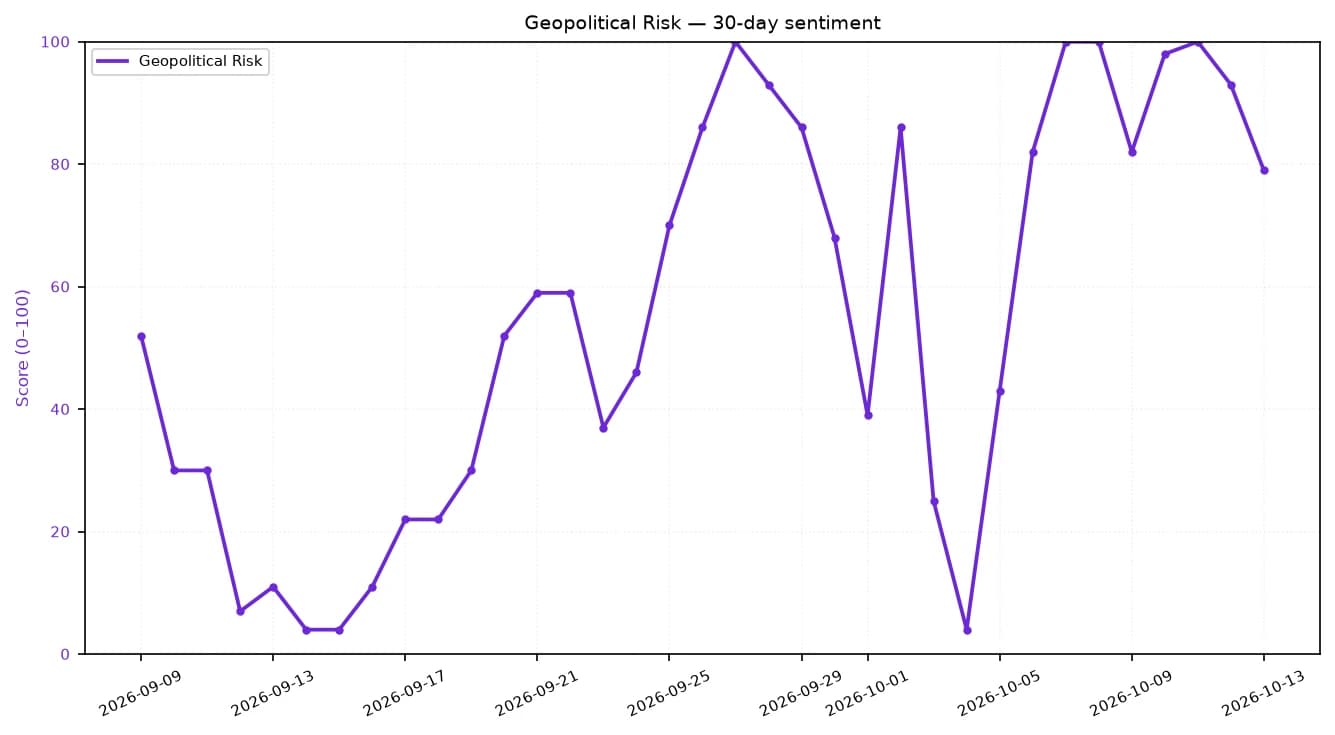
Geopolitical Risk vs EWZadalytica.com
Explore this data interactively — full history, time series and cross-market comparisons.

The market is also not trading this in isolation. Adalytica’s Global Stability Sentiment gauge is at 100, labeled extreme greed, after a sharp weekly and monthly surge, which suggests global investors are leaning hard into risk even as Brazil is sending the opposite signal. That divergence matters. When broad risk appetite is elevated, country-specific political shocks can produce outsized moves because there is less tolerance for uncertainty. In other words, Brazil’s runoff is hitting markets at the exact moment when global capital is least prepared to pay for ambiguity.
Petrobras is the cleanest barometer of that tension. The company remains a direct lever on Brazil’s policy direction, and the market is effectively asking whether the post-runoff environment will support shareholder returns and operating discipline or reopen the door to heavier political influence. BRF faces a different but related risk: a weaker Brazilian political backdrop can pressure domestic demand expectations and complicate the investment case for consumer-facing names already sensitive to currency, costs and confidence.
My view is that the market is underestimating how much of this selloff is political, not structural. If the runoff’s mass mobilization ends up producing a negotiated center rather than a hard policy lurch, the current move in EWZ and Petrobras could become the kind of overshoot that long-term investors want to own. If it does not, the losers will be the local banks, state-linked firms and domestic consumption names first, while exporters and dollar earners look comparatively safer.
For now, the message is simple: Brazil is no longer being priced as a steady reopening trade. It is being priced as a political-risk event, and that creates both danger and opportunity. Investors who want exposure should wait for evidence that the runoff’s popular mandate is translating into governability, not just momentum. Until then, the clearest asymmetric trades are the ones least exposed to domestic policy shock.
| Entity | Gains | Losses |
|---|---|---|
| Exporters / dollar earners | ▲Currency cushion | ▼Domestic-policy exposure |
| Petrobras (PBR) longs | ▲Value rebound if calm returns | ▼Political intervention risk |
| EWZ dip buyers | ▲Oversold entry setup | ▼Further runoff volatility |
| BRF and consumer stocks | ▲None | ▼Confidence and demand pressure |