Brazil’s plan to cushion companies hit by the end of six-day workweeks is setting up a new round of labor-cost adjustment, and investors should watch where the pain is absorbed: software makers that help firms automate work processes, and income stocks tied to steadier payroll and office usage.
Brazil Workweek Reform May Boost Automation Spending
Finance ministry official Dario Durigan said the government is weighing targeted credit lines and training programs for businesses that will need to adapt to the new 40-hour workweek and the ban on six-day shifts. The support would not be a direct wage subsidy, but a financing bridge for companies forced to reorganize schedules, retrain staff and invest in productivity tools. For the economy, that matters because Brazil is trying to improve worker conditions without jolting activity or adding immediate fiscal strain.
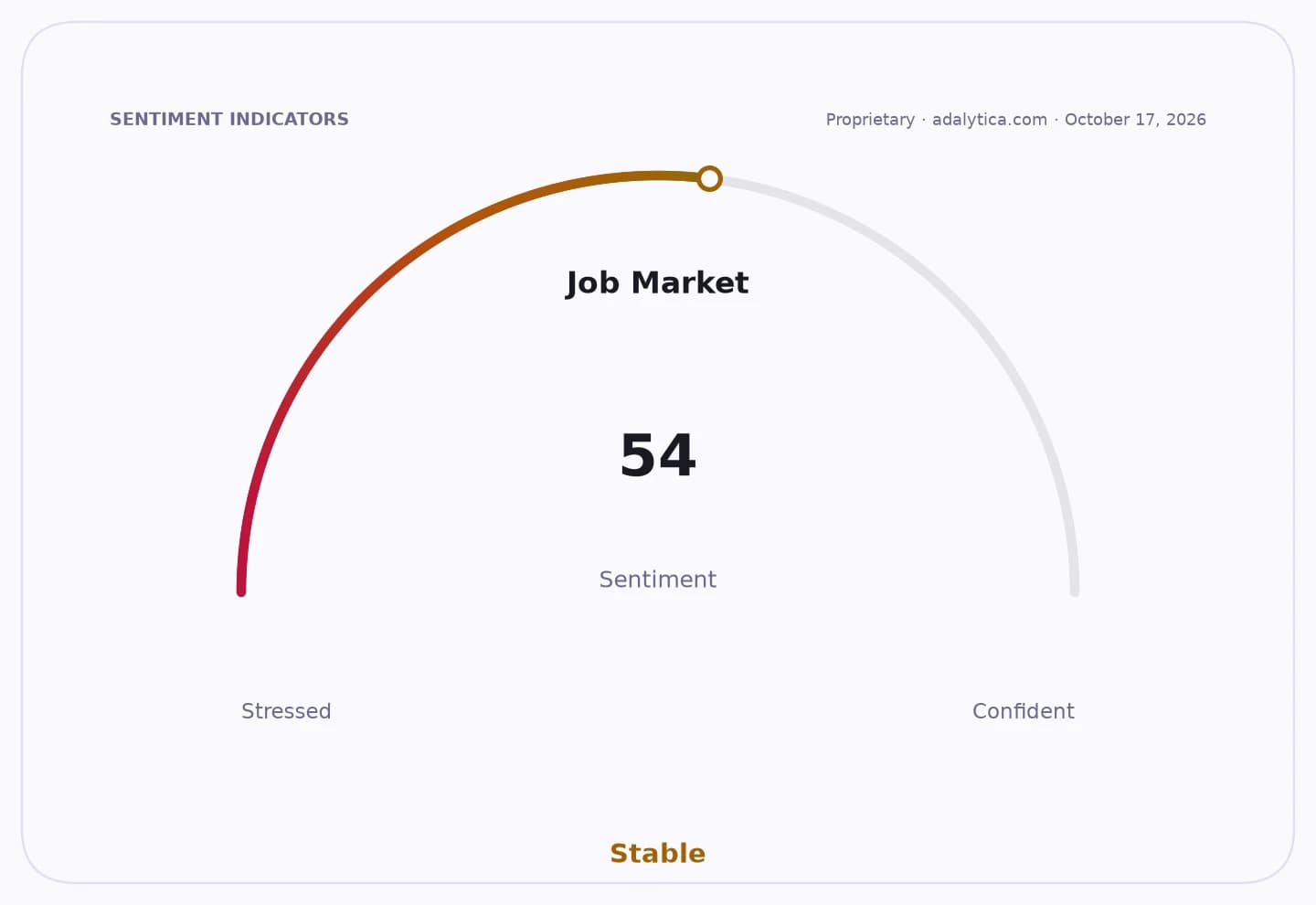
Sentiment IndicatorsⓘProprietary · adalytica.com · October 20, 2026
This is a snapshot — live sentiment, awareness and momentum for 130+ markets update continuously in the dashboard.Open AlphaPulse
The policy shift is economically significant because it changes the marginal cost of labor at the same time as Brasília is trying to protect growth and keep the fiscal adjustment gradual. Durigan said 68% to 70% of jobs in Brazil are outside the 6x1 schedule, implying the reform will hit a large but not universal slice of employers, particularly in retail, services and other labor-intensive businesses. If companies can finance the transition rather than absorb it all at once, the result is likely to be more spending on scheduling software, workflow automation, digital training and process redesign.
That is where Workday comes into focus. The human-resources software company is one of the clearest beneficiaries when businesses are pushed to manage labor more efficiently, and its stock has been trying to recover after a sharp selloff. Workday shares closed at $190.81 on Oct. 16, down from $206.45 on Aug. 13, while its 50-day moving average sits just below the current price, suggesting the market is still debating whether the recent rebound can hold. Brazilian employers adapting to shorter schedules will not move Workday revenue by themselves, but the reform reinforces the broader global case for enterprise software that cuts labor friction and improves productivity.
Realty Income is a different but still relevant winner-and-loser story. A mandated shift away from six-day operations can alter how retailers, pharmacies and service tenants use space, which matters for a landlord built on long-term cash flows from net-lease properties. Realty Income shares fell to $56.08 on Oct. 16 from $63.15 in early July and remain below their 200-day moving average, but the name still fits the investor playbook for a world where businesses want flexible, lower-risk operating footprints. If the reform accelerates consolidation, automation and store-hour optimization among tenants, landlords with strong balance sheets and essential properties should be better positioned than weaker operators.
The market is also being asked to price a political message: Lula’s government is using labor reform not just as a social-policy win, but as a catalyst for modernization. That is why the planned credit lines matter. They reduce the odds of an abrupt corporate pullback and increase the chance that companies respond with capex, software and training rather than layoffs alone.
For investors, the takeaway is straightforward: the end of the 6x1 model is not just a labor story, it is an automation and productivity story. The best positioning is in the picks-and-shovels names that help companies do more with fewer hours, while more labor-heavy operators may face margin pressure until the transition is financed and absorbed.
| Entity | Gains | Losses |
|---|---|---|
| Workday | ▲Higher demand for workforce software | ▼Slower near-term budget decisions |
| Realty Income | ▲More stable tenant base | ▼Pressure on labor-heavy tenants |
| Brazilian employers | ▲Credit and transition support | ▼Higher adaptation costs |
| Labor-intensive retailers | ▲Productivity upgrades | ▼Margin squeeze from shorter weeks |