Brent crude futures fell by more than $5 a barrel as the immediate geopolitical premium built into oil prices began to unwind, sending one of the market’s most sensitive inflation gauges sharply lower.
Brent crude falls as geopolitical premium unwinds
The selloff matters because crude remains a direct input into transport, manufacturing and consumer prices, and a sudden drop of that size can quickly alter expectations for inflation, interest rates and energy-sector earnings. WTI’s November contract had already slipped to $88.12 on Nov. 4 and edged to $90.52 the next day before easing again, while Brent’s move suggests traders were aggressively trimming risk after a period of Gulf-related tension had lifted prices sharply.
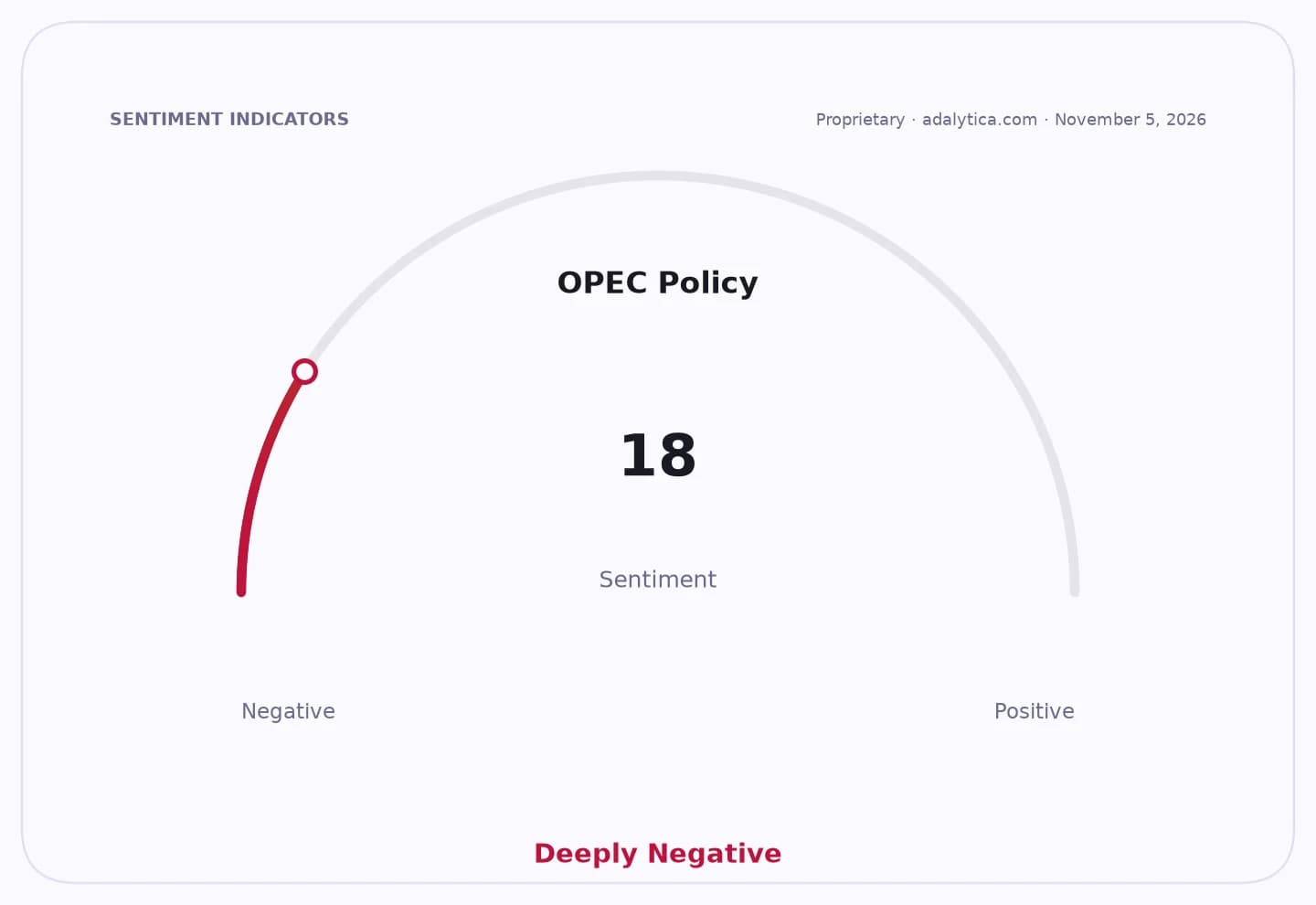
Sentiment Indicators

The drop also comes against a backdrop of unusually jumpy cross-asset positioning. Adalytica’s trade signals for U.S. oil exposure showed sentiment at neutral, but awareness at “fear,” while the broader S&P 500 gauge sat at “extreme greed,” a combination that can leave equities vulnerable to a sharper repricing if crude swings feed into margins or inflation fears. A softer oil market, by contrast, tends to support refiners, airlines, transport companies and consumers, while pressuring producers and energy-linked ETFs.
The macro backdrop is still doing much of the work. U.S. 10-year Treasury yields eased to 4.84% from 4.95% over the latest sessions, consistent with some relief in inflation expectations, even as the dollar remained firm. For investors, that matters because oil and yields often move together when markets are recalibrating growth and price pressures; a larger and sustained Brent decline would strengthen the case for easier monetary conditions, while a rebound would revive the inflation trade.
Still, the move is not necessarily a clean signal that the market has turned bearish on crude fundamentals. Oil has spent much of the year swinging between supply-risk spikes and demand worries, with the current slide more likely reflecting a temporary compression of geopolitical risk than a decisive shift in the underlying supply-demand balance. If tensions in the Gulf flare again, the premium can return just as fast.
For investors, the key question is whether this is a one-day de-risking move or the start of a broader retracement in energy. If Brent remains under pressure, it should ease input-cost concerns across the economy and improve sentiment for consumer and industrial names. If the market re-prices regional risk higher again, energy equities and inflation hedges are likely to outperform quickly.
| Entity | Gains | Losses |
|---|---|---|
| Consumers | ▲Lower fuel costs | ▼— |
| Airlines and transport firms | ▲Cheaper input costs | ▼— |
| Energy producers | ▲— | ▼Lower crude revenue |
| Bond markets | ▲Softer inflation pressure | ▼Higher growth concern if demand weakens |