Brent crude’s hold near $88 a barrel shows the oil market is still pricing a meaningful geopolitical and supply premium, even as signs of softer demand and rising U.S. inventories try to drag prices lower.
Brent crude holds near $88 as oil stocks stay firm

That matters because crude at this level keeps inflation sticky, protects cash flows for producers and threatens to squeeze consumers just as global growth looks less secure. For investors, it keeps the energy trade alive: upstream producers, oilfield service companies and leveraged oil ETFs still have a clear tailwind, while airlines, transport names and refiners facing weaker crack spreads are more exposed to every dollar higher in crude.
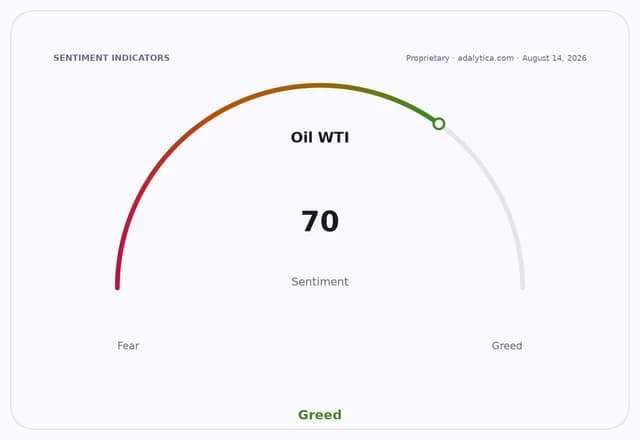
Sentiment IndicatorsⓘProprietary · adalytica.com · August 14, 2026
This is a snapshot — live sentiment, awareness and momentum for 130+ markets update continuously in the dashboard.Open AlphaPulse
The latest move is not a clean breakout, but it is a reminder that oil remains hostage to the balance between barrels and fear. Brent climbed above $89 earlier in the week on supply worries tied to Middle East tensions, then slipped more than 2% as demand concerns and inventory data resurfaced. Even after that pullback, the benchmark is still far above its 50-day moving average and comfortably above the 200-day moving average, a sign the medium-term trend remains constructive.
That strength is feeding directly into the equity market. The United States Oil Fund is trading around $126.60, well above its 200-day average of roughly $103, while the Brent-linked BNO is near $50.64 versus a 200-day average close to $41. Those levels tell you the market has not yet priced in a sustained demand shock. Instead, it is still leaning toward a world where geopolitical disruption keeps spare capacity tight and downside in crude is limited.
The bigger investment point is that oil at $88 is not just a commodity story; it is a capital-allocation story. At Brent levels above the low- to mid-$80s, U.S. shale, integrated majors and offshore drillers can continue funding dividends, buybacks and capex discipline. Chevron, Exxon Mobil, ConocoPhillips and Occidental all remain set up to benefit if Brent stays elevated into year-end. Service names such as Halliburton and Schlumberger also gain if producers keep drilling budgets intact. The losers are more obvious: fuel-intensive airlines, consumer transport chains and import-dependent economies that get hit first when energy prices stop behaving like a tax cut.
The market underestimates how powerful this setup can become when oil is already expensive and sentiment is still neutral. Adalytica’s oil-trade signal is neutral, not euphoric, even after a 30-day jump, which suggests there is still room for the trade to re-rate if supply risks intensify again. For now, Brent near $88 says the easy money has been made, but the asymmetric trade has not gone away. If you want exposure to the next leg, stay with the producers and the infrastructure behind them — not the consumers that pay the bill.
| Entity | Gains | Losses |
|---|---|---|
| Brent-linked producers | ▲Higher cash flow | ▼None if hedged poorly |
| Oilfield services | ▲More drilling demand | ▼Activity pauses if crude weakens |
| Consumers / airlines | ▲Lower fuel costs if oil falls | ▼Higher input and travel costs |
| Importers / refiners | ▲Cheaper feedstock if crude eases | ▼Margin pressure if demand slows |