Donald Trump’s decision to cancel planned U.S. airstrikes on Yemen’s Houthis at the last minute removes, for now, the most immediate trigger for a wider Middle East escalation that could have jolted crude, shipping and defense stocks.
Trump cancels planned Yemen strikes on Houthis

The market significance is straightforward: a direct U.S. military response would have raised the odds of retaliatory attacks near the Bab el-Mandeb, one of the world’s most important chokepoints for oil tankers and container traffic. That is the kind of geopolitical shock that quickly feeds into energy prices, freight rates, insurance costs and risk appetite. The fact that the strike package reached the point where targets were approved and munitions were loaded before Trump reversed course underscores how close investors came to a fresh supply-chain and inflation scare.
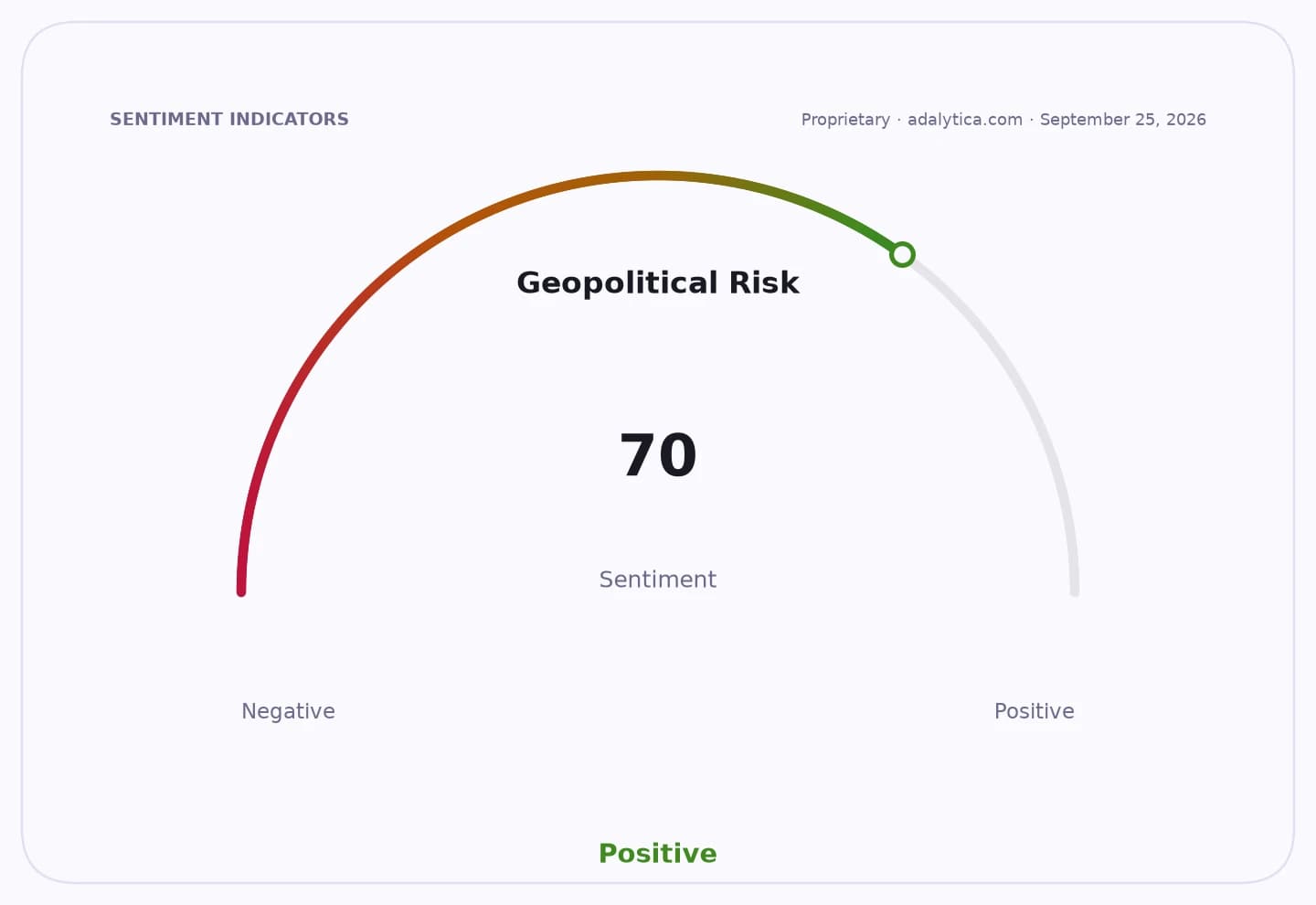
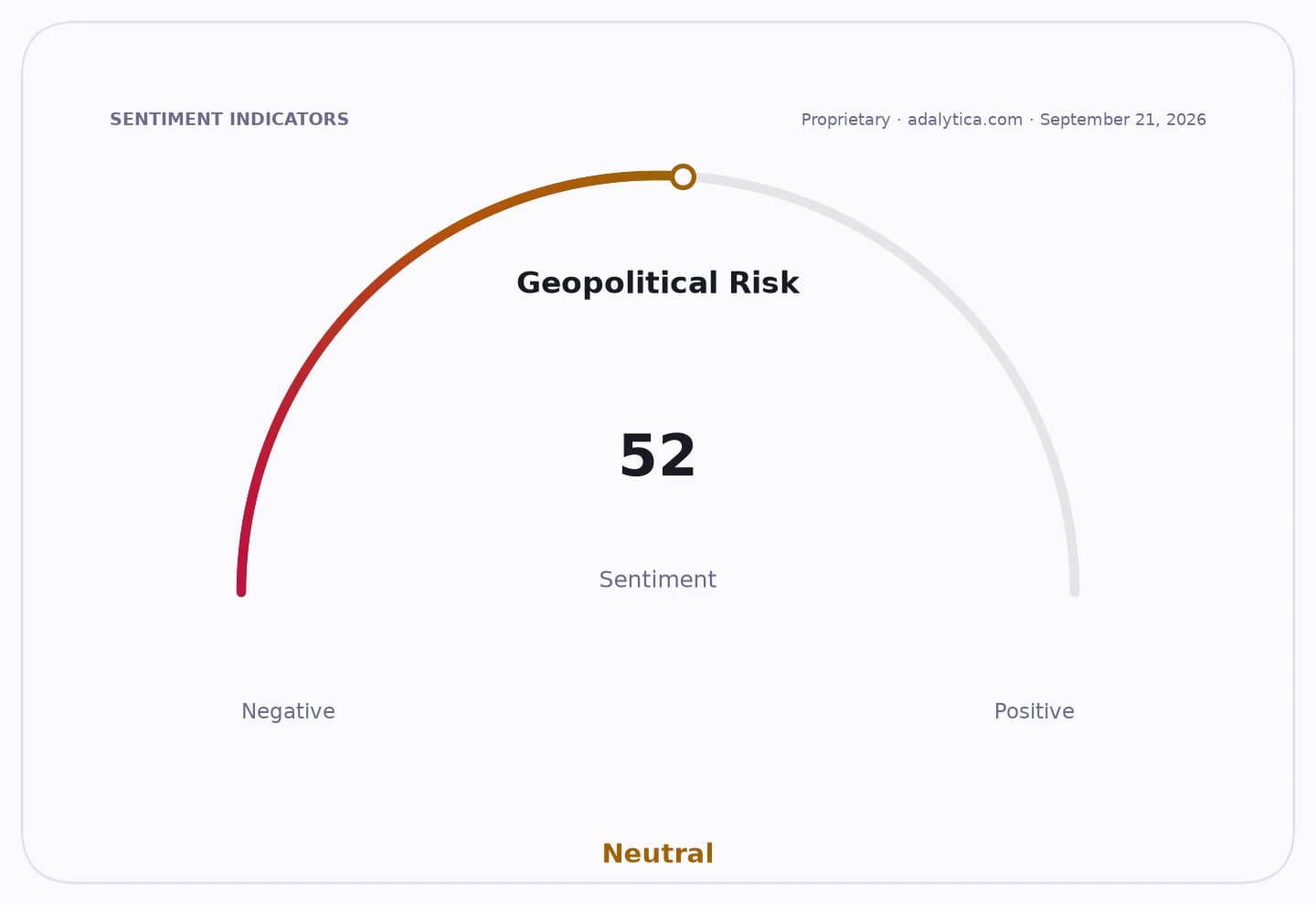
Sentiment IndicatorsⓘProprietary · adalytica.com · September 26, 2026
This is a snapshot — live sentiment, awareness and momentum for 130+ markets update continuously in the dashboard.Open AlphaPulse
Oil has already been trading with an elevated geopolitical premium. U.S. crude, as tracked by WTI, has been swinging around the mid-$90s to low-$100s range in the latest data, while the U.S. Energy sector ETF XLE has held well above its 50-day and 200-day moving averages, even after a pullback from recent highs. That tells you the market is still pricing in tension across the Middle East, but not yet a full-blown supply disruption. A U.S. strike on the Houthis would have pushed that trade harder.
For investors, the immediate takeaway is that the premium in oil and defense names may cool at the margin, but the broader thesis remains intact: geopolitical volatility is no longer a tail risk, it is part of the baseline. The Adalytica Global Stability gauge still sits in neutral territory but with extreme fear in awareness terms, a sign that markets remain highly alert to escalation even when headline sentiment looks calmer. That is exactly the kind of backdrop that keeps capital rotating toward energy producers, defense contractors and shipping beneficiaries whenever the region flares up.
The timing matters because investors had already been leaning into the trade. XLE’s recent rally showed how quickly energy shares can re-rate when crude spikes, while defense stocks such as Lockheed Martin have remained in focus as governments boost security spending in a more dangerous world. A canceled strike does not erase those structural forces, but it does reduce the odds of an abrupt near-term repricing higher in crude and lower in transport-sensitive assets.
The deeper narrative is that Washington is trying to avoid opening yet another front in the Middle East even as regional conflict continues to threaten global trade routes. That leaves the Houthis as a recurring market risk rather than an immediate war premium. For now, investors should treat any pullback in energy and defense tied to this headline as a tactical pause, not a reason to abandon the trade. The asymmetric opportunity still favors owning the infrastructure of conflict — energy, defense and logistics — on any weakness.
| Entity | Gains | Losses |
|---|---|---|
| Oil producers | ▲Lower immediate shock risk | ▼Less near-term spike premium |
| Shipping lines | ▲Fewer escalation fears | ▼Ongoing route uncertainty |
| Defense contractors | ▲Sustained security demand | ▼No fresh strike catalyst |
| Consumers/importers | ▲Relief on fuel costs | ▼Less protection in a flare-up |