The British pound rose to its highest level against the zloty in almost two years, even as Poland’s currency posted only a modest recovery and the euro hovered near PLN 4.36.
British pound hits 2-year high vs zloty

That matters because the move underscores how uneven the zloty’s recent performance has become: the Polish currency has steadied slightly against the euro and dollar, but it is still vulnerable to a broader repricing of regional risk and to persistent domestic macro headwinds. For households and businesses with foreign-currency exposure, the latest levels keep imported costs elevated and leave little room for relief on debt servicing, trade settlement or travel spending.
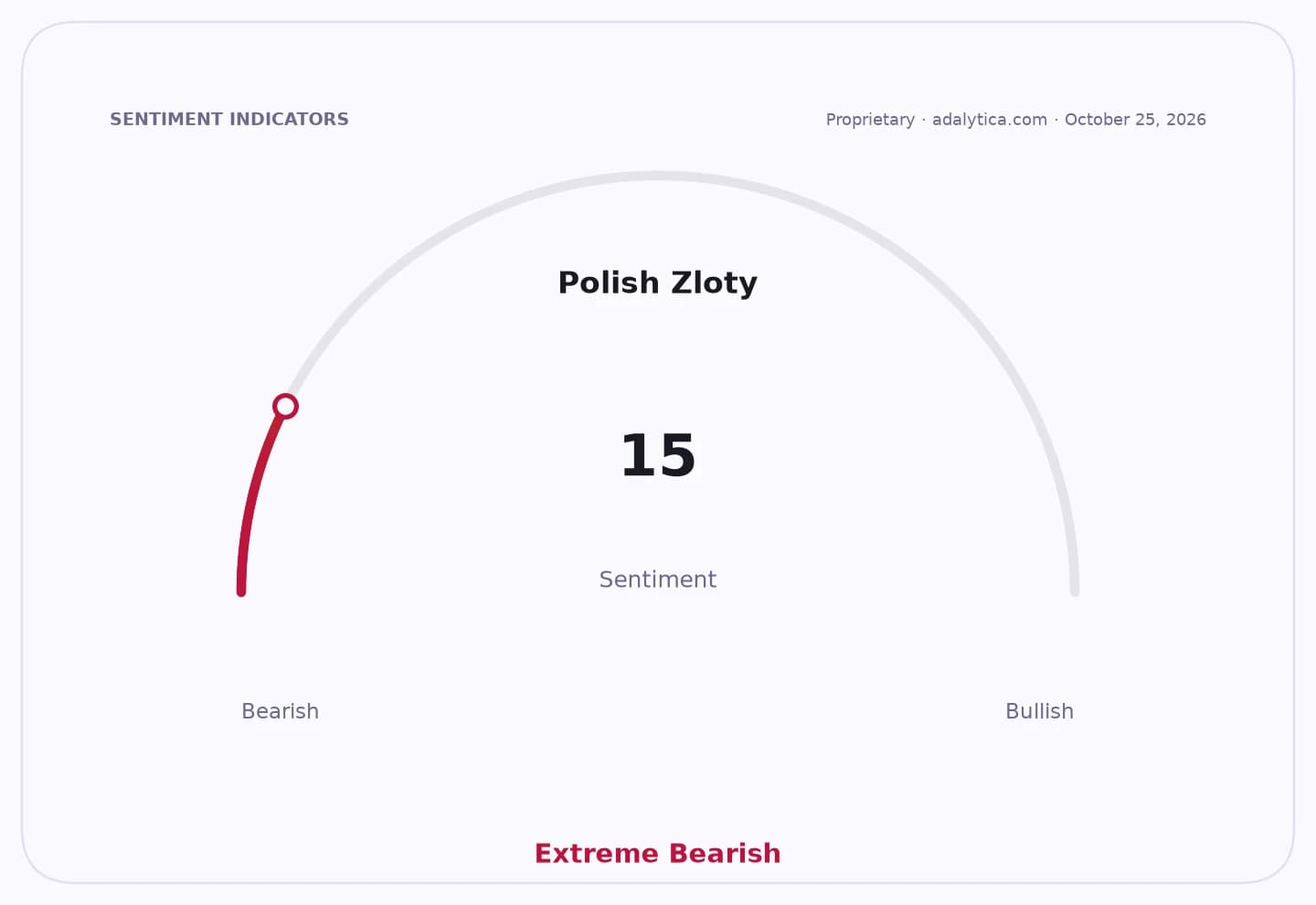
Sentiment Indicators
At 9:58 a.m. in Warsaw, the euro traded at PLN 4.3641, slightly below the previous day’s level and just above the 4.36 area that market participants are watching closely. The dollar changed hands at less than PLN 3.90, with the EUR/USD pair holding above 1.12, while sterling climbed to PLN 5.2046 and at one point reached PLN 5.2079, its strongest since November 2024.
The pound’s advance is particularly notable because it has come even as the dollar has paused after a strong run earlier this year. In other words, sterling’s gain versus the zloty is not being driven only by greenback weakness, but also by the market’s relative preference for the British currency and the zloty’s lack of momentum. Over the past four months, GBP/PLN has risen by about 30 groszy, making it one of the clearest expressions of zloty underperformance.
For Poland, the broader message is that the medium-term weakening trend remains intact. PKO BP said it does not expect a lasting move below PLN 4.36 on EUR/PLN or PLN 3.86 on USD/PLN in the coming days, citing still-elevated inflation pressure, a hesitant central bank, a deteriorating balance of payments and weak public finances. That combination matters for investors because it keeps the case for a durable zloty recovery weak unless there is a clear shift in policy or macro data.
The euro’s firmness also reflects the fact that the zloty’s earlier period of sustained appreciation appears to have ended. Market pricing suggests the currency is now trading more on domestic vulnerability than on any broad emerging-market rebound. By contrast, the Swiss franc was nearly unchanged at PLN 4.7135, still below the March highs between PLN 4.75 and PLN 4.79, showing that not every safe-haven currency is moving in lockstep.
For investors, the key implication is that FX volatility around the zloty may persist even without a sharp global risk-off move. Importers and borrowers with sterling liabilities remain exposed to further currency costs, while exporters selling into the UK may benefit from the stronger pound. The next catalyst for the zloty will likely come from inflation data, central-bank communication and signs of whether Poland’s external and fiscal imbalances worsen or stabilize.
| Entity | Gains | Losses |
|---|---|---|
| British pound | ▲Stronger PLN value | ▼Polish importers, sterling debtors |
| Polish exporters to UK | ▲Higher zloty revenues on GBP sales | ▼Polish consumers facing pricier UK goods |
| Zloty bulls | ▲Slight euro and dollar stabilization | ▼Those expecting a sustained recovery |
| Polish borrowers with FX exposure | ▲Little immediate benefit | ▼Higher servicing costs stay in place |