Polish households are growing more cautious even as inflation expectations cool, a combination that points to slower consumer spending and a softer growth backdrop for one of Europe’s more resilient economies.
Poland consumer confidence eases as inflation cools
That matters because Poland’s recovery has been powered in part by domestic demand. When confidence weakens, households tend to defer big-ticket purchases, trim discretionary spending and lean harder on savings, all of which can dampen retail sales and broader GDP momentum. The easing in inflation expectations is welcome for purchasing power, but it is not enough on its own to offset the drag from sentiment.
Sentiment Indicators
The report also fits a wider macro pattern: price pressures have been easing from earlier peaks, while the labor market remains relatively stable. September unemployment stood at 5.8%, suggesting the slowdown is not being driven by a sudden jobs shock. Instead, the message is more subtle — consumers may believe inflation is less of a threat, but they are still not feeling confident enough to spend aggressively.
For investors, that creates a mixed setup. Lower inflation expectations reduce the risk of another tightening cycle and can support local bonds and rate-sensitive assets. But softer confidence can weigh on Polish retailers, consumer lenders and domestic-facing companies that rely on steady household demand. The risk is that improving price stability does not immediately translate into stronger consumption.
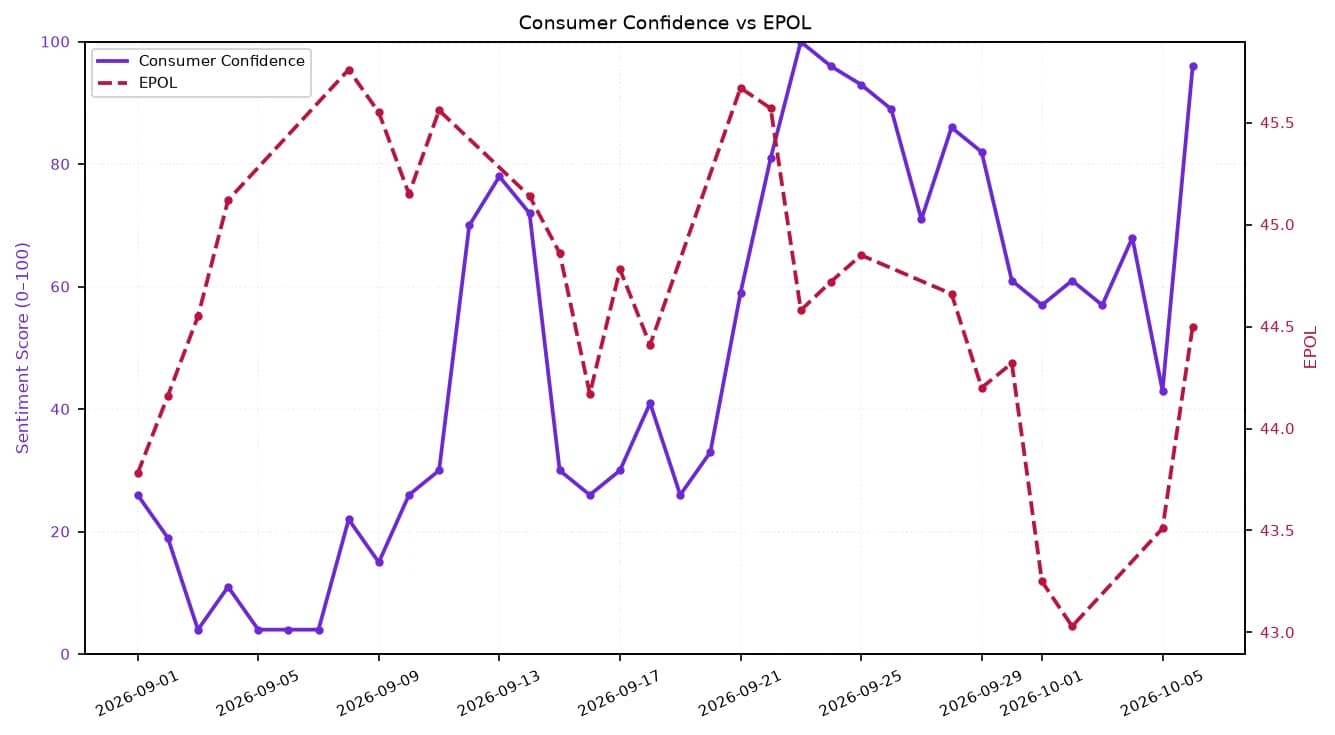
Exchange-traded funds tied to Polish equities have already shown how quickly sentiment can swing. EPOL, which tracks Polish stocks, has traded above its 50-day moving average and near the upper end of its recent Bollinger Band range, but the latest confidence data argues for caution on cyclical exposure until spending trends re-accelerate. The bigger opportunity, in our view, remains in businesses that can benefit from Poland’s longer-term structural story — infrastructure, nearshoring and export-linked industrials — rather than pure consumer plays.
The key question now is whether lower inflation starts to feed through into real household confidence in the months ahead. If it does, Poland could re-enter a stronger domestic-demand phase. If not, the market should expect a slower, more selective consumer recovery, with investors favoring quality, pricing power and earnings leverage over broad-beta exposure.
| Entity | Gains | Losses |
|---|---|---|
| Polish bond market | ▲Easier policy outlook | ▼Higher growth concerns |
| Domestic retailers | ▲Lower inflation input costs | ▼Softer consumer demand |
| Polish consumers | ▲Less inflation pressure | ▼Weaker confidence |
| EPOL / Polish equities | ▲Valuation support from disinflation | ▼Cyclical earnings risk |