Bulgaria’s latest campaign against food inflation has run into a credibility test: employers, consumer groups and processors are now disputing how regulators are calculating markups, arguing that state-run oil prices can be higher than the “excessive” retail prices being cited. The row matters because it could determine whether the government’s pricing push turns into meaningful enforcement or into a broader political dispute over how food costs are measured and who is to blame.
Bulgaria food price markup dispute widens

The consumer protection commission said on Tuesday it had found markups of more than 140% on food products in retail chains and warned that firms unable to justify the increases could face penalties. The list of items flagged as having the highest markups includes butter, cheese, yellow cheese, tomatoes and onions. The watchdog has said it will next examine medicines, bank fees and mobile services, widening what began as a grocery-price probe into a broader cost-of-living intervention.
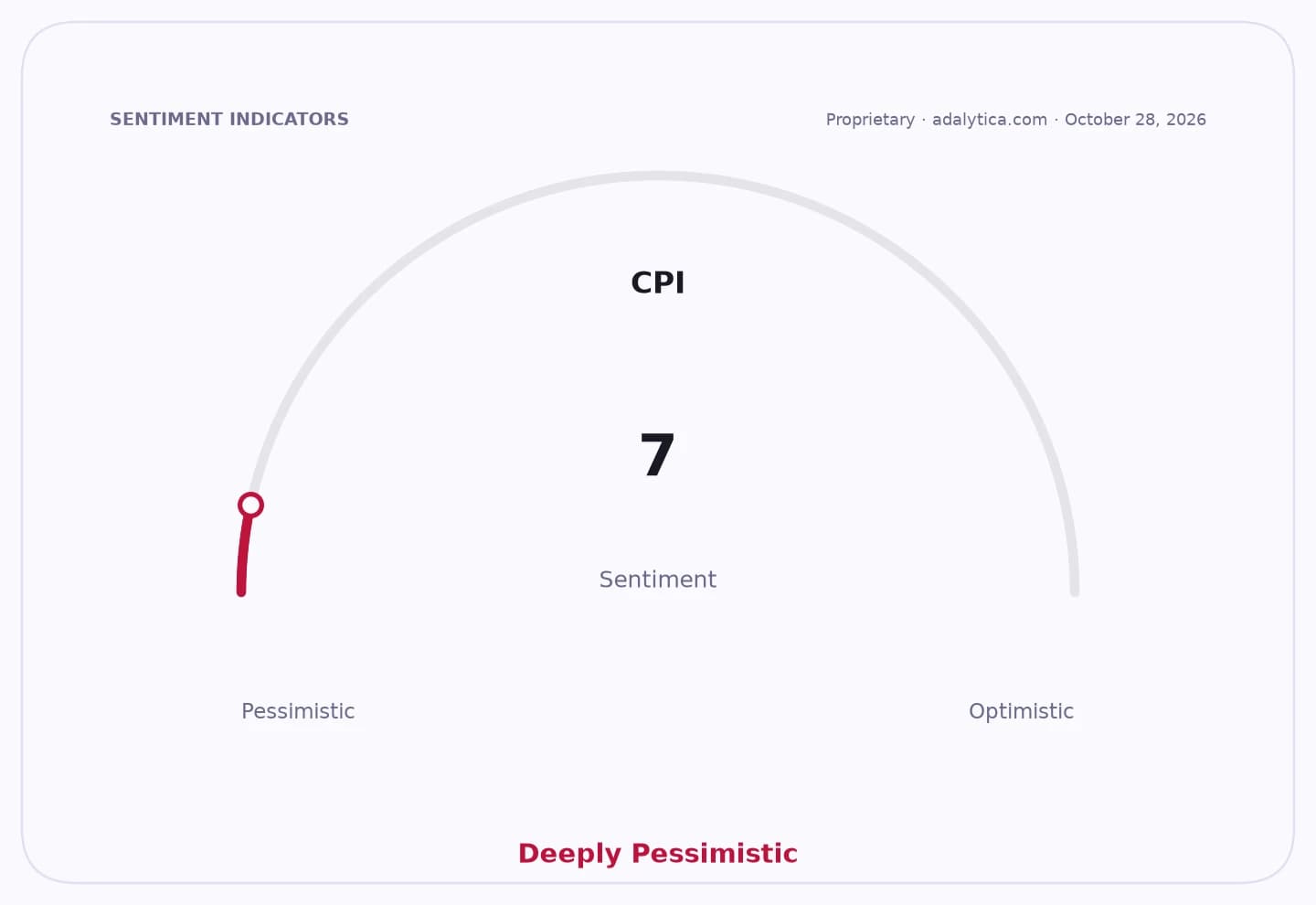
Sentiment Indicators
For investors and businesses, the issue is not just the size of the markups but the methodology behind them. Employers from the Union for Economic Initiative said comparisons should include the state-owned producer and retailer, arguing that the publicly sold butter it examined was more expensive than the final shelf price cited by the regulator. That matters because if the baseline product is not identical, or if transport, processing, packaging and wholesale margins are treated inconsistently, the headline markup figures may overstate retailer pricing power and understate the role of upstream costs.
The debate also highlights a familiar fault line in food inflation: producers, processors and retailers often each claim the other is capturing the margin. Bulgaria’s dairy processors say a 100% markup on a finished product is unjustified, but they also insist comparisons should be made between identical products by weight and specification. Consumer advocates, meanwhile, are warning that public accusations of price gouging can stoke anger unless the calculations are transparent and based on clear reference prices, whether wholesale, delivered or on-shelf.
Economically, the dispute lands at a sensitive moment. Global oil prices remain elevated despite recent volatility, and the broader inflation backdrop has been sticky enough to keep input-cost pressures in focus across Europe. When energy, logistics and imported raw materials are still expensive, retail food prices can stay high even if some input costs ease. That makes markups politically explosive: consumers see the shelf price, while firms point to the cost stack behind it.
For investors, the immediate implication is regulatory risk. Retail chains, food processors and consumer brands operating in Bulgaria face the possibility of fines, deeper scrutiny and reputational pressure if authorities press ahead without a clear pricing framework. If the government expands the probe to banking and telecoms, the risk broadens from the grocery aisle to other domestically exposed sectors where fee structures and margins are already politically sensitive.
The bull case for regulators is that the campaign could force more transparency in supply chains and dampen pricing abuses if any exist. The bear case is that poorly defined comparisons could discourage investment, distort pricing behavior and trigger a cycle of public accusations that does little to reduce inflation. The next test will be whether the commission publishes enough detail to distinguish legitimate cost pass-through from genuine excess pricing.
| Entity | Gains | Losses |
|---|---|---|
| Bulgarian consumers | ▲Potential scrutiny of prices | ▼Confusing markup claims |
| Retail chains | ▲None if comparisons hold | ▼Fines and reputational risk |
| Food processors | ▲Clearer cost debate | ▼Margin pressure |
| Regulators | ▲Political leverage | ▼Credibility if data is vague |