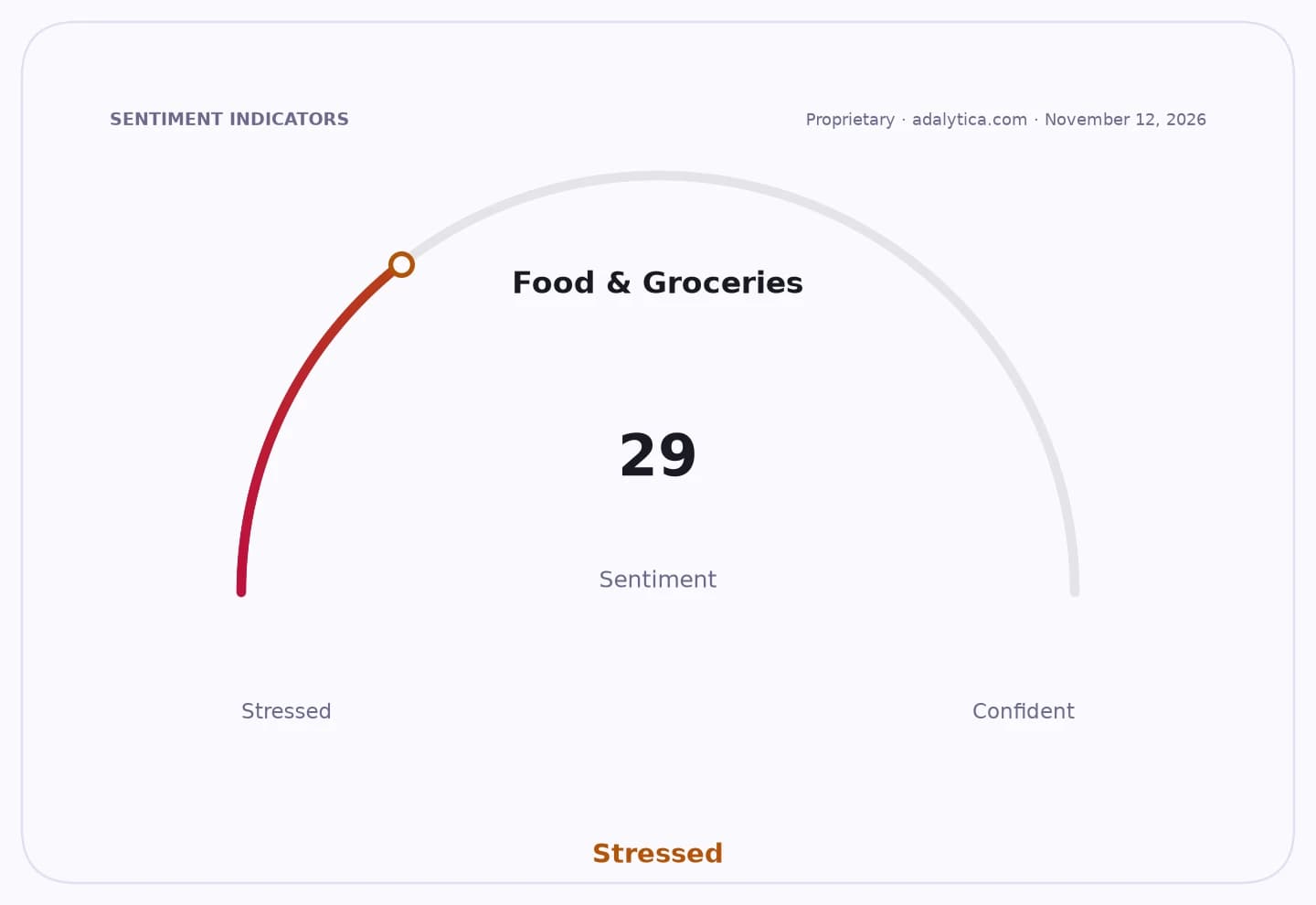
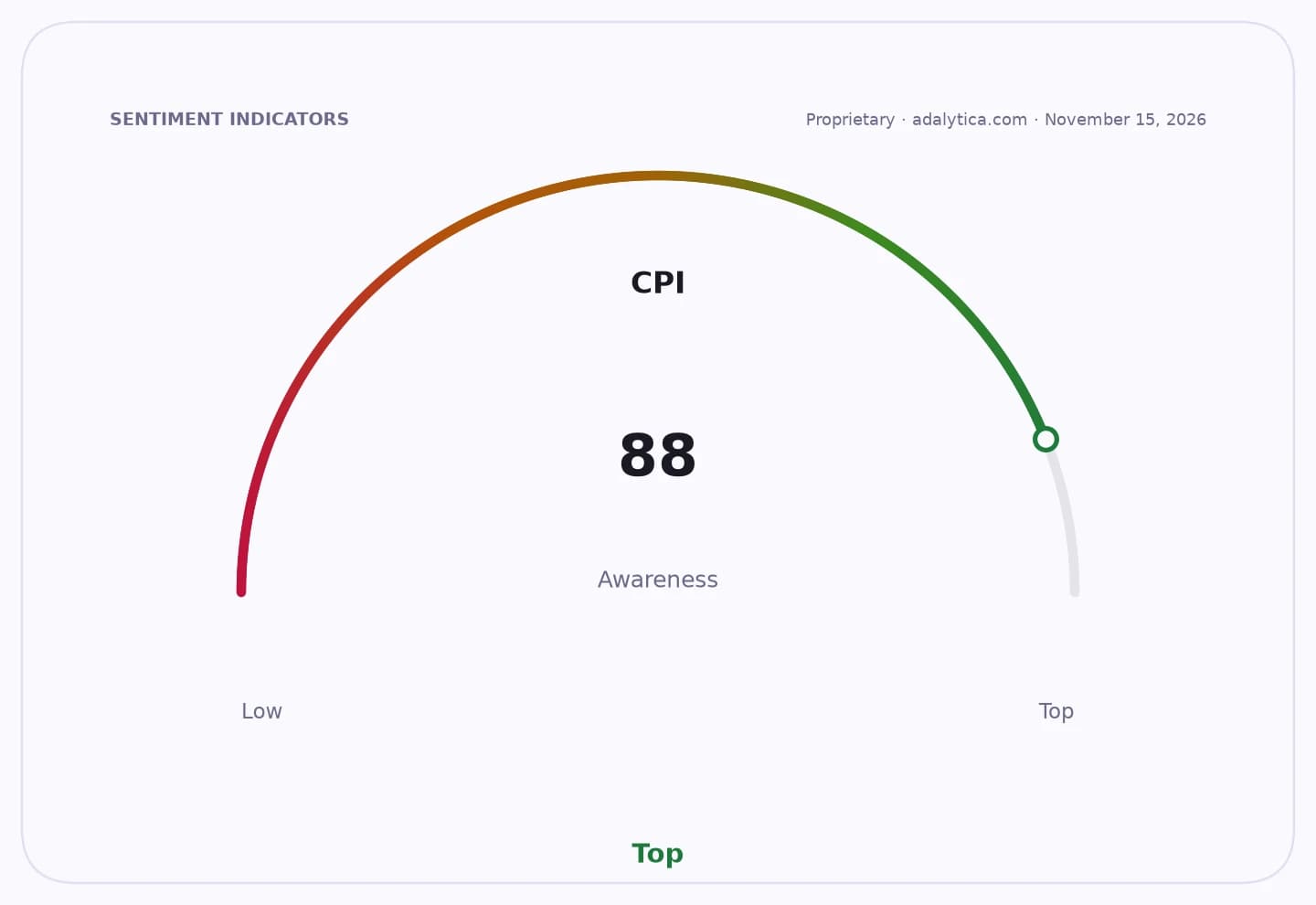
Basic food products and most vegetables are getting more expensive on Bulgaria’s wholesale markets, adding pressure to household budgets and pointing to another week of sticky food inflation in a country where food costs remain a key driver of consumer prices.
Bulgaria wholesale food prices rise as vegetables jump
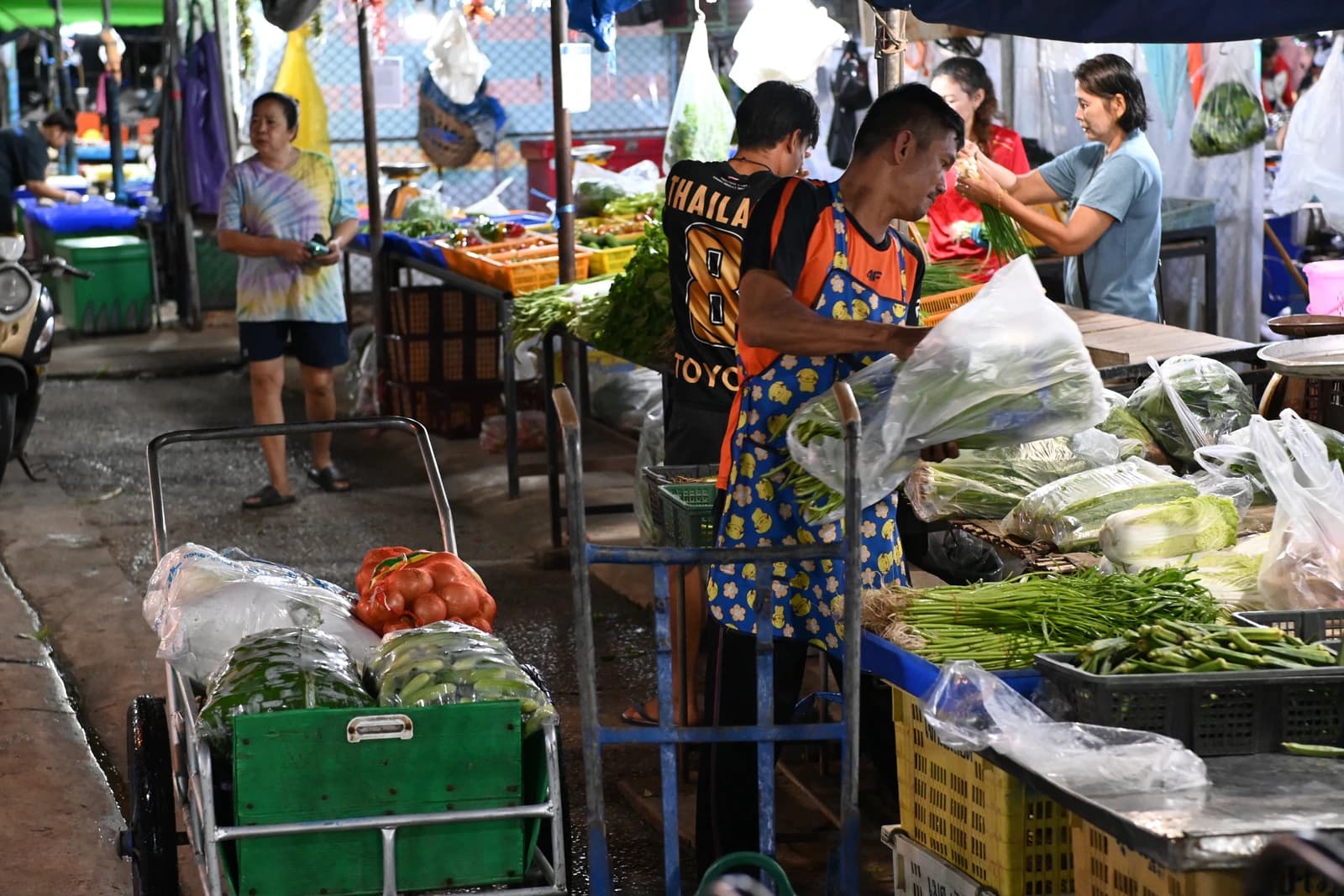
The State Commission on Commodity Exchanges and Wholesale Markets said its wholesale food price index rose 0.58% on the week to 2.437 points from 2.423, using 2005 as the 1.000-point base. That means the broad cost of staples is moving higher again even as some categories such as rice, lentils and flour ease, underscoring how uneven food inflation remains.
Sentiment Indicators
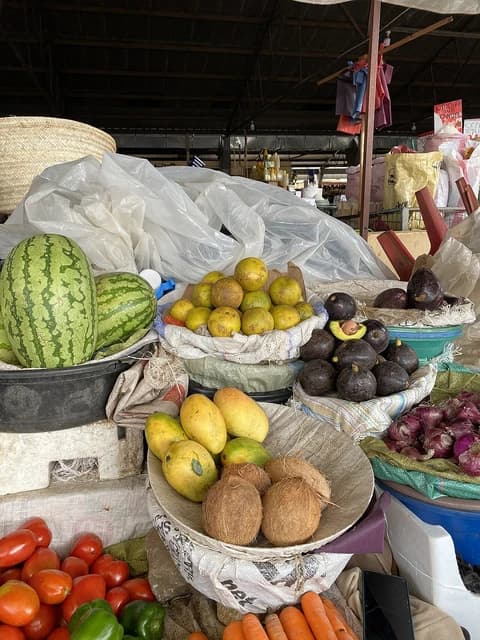
Dairy and protein products showed mixed but mostly firmer pricing. Cow’s cheese rose 0.40% to 6 euros a kilogram, while Vitosha-type yellow cheese edged up 0.20% to 9.21 euros. Fresh milk climbed 3.90% to 1.29 euros a liter and butter increased 2.90% to 1.44 euros for 125 grams. Frozen chicken gained 1.24% to 3.60 euros a kilogram, and eggs advanced 4.17% to 0.20 euros apiece wholesale.
Among basic staples, rice fell 4.24% to 1.58 euros a kilogram and lentils dropped 3.77% to 1.94 euros, but dry beans rose 4.33% to 2.12 euros. Sugar inched up 0.84% to 0.96 euros a kilogram, while type-500 flour declined 3.18% to 0.67 euros and sunflower oil slipped 1.49% to 1.72 euros a liter.
Vegetables were the sharpest source of inflation. Green peppers jumped 10.14% to 1.26 euros a kilogram, tomatoes rose 6.69% to 2.39 euros, red peppers gained 4.89% to 1.46 euros and zucchini added 4.06% to 1.23 euros. Onion was flat at 0.59 euros a kilogram.
The move matters for investors and policymakers because food carries outsized weight in consumer inflation and in disposable income, particularly in lower-income households that spend a larger share of budgets on basics. Persistent increases in wholesale food prices can filter quickly into retail shelves, complicating the outlook for inflation and real spending.
That keeps food producers, grocery chains and agribusiness exposed to margin pressure if they cannot pass through higher costs, while consumer demand could weaken if price increases continue. It also highlights the sensitivity of Bulgaria’s food market to seasonal supply swings and broader agricultural conditions, with vegetable prices doing most of the lifting in this week’s increase.
The next catalyst is whether the wholesale index keeps climbing into the holiday shopping period, when retailers typically face stronger demand and tighter scrutiny over shelf pricing.
| Entity | Gains | Losses |
|---|---|---|
| Vegetable sellers | ▲Higher wholesale prices | ▼Price-sensitive shoppers |
| Dairy and meat suppliers | ▲Better pricing power | ▼Households on tight budgets |
| Grocery chains | ▲None immediately | ▼Margin pressure if costs rise |
| Bulgarian consumers | ▲Lower prices on rice, flour, oil | ▼Higher bills for staples and produce |