BYD is on the verge of passing Ford in Europe, and that’s more than a symbolic handoff on a sales chart — it’s a sign that Chinese automakers are moving from challenger status to structural threat in one of the world’s most important car markets.
BYD Nears Ford in Europe Registrations
Through August, BYD registered 234,099 vehicles in Europe, just 10,839 fewer than Ford’s 244,938, according to data from the European Automobile Manufacturers’ Association. BYD’s registrations jumped 144.1% from a year earlier, while Ford’s fell 14.4%. If the current pace holds, Ford could lose another piece of a market where it has already been shrinking its lineup and its relevance.
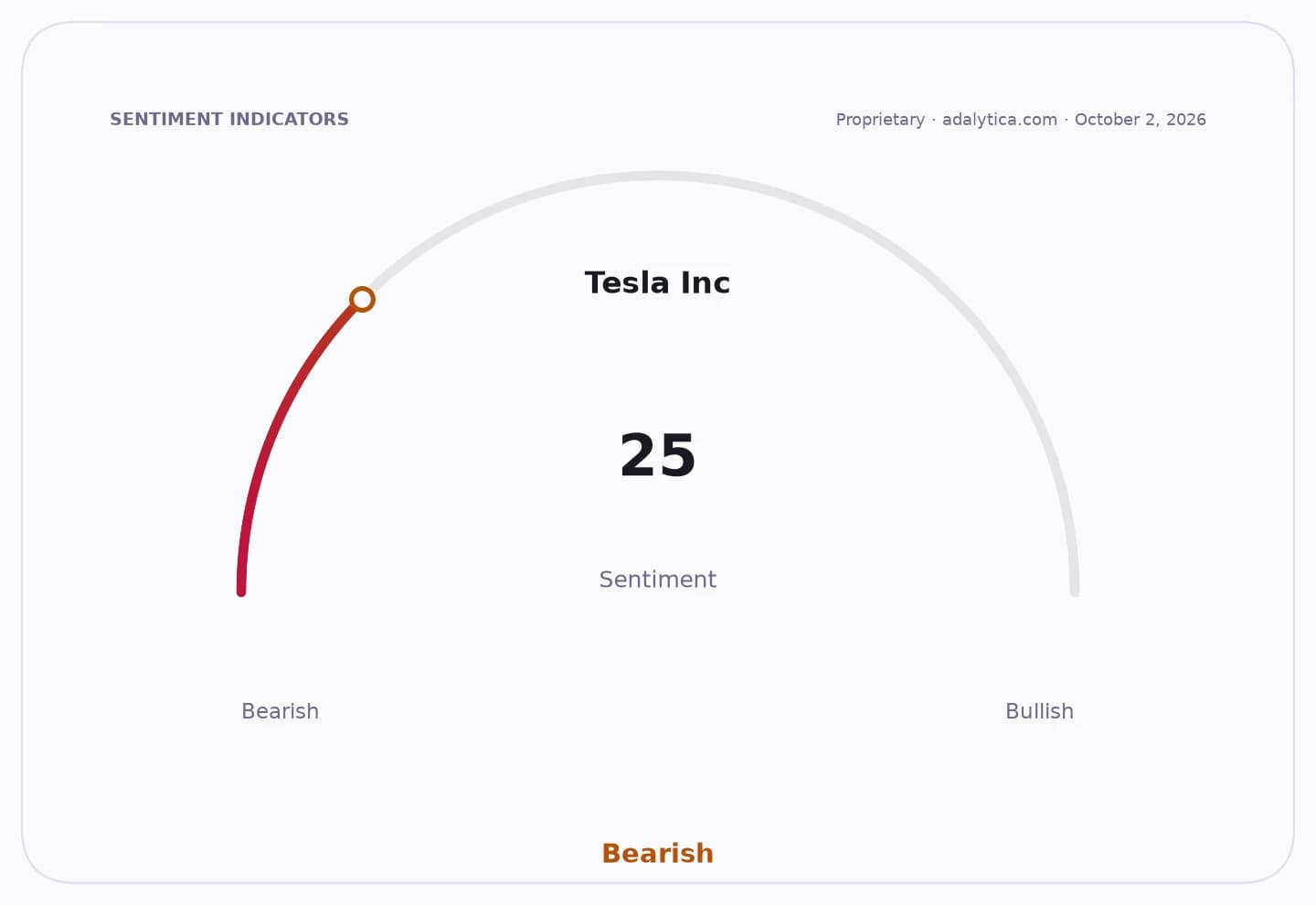
Sentiment IndicatorsⓘProprietary · adalytica.com · October 1, 2026
This is a snapshot — live sentiment, awareness and momentum for 130+ markets update continuously in the dashboard.Open AlphaPulse
For investors, the bigger takeaway is not simply that BYD is growing fast. It is that the competitive gap is being reshaped by strategy. BYD has been adding models and widening its reach, while Ford has spent years trimming back mainstream nameplates like the Fiesta, Focus and Mondeo. In Europe, that matters. Car buyers cannot purchase products that no longer exist, and Ford’s leaner portfolio has left it exposed as demand shifts toward newer, cheaper and more electrified offerings.
BYD’s rise also underlines a broader industry inflection point. Chinese brands are no longer nibbling at the edges of the market. They are becoming a meaningful force across Europe. MG owner SAIC has 230,290 registrations through August, not far behind Ford. Geely Group brands have already moved ahead on a combined basis, and Chery is scaling quickly too. Put together, Geely, BYD, SAIC and Chery now account for about 10.4% of European registrations, or roughly one in every 10 cars sold.
That is economically important because Europe remains one of the most competitive battlegrounds for global automakers. The region’s transition toward electric vehicles rewards companies that can bring attractive products to market quickly and profitably. Chinese manufacturers have proven aggressive on both pricing and product cadence, and that pressure is forcing established automakers to spend more, react faster and accept thinner margins in some segments.
Ford still has a response. It has said it will work with Renault on a new lineup of Europe-focused electric vehicles, including possible successors to the Fiesta and smaller crossovers tailored to local tastes. But those vehicles are still coming later, not now. The registration data suggest that the market is rewarding companies with momentum today, not plans for the end of the decade.
There is also a valuation angle for investors. Ford shares have been volatile, and the stock’s recent slide back toward the low end of its 50-day and 200-day moving averages reflects how quickly sentiment can sour when the market starts to question a company’s competitive positioning. BYD, meanwhile, has been building scale in Europe even as its own shares have softened recently. That mismatch can create opportunities, but it also reinforces a simple lesson: in autos, product cycles and market share trends matter more than brand nostalgia.
The long-term question for investors is whether Ford can turn its Europe strategy into real volume before Chinese rivals lock in lasting habits with buyers. If Ford’s Renault partnership works, it could restore some relevance. If it does not, this may be remembered as the moment when the European market fully accepted that the Chinese auto industry had arrived.
For patient investors, the better move is to watch the competitive map, not just the monthly tally. BYD is worth watching as an expanding global winner. Ford remains a hold-and-monitor story, with Europe now looking less like a comeback market and more like a proving ground.
| Entity | Gains | Losses |
|---|---|---|
| BYD | ▲European share and scale | ▼Ford’s lead |
| Ford | ▲Potential Renault-backed reset | ▼Market relevance in Europe |
| Chinese automakers | ▲Broader acceptance in Europe | ▼Established legacy brands |
| European buyers | ▲More choices and lower prices | ▼Less room for complacent incumbents |