Paris shares jumped sharply after the U.S. midterm elections delivered a clearer political backdrop, while falling oil prices and lower sovereign borrowing costs gave French equities an extra lift.
CAC 40 Rises on Midterms, Lower Yields and Oil
The CAC 40 rose 1.96% to 8,177.89, its biggest move in weeks, as investors welcomed the prospect of divided government in Washington and a reduced risk of abrupt shifts in spending, regulation and trade policy. The move mattered well beyond sentiment: it helped pull French 10-year borrowing costs down to 4.77% from 4.95% and eased pressure on European bond markets more broadly.
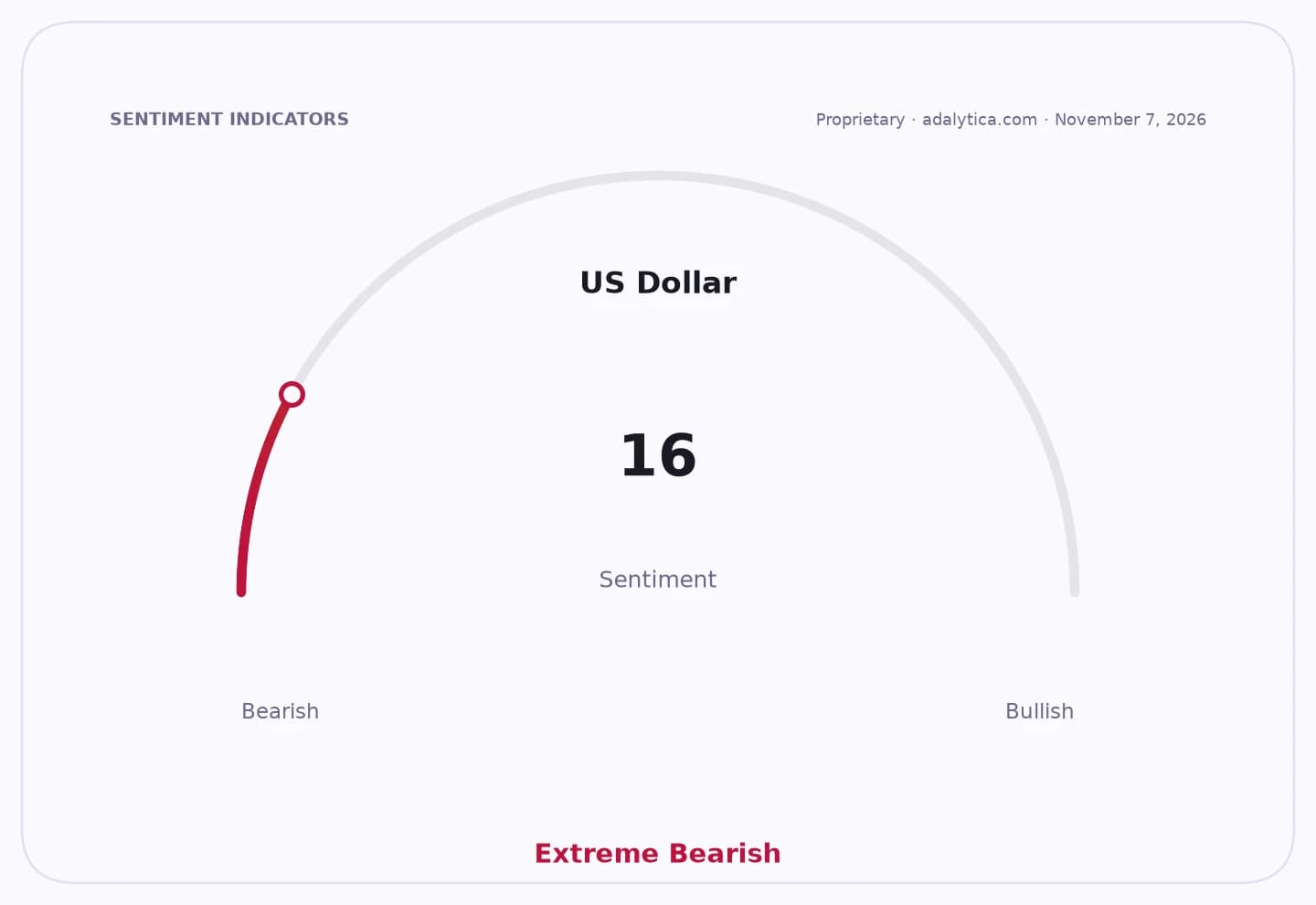
Sentiment Indicators
That rate relief is important for investors because higher sovereign yields have been one of the main brakes on European risk assets this year. A decline in French and German bond yields improves the discount rate used to value equities, supports banks’ balance sheets and reduces the market’s anxiety over fiscal and political instability. Vincent Juvyns of ING said the election result removed uncertainty, while Schroders analysts argued that divided government has historically been supportive for markets because institutional gridlock tends to restrain public spending.
The oil market reinforced that read-through. Brent slipped back below $100 a barrel as traders priced in a better chance of diplomatic progress in the Middle East, which has been a key driver of inflation expectations and sovereign yields. Lower crude prices matter for Europe especially: they ease imported inflation, reduce the pressure on central banks to stay hawkish for longer and improve the outlook for rate-sensitive sectors.
French banks were among the biggest beneficiaries of the session. BNP Paribas rose 4.67%, Société Générale gained 3.80% and Crédit Agricole added 3.33%, reflecting a combination of improved risk appetite and relief on bond-market stress. For lenders, lower sovereign yields typically help financial conditions and reduce mark-to-market strain on fixed-income portfolios, even as slower economic growth can still cap loan demand.
The more important market narrative, however, was not simply “midterms up.” It was the idea that the election outcome may slow, or at least complicate, the policy backdrop that has been driving the largest themes in global markets: inflation, rates and artificial-intelligence spending. Several analysts pointed to the risk that a newly empowered Congress could push back on further military funding, potentially intensifying pressure for diplomacy in the Middle East and feeding the decline in energy prices.
At the same time, investors rotated away from parts of the market most exposed to the AI buildout. Thomas Hempell of Generali said markets are increasingly worried that AI regulation could tighten and slow infrastructure spending. That concern hit Paris-listed semiconductor and equipment names: STMicroelectronics fell 5.14%, Soitec dropped 11.78%, Schneider Electric lost 3.42% and Legrand declined 4.56%. The weakness underscores how sensitive European industrial and chip stocks have become to the scale and pace of U.S. data-center investment.
The cross-asset reaction suggests investors are still trading the same macro bundle: lower oil, lower yields and fewer policy surprises are bullish for European equities, but any sign that Washington could lean harder into AI oversight or that energy prices may reheat inflation can quickly reverse the move. For Paris, the immediate winner was a market that depends heavily on cheaper capital and steadier global policy; the losers were the sectors priced for uninterrupted technology capex and strong industrial demand.
| Entity | Gains | Losses |
|---|---|---|
| Paris stocks / CAC 40 | ▲Higher risk appetite | ▼None in the session |
| French banks | ▲Lower bond yields | ▼Higher-rate backdrop easing |
| Energy importers / consumers | ▲Cheaper crude | ▼Oil producers |
| Semiconductors & electrical equipment | ▲— | ▼AI capex/regulatory fears |