California’s job market is one of America’s most unstable, but that volatility is also part of the state’s growth advantage — and investors should think about the economic ripple effects, not just the headline ranking.
California job growth and volatility over 50 years

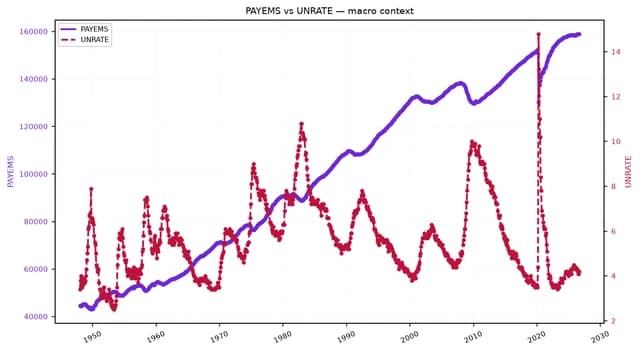
Over a 50-year review of federal employment data, California came in as the 14th-most volatile job market among the 50 states and Washington, D.C., with job swings that were 27% above the national norm. That matters because the states with the biggest swings have historically delivered faster employment growth, a reminder that economic dynamism tends to reward risk-taking regions even when it punishes them in down cycles.
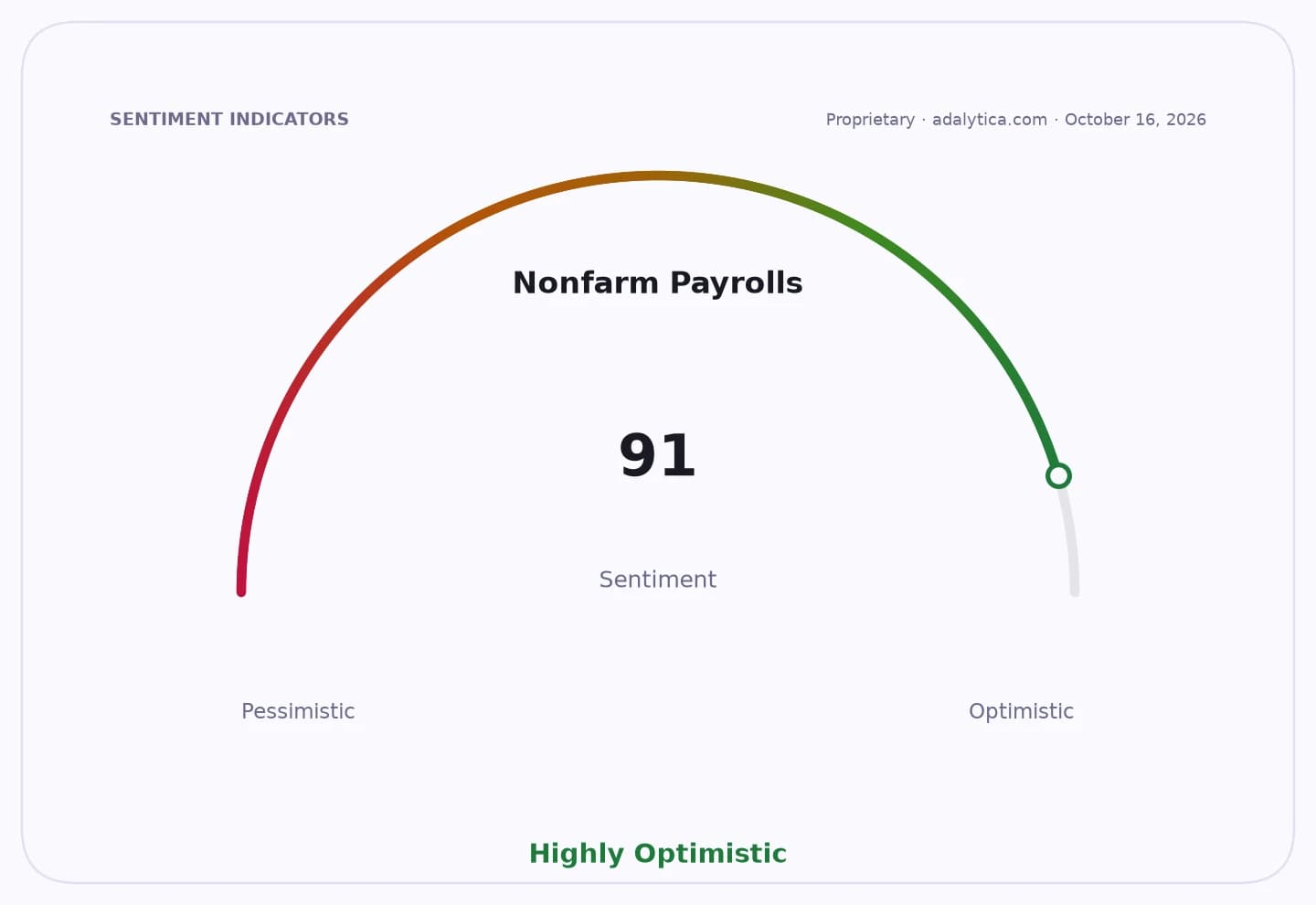
Sentiment Indicators

The pattern is clear. California ranked 13th for long-run job growth, with employment rising 1.5% a year on average, ahead of the typical U.S. pace of 1.1%. Its best years were strong enough to rank 10th among the states, with one-year job gains at the high end running 5.8% annually. But the downside has been equally real: California’s weak years were the 11th-deepest, with employment falling 2.9% in a bad year, steeper than the national average.
That tradeoff is why California remains an economic engine despite its choppier labor market. A state that can absorb larger swings in hiring and layoffs is usually a state with bigger industries, faster capital formation and more exposure to cyclical sectors such as technology, entertainment, logistics and professional services. In other words, volatility is not just noise — it is a sign of an economy that is still capable of generating outsized gains when the cycle turns.
For investors, that has real implications. The market often overweights stability and underestimates the long-term payoff from scale, innovation and labor-market churn. California’s labor profile fits the same playbook that has benefited AI, cloud, software and advanced manufacturing: higher short-term disruption in exchange for greater secular upside. Companies tied to the state’s growth clusters — from semiconductors and software to data-center infrastructure, industrial real estate and power demand — remain the clearest beneficiaries of that kind of volatility.
The broader lesson is that the calmest labor markets are not necessarily the best wealth creators. The states with the least job swing collectively grew employment just 1% a year over the past half-century, while the most volatile states grew 1.5% a year. That gap is the kind of structural difference investors should care about: dynamic economies create more opportunity, more capital spending and more demand for the picks-and-shovels businesses that serve them.
California’s ranking is not a warning to flee the state. It is a reminder that the biggest growth stories rarely come with smooth charts. The investors most likely to win here are the ones positioning early for the infrastructure, energy and technology that a volatile, high-growth economy keeps needing.
| Entity | Gains | Losses |
|---|---|---|
| California growth sectors | ▲Faster long-run expansion | ▼Higher hiring volatility |
| AI/data-center infrastructure | ▲More capex demand | ▼Short-term labor swings |
| Stable low-volatility states | ▲Predictable payrolls | ▼Slower employment growth |
| Employers and workers in cyclical industries | ▲Bigger upside in expansions | ▼Deeper drawdowns in downturns |