Canada’s escalating trade fight with the U.S. is sharpening the case for shifting more of the country’s raw materials into domestic processing, from minerals and lumber to aluminum products, because tariffs are now making it costlier to export unprocessed goods and leaving Canada more exposed to American demand.
Tariffs Push Canada Toward Domestic Resource Processing
That matters economically because Canada still sends a large share of its resource output south for further refinement or conversion into finished goods. If Ottawa and industry can capture more of that value chain at home, the country could retain more margins, jobs and tax revenue while reducing dependence on a market that has become less predictable. The current tariff regime also risks weakening investment in cross-border trade flows, which are already under pressure, and that can slow growth in sectors tied to extraction, transport and manufacturing.
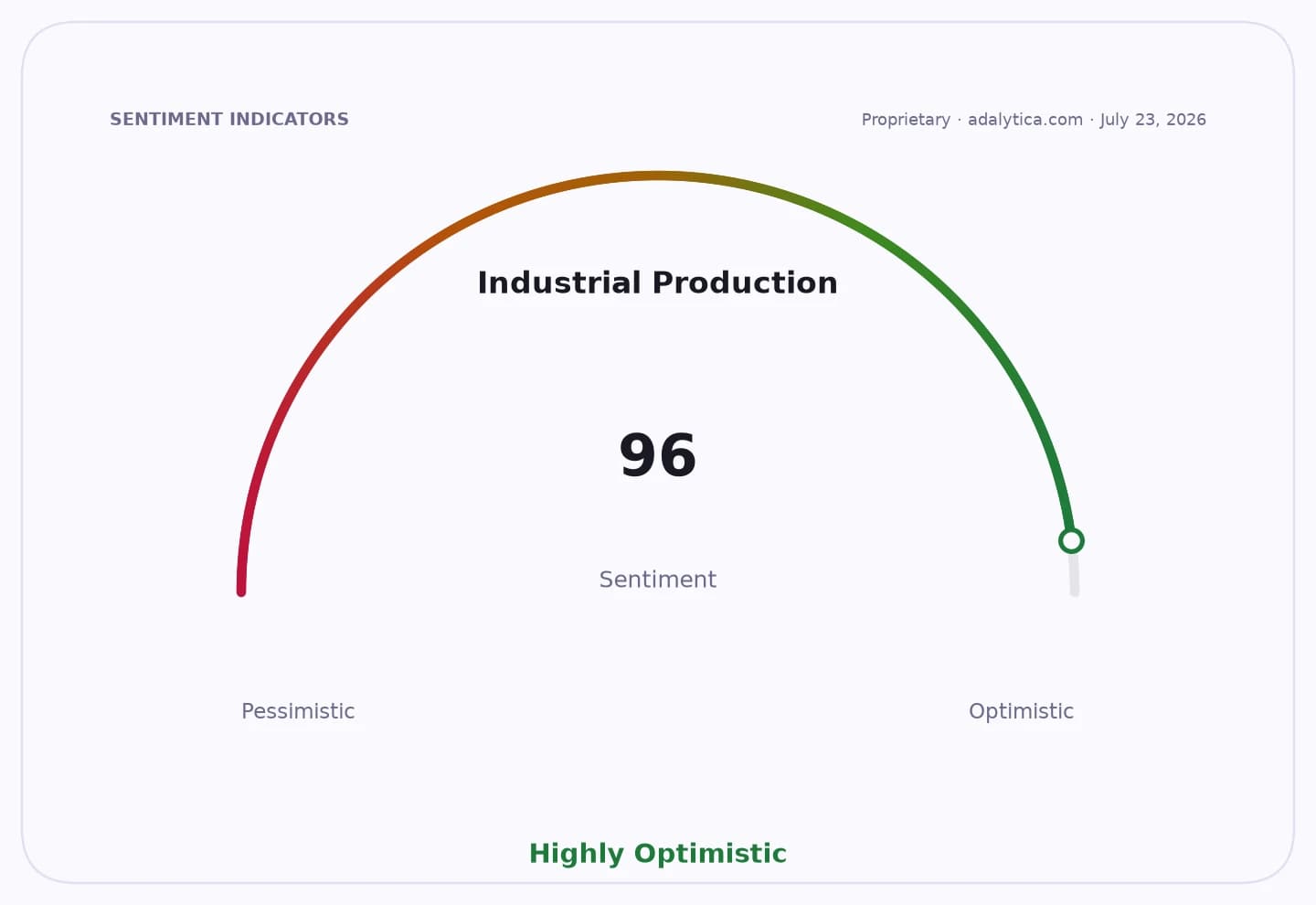
Sentiment IndicatorsⓘProprietary · adalytica.com · July 23, 2026
This is a snapshot — live sentiment, awareness and momentum for 130+ markets update continuously in the dashboard.Open AlphaPulse
The scale of the industrial challenge is visible in the macro data. U.S. industrial production has continued to grind higher, with the latest reading at 102.6 and a forecast of 102.9, while U.S. 10-year Treasury yields have climbed to 4.69%, underscoring tighter financial conditions. In that environment, tariff distortion can quickly reshape capital allocation: producers face higher hurdle rates, buyers reassess sourcing, and companies with exposure to cross-border raw materials must decide whether to absorb duties, pass them through, or move production closer to the source.
Markets are already signaling which businesses could benefit and which could be squeezed. Aluminum producer Alcoa has sold off sharply, with its shares at 45.27 after trading above 83 in early June, reflecting concern that tariff shock and weaker trade flows could hit pricing and volumes. Rio Tinto, which has major exposure to Canadian and North American raw materials, has also retreated to 91.51 from a recent high above 112, though its shares remain well above longer-term technical support on the 200-day moving average. Freeport-McMoRan has held up better, ending at 63.50, suggesting investors still see upside in copper and broader metal demand, even as tariff risk clouds North American supply chains.
The larger investment question is whether Canada uses the pressure to accelerate industrial policy that has been discussed for years but only partly executed. Mineral processing, sawmilling, aluminum fabrication and other downstream activities could lift productivity if paired with power, transport and permitting capacity. That would help Canada keep more of the economic rent from its resource base rather than exporting it at a discount and importing the higher-value finished goods later. The risk is that building out that capacity takes time, capital and stable policy, all of which are harder to secure in a trade dispute.
For investors, the key implication is a possible re-rating of winners and losers across the North American industrial complex. Canadian firms with downstream processing capacity, rail links and domestic energy access could gain strategic value, while exporters of unprocessed commodities and companies dependent on frictionless U.S. access may face margin pressure and volatile volumes. If tariffs persist, the trade war may end up doing more than disrupting commerce — it could accelerate a structural shift in how Canada monetizes its natural resources.
| Entity | Gains | Losses |
|---|---|---|
| Canadian processors | ▲Higher domestic margins | ▼Higher buildout costs |
| U.S. importers | ▲Some sourcing leverage | ▼Tariff-driven input costs |
| Alcoa | ▲Potential protected pricing | ▼Demand and volume risk |
| Rio Tinto | ▲Diversified resource base | ▼Cross-border trade exposure |