AI tools are already changing how doctors detect disease and manage care, but Canada’s planned $200 million health investment is now forcing a bigger question: whether those gains will translate into better outcomes, and whether the infrastructure behind them will create new public-health costs.
Canada health AI plan and $200 million investment

Ottawa’s pitch is straightforward. The federal strategy unveiled in Toronto aims to move artificial intelligence from pilot projects into daily care, with funding for appointment automation, AI scribes that reduce paperwork, diagnostic imaging tools and a $100 million investment in Vital, a health-data platform. In the best case, that could free clinicians from administration, speed up triage and help spot conditions that conventional workflows miss.
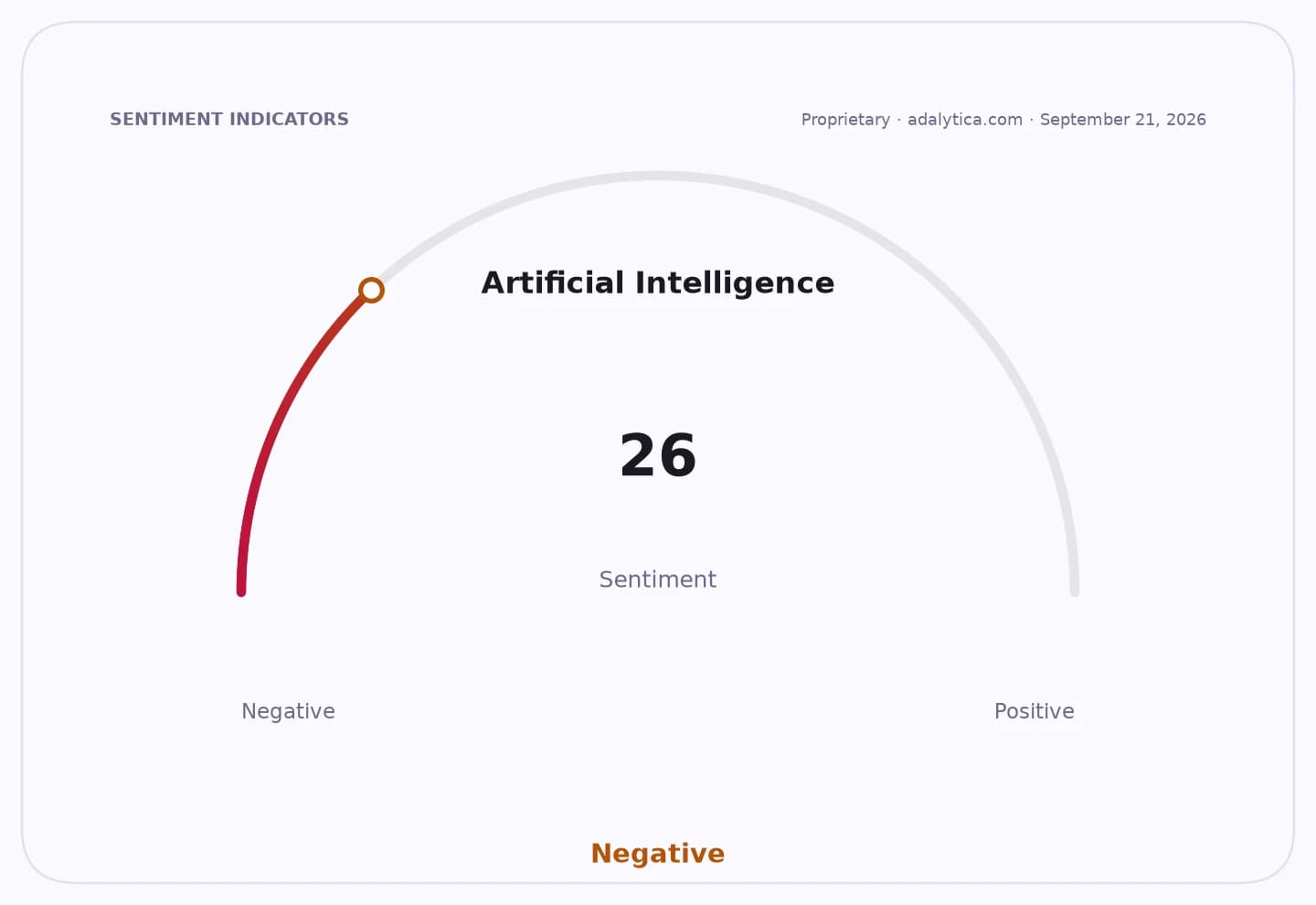
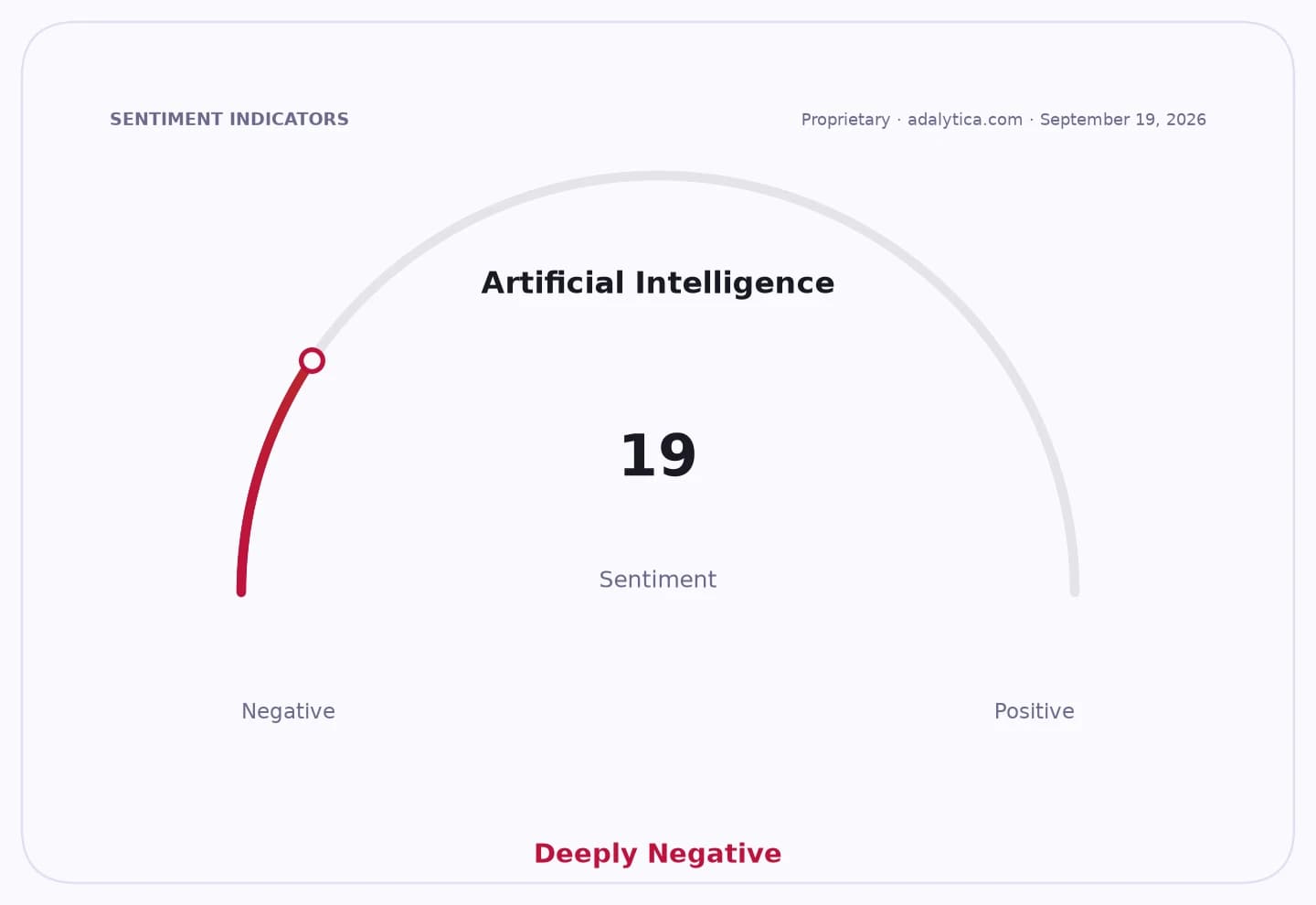
Sentiment IndicatorsⓘProprietary · adalytica.com · September 24, 2026
This is a snapshot — live sentiment, awareness and momentum for 130+ markets update continuously in the dashboard.Open AlphaPulse
The clearest evidence for the upside is clinical, not theoretical. In one real-world case cited by Mayo Clinic cardiologist Peter Noseworthy, an AI model flagged a postpartum patient’s ECG as concerning even though the tracing looked normal to clinicians; a second AI-enabled digital stethoscope raised the same alarm, and follow-up tests found left ventricular systolic dysfunction, a potentially dangerous heart condition. Similar tools are already being used in mammography and diabetic eye screening, where studies have shown strong performance and, in some cases, sensitivity above 95%.
That is why investors and policy makers are watching health AI as more than a technology story. If the software meaningfully improves detection and workflow, it can lower system costs, improve throughput and support faster drug discovery. If it simply automates paperwork without changing outcomes, the return on those public and private dollars weakens. And if the models are trained on incomplete or biased data, they can encode existing inequities rather than fix them.
The tension is especially acute in Canada, where the government is also betting that aggregated health records will generate new treatments and a domestic innovation industry. Critics say the same data sets that power better prediction may also reflect access gaps, missed tests and uneven care, making it harder to know what the AI is really learning. That matters for underserved communities, where delayed access can look indistinguishable from clinical absence in the data.
There is also an environmental and operational cost. Large-scale AI systems depend on data centres that consume significant electricity, and when those facilities are powered by fossil fuels they can add local air pollution. Those concerns have become part of the political debate around AI expansion, particularly because the health sector is not immune to the broader energy demands of the technology.
For investors, the narrative is not just about whether AI can diagnose disease faster. It is about which parts of the healthcare chain capture value if it does. Software and data-platform providers stand to benefit if hospitals adopt AI at scale. Providers and payers could gain if administrative load falls and detection improves. But the downside sits with systems that spend heavily on tools that fail to deliver measurable clinical gains, or face backlash over privacy, bias and emissions.
That leaves the Canadian push at a familiar inflection point for healthcare technology: the case for AI is strongest where it augments clinicians and improves measurable outcomes, not where it is sold as a cure-all. The next test is whether governments can prove that the benefits outweigh not only the financial cost, but also the medical, ethical and environmental ones.
| Entity | Gains | Losses |
|---|---|---|
| Patients | ▲Faster detection | ▼Bias or privacy risks |
| Doctors and hospitals | ▲Less admin burden | ▼Upfront adoption costs |
| AI vendors and data platforms | ▲Public-sector contracts | ▼Scrutiny over outcomes |
| Communities near data centres | ▲Potential better care | ▼Pollution and power demand |